

Some researchers argue the famous T-shaped pillars at Pre-Pottery Neolithic sites like Göbekli Tepe and Karahan Tepe may have been structural roof supports rather than astronomical markers. Both sites feature semi-subterranean enclosures, often sunken into hillsides. Karahan Tepe dates to roughly 11,400 years ago, with buildings reused across many generations and construction phases.
T-shaped pillars debated as roof supports at PPNA enclosures
 TürkiyeArchitecture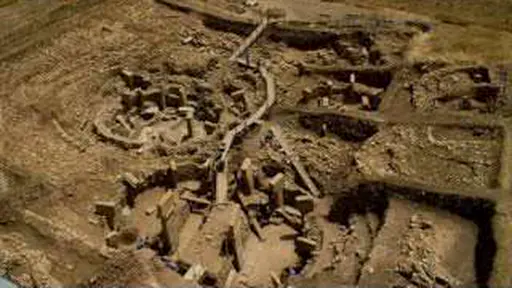
Key facts
- T-shaped pillars at Pre-Pottery Neolithic enclosures are argued by some to be roof supports rather than astronomical markers
- Enclosures at Göbekli Tepe and Karahan Tepe were often semi-subterranean, sometimes sunken into the ground or built on slopes
- Karahan Tepe is dated to approximately 11,400 years ago
- Buildings at Karahan Tepe were in use for many generations across multiple phases of construction
Site mentioned
Sources
Gobekli Tepe's Pillarsmartinsweatman.blogspot.com
The Pillars: GT is famous for its anomalous megalithic pillars, and especially the symbols carved on them. t-shaped belt buckle.
A Human Face Was Carved Into This Stone Pillar in Turkey 11000 Years Agosmithsonianmag.com
The T-shaped pillar is the first with a face to be found in the Stone Age archaeological sites of Turkey's Taş Tepeler.
Göbekli Tepeen.wikipedia.org
The T-shaped pillar tradition seen at Göbekli Tepe is unique to the Urfa region but is found at most PPN sites. These include Nevalı Çori, Hamzan Tepe ...
T-pillars – Tepe Telegramsdainst.blog
The T-shaped pillars discovered at Göbekli Tepe are big. The central pair of Enclosure D measure 5.5 m and weigh about 8 to 10 metric tons each.
Göbekli Tepewhc.unesco.org
Distinctive T-shaped pillars are carved with images of wild animals, providing insight into the way of life and beliefs of people living in Upper Mesopotamia … ...
Was this story useful?
Keep exploring
Every site on this page sits on the globe, and the people who research them are on the Discord.
3D Globe · Sites by country · Story Archive · Research Library · Weekly Journal · Search
AI-generated text · images from the original sources · always verify with the sources.