

Formative-period E-group-like monuments in the Olmec area often paired a western pyramid with an eastern platform across a plaza. A 2023 study by Ivan Šprajc argues that some orientations were astronomical: one links sunrise on February 11 with sunset on October 29, 260 days apart, suggesting knowledge of the Mesoamerican 260-day cycle. The relevant structures date to roughly 1100–750 BCE, placing the proposed calendar practice in that period. The Tzolk’in combines 13 numerals with 20 day signs. The video also interprets possible lunar and Venus observations, 20-edge designs and links with agriculture as evidence of a wider fertility-linked system; those architectural and fertility claims remain the video’s interpretation.
Study Argues Olmec-Area Alignments Reflect a 260-Day Cycle
Key facts
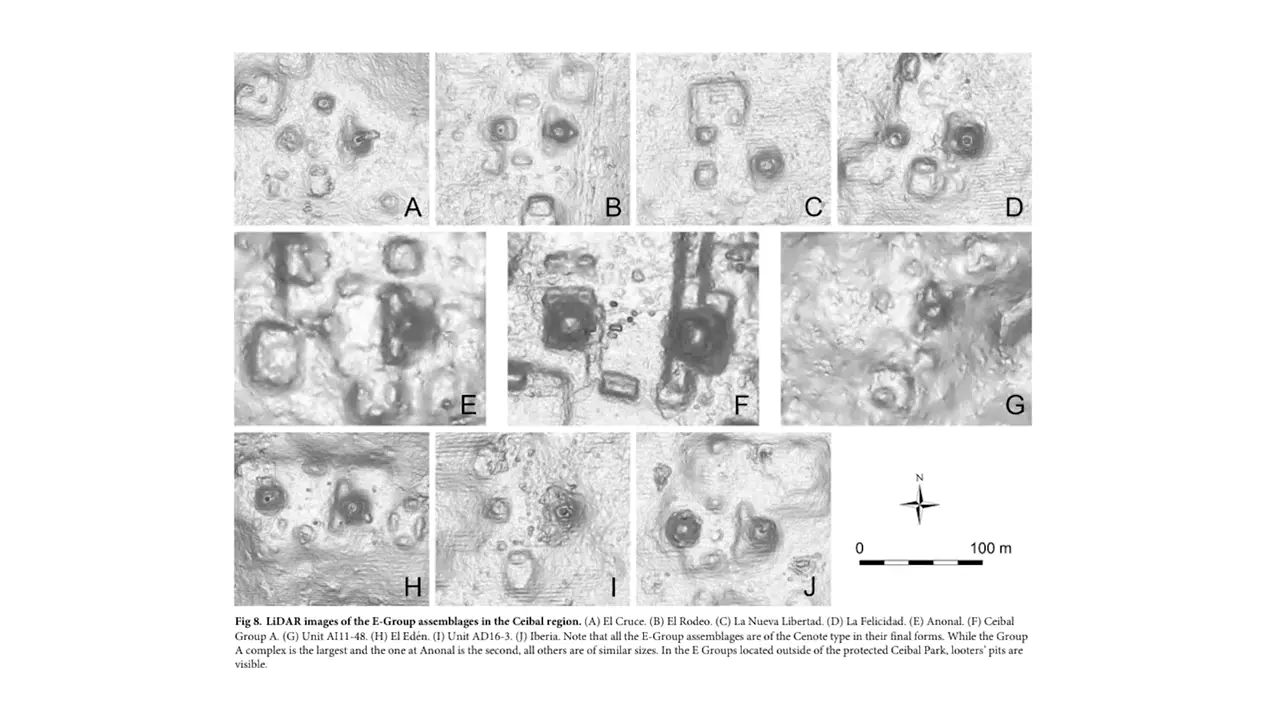
- A 2023 Science Advances study by Ivan Šprajc argues that some Formative-period E-group and E-group-like arrangements in the Olmec area and western Maya lowlands had astronomical orientations.
- E-group-like arrangements generally pair a western pyramid with an eastern platform across a plaza. Their use as astronomical observation platforms is a debated interpretation, not a settled function.
- The proposed solar alignment pairs sunrise on February 11 with sunset on October 29, 260 days apart—not two sunrise observations.
- The ca. 1100–750 BCE range dates the archaeological contexts discussed; the calendar use is inferred from those alignments rather than documented continuously throughout the period.
- The Tzolk’in combines 13 numerals with 20 day signs, producing 260 combinations. The cited research does not establish that 20-edge platform designs encode the number 20.
- Possible lunar and Venus observations are interpretations in the study. The video’s proposed Venus–agriculture fertility link is not an established Olmec finding, although later Mesoamerican traditions associate Venus with warfare and sacrifice.
Sources
The Maya Structures that Brought Cosmic Order to Earthsupercluster.com
E-Groupen.wikipedia.org
Astronomical aspects of Group E-type complexes and ... - PMCpmc.ncbi.nlm.nih.gov
astronomy, ritual, and the interpretation of maya “e-group ...discovery.ucl.ac.uk
Was this story useful?
Keep exploring
Every site on this page sits on the globe, and the people who research them are on the Discord.
3D Globe · Sites by country · Story Archive · Research Library · Weekly Journal · Search
AI-generated text · images from the original sources · always verify with the sources.