

In January 1946, Matthew Stirling reached San Lorenzo in Veracruz. They discovered a massive colossal head (El Rey) and over 200 more basalt monuments including altar thrones, statues, and stelae. San Lorenzo sits on an elevated plateau and is now considered the earliest Olmec city - the formative period of the entire Olmec world.
Sterlings discover San Lorenzo as Olmec birthplace in 1946
 MexicoGeneral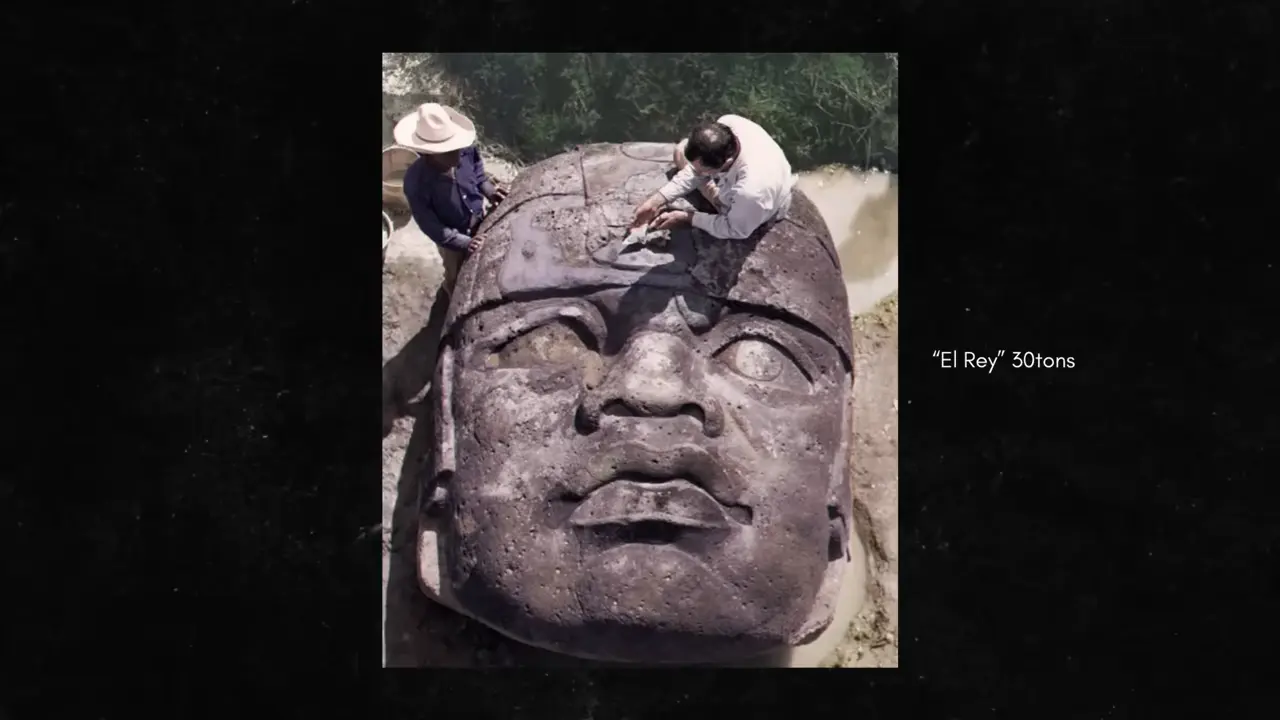
Key facts
- The final expedition set off from Washington DC in late January 1946
- Sterling reached a site now known as San Lorenzo in Veracruz
- They discovered a 30-ton colossal head known as El Rey
- Over 200 more basalt monuments were uncovered at San Lorenzo
- Discovered San Lorenzo Colossal Heads 1-10 and Monuments 1-61
- Findings included megalithic altar thrones, statues, circular altars, and stelae
- Surface finds showed early iterations of pottery styles seen at La Venta
- San Lorenzo is considered the earliest Olmec city and the formative period of the Olmec world
- The site sits on an elevated plateau overlooking fertile river valleys
Site mentioned
Sources
The Olmec Colossal Heads - History Hithistoryhit.com
The Olmec colossal heads are believed to depict local rulers or other people of great importance. There are many mysteries surrounding these monuments of ...
San Lorenzo (archaeological site) | Anthropology | Research Startersebsco.com
Archaeological interest in San Lorenzo was notably heightened in the 1930s and 1940s through the explorations of Matthew Stirling and later detailed excavations ...
Matthew Williams Stirling with Cast of Olmec Headsi.edu
The original stone head was excavated by Smithsonian-National Geographic Expedition led by Stirling to Vera Cruz, Mexico, in 1946. ... Cast Of San Lorenzo Head No ...
Olmec colossal heads - Wikipediaen.wikipedia.org
San Lorenzo Colossal Head 1, now at the Xalapa Museum of Anthropology in Veracruz ... The head was discovered by Matthew Stirling in 1946, 550 metres (600 ...
Colossal head monument 2 from the San Lorenzo site.lithiccastinglab.com
This large colossal head was found on the San Lorenzo site in 1945 by Mathew Stirling's guide. ... It was excavated in 1946 by Matthew Stirling.
Was this story useful?
Keep exploring
Every site on this page sits on the globe, and the people who research them are on the Discord.
3D Globe · Sites by country · Story Archive · Research Library · Weekly Journal · Search
AI-generated text · images from the original sources · always verify with the sources.