

🧩 Over 100,000 ilmenite cubes — each walnut-sized with three drilled holes — have surfaced at Olmec sites. Two massive caches at San Lorenzo include 10,000+ cubes at Loma de Sapotito and six metric tons near the Red Palace, discovered by Coe and Diehl in the 1960s. Ann Cyphers proposed they adorned ceremonial headdresses.
Mystery of 100,000+ ilmenite cubes found at Olmec sites
 Mexicounverified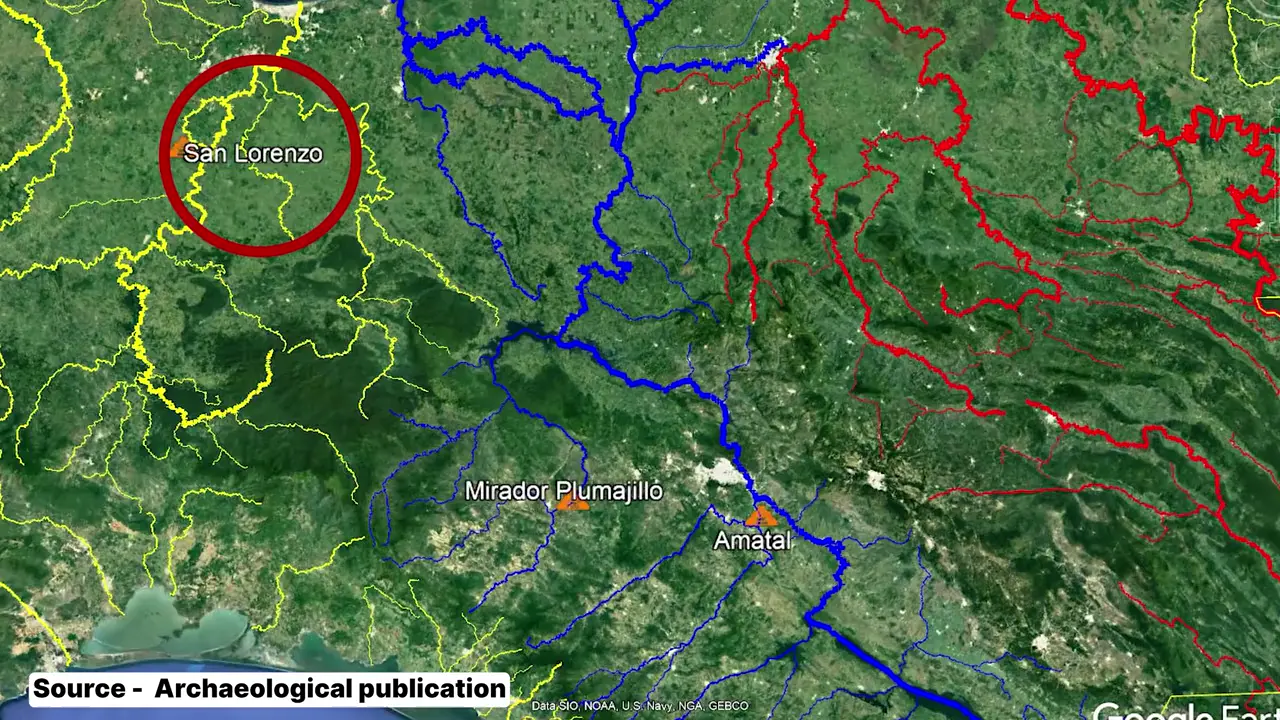
Key facts
- Over 100,000 ilmenite cubes have been found at various Olmec sites, most about the size of a walnut with three drilled holes
- Ilmenite is a weakly magnetic metallic oxide not found in the Olmec heartland; closest source is in southern mountains
- Two major caches were found at San Lorenzo Tenochtitlán Museum: over 10,000 cubes in a mound at Loma de Sapotito, and six metric tons (40,000 whole cubes plus 60,000 fragments) in a pit next to the Red Palace
- The largest cache was discovered by Coe and Diehl in the 1960s during Yale University excavations
- A production site at Plumo on the Rio La Venta yielded 1,500 cubes in various production states
- Archaeologist Ann Cyphers proposed the cubes were woven into headdresses, supported by finding cubes near Colossal Head 10 at San Lorenzo Tenochtitlán Museum in 1994
- A replication study about a decade ago debunked most theories except weaving together as beads
Was this story useful?
Keep exploring
Every site on this page sits on the globe, and the people who research them are on the Discord.
3D Globe · Sites by country · Story Archive · Research Library · Weekly Journal · Search
AI-generated text · images from the original sources · always verify with the sources.