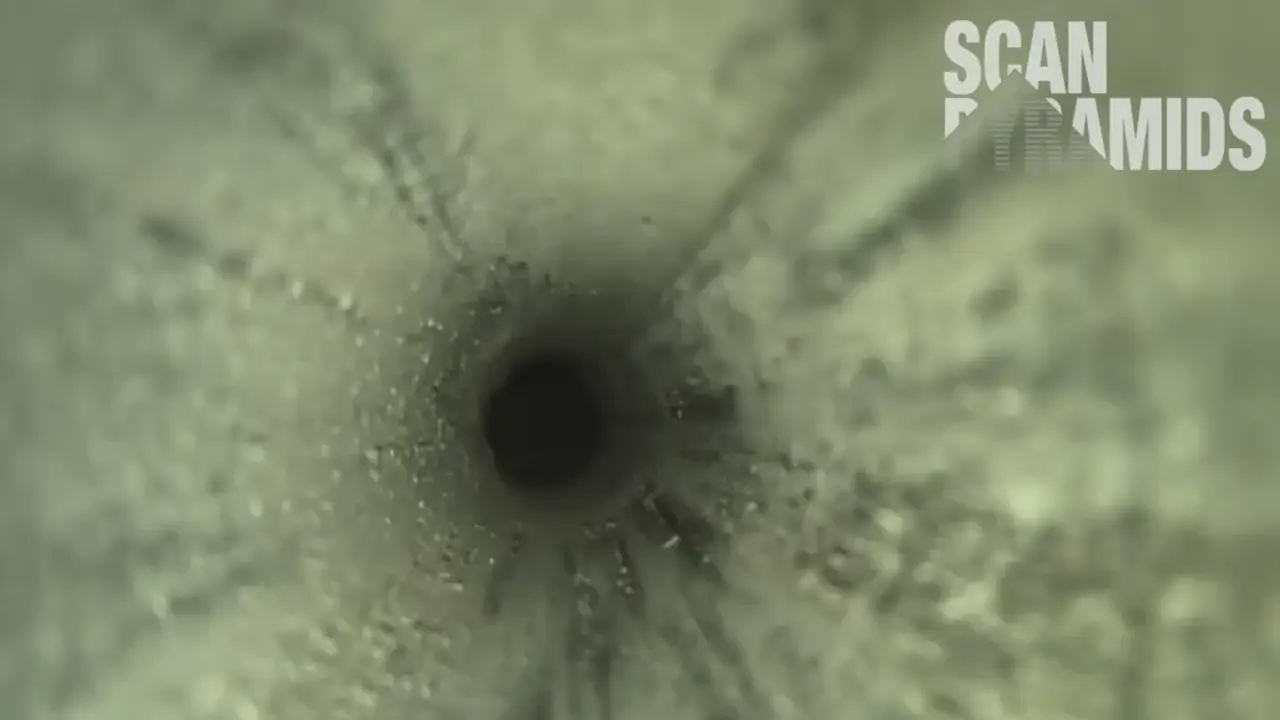
The Scan Pyramids Mission set the gold standard 🏆 Before touching the Great Pyramid's corridor, they combined muography, GPR & ultrasound — ALL had to agree before any physical inspection. That's how it's done at sacred sites! 🧱
Key facts claimed:
- ScanPyramids used muography to detect the North Face Corridor void in the Great Pyramid
- Before excavation, researchers used three non-destructive testing techniques with multi-modal image fusion to validate muon data
- Results were fused together before allowing camera inspection inside the corridor
- Multiple geophysical techniques required confirmation before any physical work at the Giza site
- This represents proper scientific methodology for major discoveries at Giza
Sources
Scientists Scan Egypt's Menkaure Pyramid with High-Tech Toolsarchaeology.org... ultrasound, and electrical resistivity tomography to gather more information. When they combined the collected data, the researchers found ...
How cosmic rays spotted a hidden 'void' within the Great Pyramidpbs.orgAn international team of excavators, engineers and particle physicists recently used them to uncover a large void deep inside the Great Pyramid of Giza.
Confirmation of the ScanPyramids North Face Corridor in the Great ...pmc.ncbi.nlm.nih.govConfirmation of the ScanPyramids North Face Corridor in the Great Pyramid of Giza using multi-modal image fusion from three non-destructive testing techniques.
A Peek at the New Discoveries Inside the Great Pyramid - PBSpbs.orgScientists use augmented reality technology to see what the newly discovered voids inside the Great Pyramid of Giza might look like.
ScanPyramids - Wikipediaen.wikipedia.orgThis project aims at scanning Old Kingdom Egyptian Pyramids (Khufu, Khafre, the Bent and the Red) to detect the presence of unknown internal voids and ...
AI-generated text · images from the original sources · always verify with the sources.