

Radar found hidden shafts under 180ft mound. Biondi's SAR: could be spoil heap.
SAR scans reveal potential second Sphinx structure under mound at Giza Necropolis
 EgyptRemote Sensing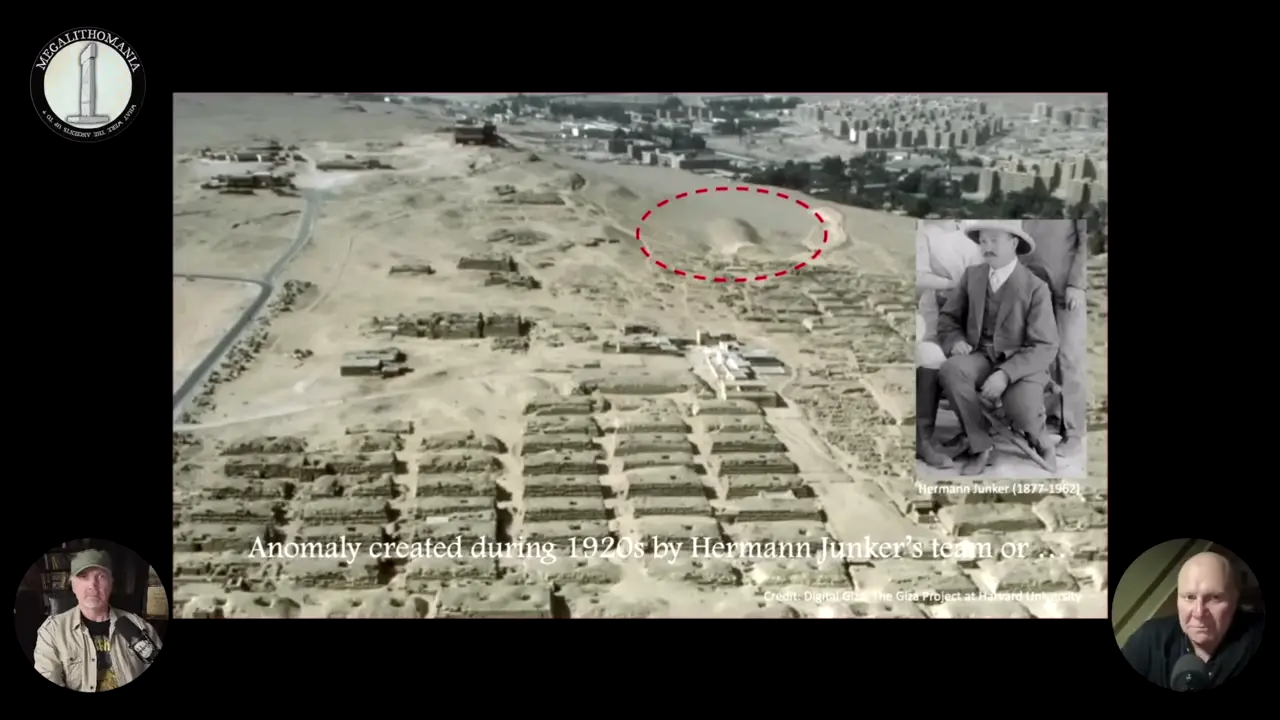
Key facts
- Preliminary satellite-based SAR scans detected a massive structure concealed beneath a 180ft-high mound of hardened sand in the extreme northwestern Giza Necropolis
- Scans show vertical shafts and passageways similar to those found beneath the original Great Sphinx
- Dense vertical lines in scan data are believed to represent solid walls of underground shafts rather than empty voids
- Filippo Biondi conducted the SAR scans using satellites 400 miles above Earth emitting electromagnetic pulses
- The scanning technology detects sound activity frequency changes when beams hit solid rock with cavities below versus solid rock alone
- The underground features appear to mirror the structure of the Great Sphinx
- Herman Junka investigated mastaba tombs in this area between 1910-1929; aerial photographs show the anomaly was not present during his excavations
- Abdul Mahin Abdul Baka worked on the western cemetery between 1914-1953; the anomaly may have been a spoil heap from his excavations
- The red and black areas in scan data indicate hollows and cavities, while blue and green areas represent less dense material
- The findings suggest a potentially larger and more extensive underground complex beneath the Giza plateau
Site mentioned
Sources
tinyurl.com
Linked in video description
amazon.co.uk
Linked in video description
megalithomania.co.uk
Linked in video description
Keep exploring
Every site on this page sits on the globe, and the people who research them are on the Discord.
3D Globe · Sites by country · Story Archive · Research Library · Weekly Journal · Search
AI-generated text · images from the original sources · always verify with the sources.