

Room 3 at Bonampak celebrates military victory through ritual bloodletting and dance. Three young brothers wear massive quetzal-feather headdresses and dancers' wings, holding ceremonial staves. The murals depict self-inflicted bloodletting, with noble women piercing their tongues using implements studded with obsidian or stingray spines to draw blood. Chan Muwaan is the last known ruler before the Terminal Classic collapse.
Room 3 murals reveal human sacrifice and Maya bloodletting rituals
 MexicoArt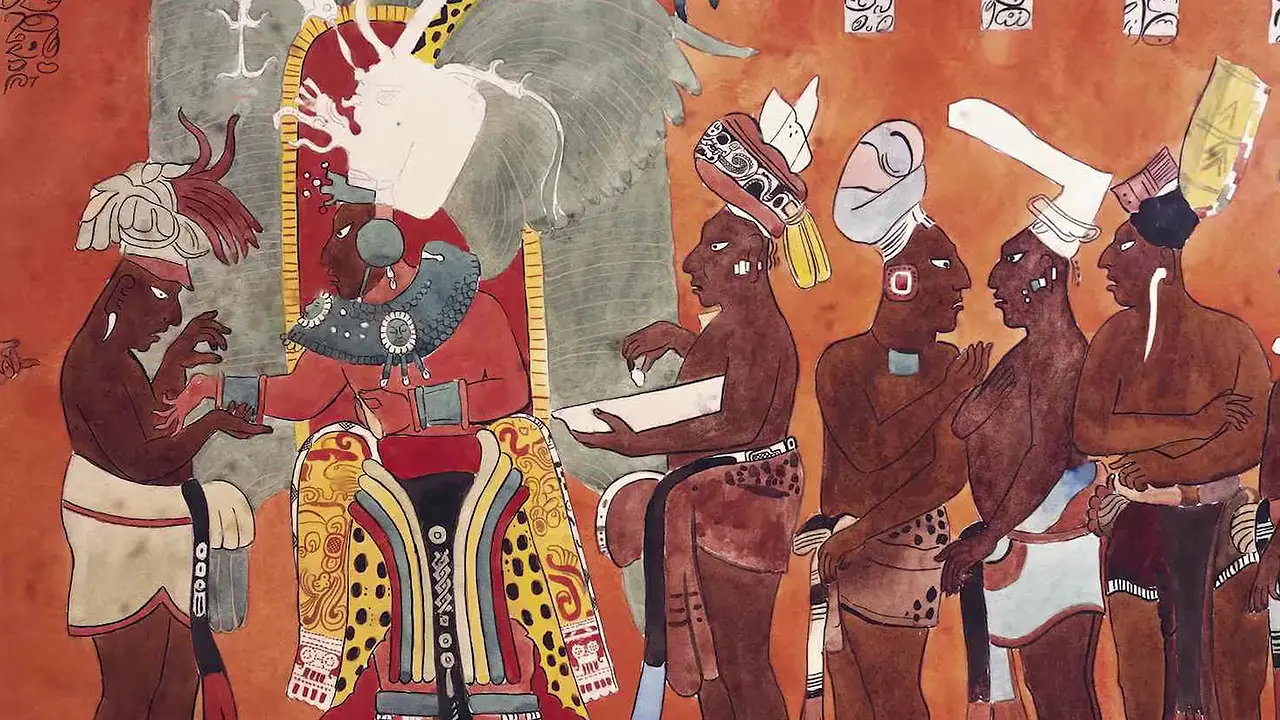
Key facts
- Room 3 depicts ceremonial celebrations after military victory, including ritual bloodletting and elaborate dance performances.
- Three young brothers, including the heir from Room 1, are shown wearing massive headdresses of brilliant green quetzal feathers and dancers' wings.
- Each brother holds a bloody femur bone modified to serve as a ritual axe.
- Infrared imaging revealed that a figure kneeling below the central brother holds an object identified as the still-beating heart of a sacrifice victim whose body is being dragged down pyramid steps.
- The murals depict self-inflicted bloodletting, with noble women piercing their tongues using obsidian-studded ropes to draw blood.
- Chan Muwaan II's principal wife appears in multiple scenes, underscoring the political importance of elite Maya women.
- Chan Muwaan II is currently the last known ruler of Bonampak; the site, Yaxchilan, and other Usumacinta Valley cities were abandoned in the early 9th century as part of the Terminal Classic collapse.
- The murals were first shown to the outside world in 1946 by a local man named Chambor.
Site mentioned
Sources
lugares.inah.gob.mx
Linked in video description
Was this story useful?
Keep exploring
Every site on this page sits on the globe, and the people who research them are on the Discord.
3D Globe · Sites by country · Story Archive · Research Library · Weekly Journal · Search
AI-generated text · images from the original sources · always verify with the sources.