

The mausoleum of Qin Shi Huang, who unified China in 221 BC, sprawls across dozens of square kilometers. Above it stands the Terra Cotta Army: over 8,000 life-sized soldiers, horses, and chariots. Ancient historian Sima Qian wrote of mercury rivers and a jeweled ceiling; modern surveys have detected unusually high mercury levels in the soil. The tomb stays sealed because painted warriors lose color instantly upon air exposure. ⚔️
Qin Shi Huang's tomb remains sealed 2200 years after emperor's death
 ChinaGeneral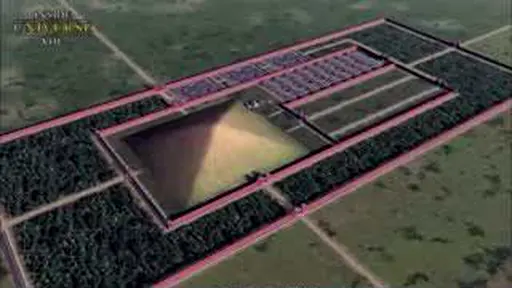
Key facts
- Tomb belongs to Qin Shi Huang, who unified China in 221 BC and began construction of the Great Wall
- Underground mausoleum covers dozens of square kilometers
- Protected by the Terra Cotta Army: more than 8,000 life-sized soldiers, horses, and chariots
- Ancient historian Sima Qian described rivers and seas of liquid mercury and a jeweled star ceiling
- Modern scientific surveys detected unusually high concentrations of mercury in the soil above the tomb
- Chamber remains sealed because excavation methods could irreversibly damage artifacts; painted terra cotta warriors rapidly lose color when exposed to air
Site mentioned
Sources
Qin dynasty (221–206 BCE) - National Museum of Asian Artasia-archive.si.edu
It was China's first unified state whose power was centralized instead of spread among different kingdoms in the north and south.
The First Qin Emperor Unifies Chinahistoryisnowmagazine.com
In 221 BCE, Qin Shi Huang, the ruler of the state of Qin, completed a monumental achievement in Chinese history: the unification of China.
Qin Shi Huangen.wikipedia.org
By 221 BC, he had conquered all the other warring states and unified all of China, and he ascended the throne as China's first emperor. During his reign, his ...
Qin dynasty | History, Facts, & Achievementsbritannica.com
Shihuangdi was emperor of the Qin dynasty (221–210 BCE) and the creator of the first unified Chinese empire. He is also known for his interest ...
Who was China's First Emperor?liverpoolmuseums.org.uk
With massive armies he overpowered the six remaining independent kingdoms of the late Warring States Period and unified China in 221 BC;
Was this story useful?
Keep exploring
Every site on this page sits on the globe, and the people who research them are on the Discord.
3D Globe · Sites by country · Story Archive · Research Library · Weekly Journal · Search
AI-generated text · images from the original sources · always verify with the sources.