

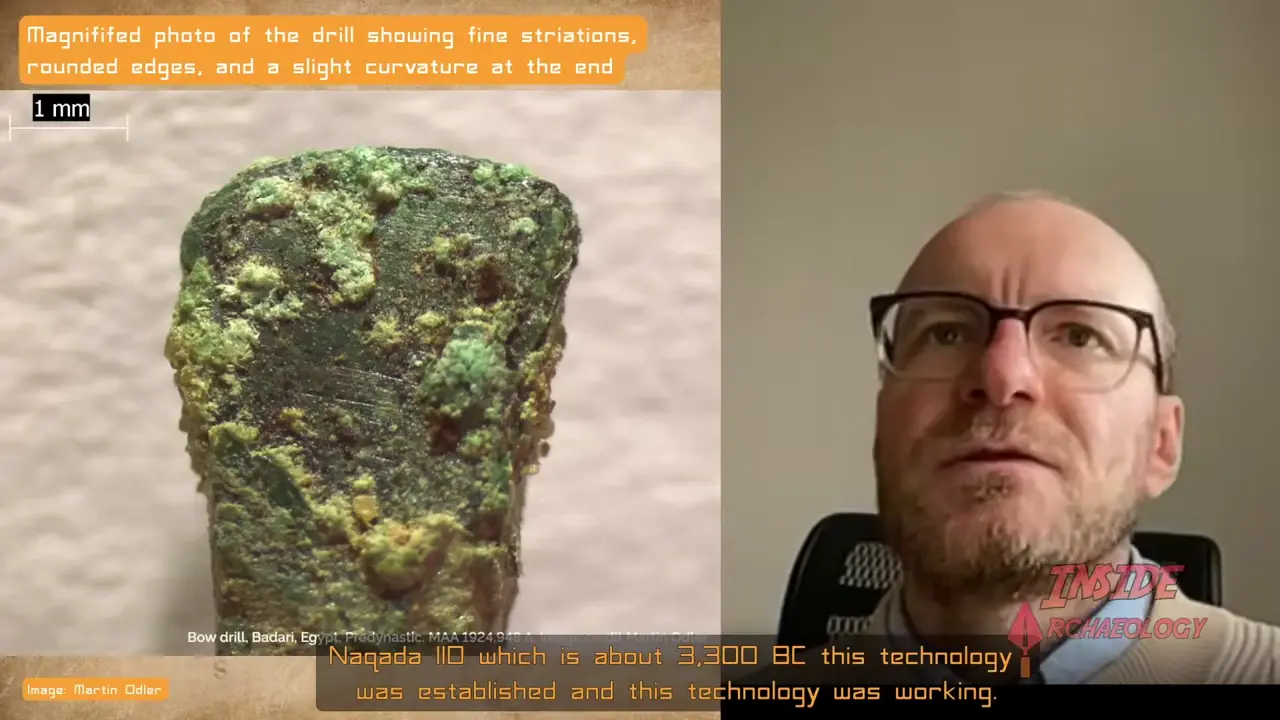
Newcastle University holds a copper-alloy drill bit excavated in the 1920s at the Badari cemetery in Upper Egypt. Dated to about 3300 BC, it is the earliest identified metal drill bit from ancient Egypt. Researchers interpret it as part of a bow drill and describe it as evidence of mechanically sophisticated drilling much earlier than previously thought.
Pre-dynastic Egyptian copper-alloy drill identified at Newcastle
Site mentioned
📍 Badari🌍 Show on the globe
Key facts
- Newcastle University, not Cambridge, holds the copper-alloy drill bit.
- The object was excavated in the 1920s from the Badari cemetery in Upper Egypt and is dated to about 3300 BC (Naqada II).
- Researchers identify it as the earliest identified metal drill bit from ancient Egypt.
- The researchers interpret the object as a component of a bow drill.
- The available Newcastle source does not confirm the claimed microscopy methods, arsenic-and-nickel readings, or eastern-desert metal provenance, so those details are omitted.
Was this story useful?
Keep exploring
Every site on this page sits on the globe, and the people who research them are on the Discord.
3D Globe · Sites by country · Story Archive · Research Library · Weekly Journal · Search
AI-generated text · images from the original sources · always verify with the sources.