

Olmec-style art spread across Mesoamerica, but scholars see no evidence of an empire 🌍. La Blanca grew post-1000 BCE with a 25m pyramid. Takalik Abaj has the only colossal head outside the heartland. Chalcatzingo holds ~30 carvings (800-450 BCE), possibly by La Venta artists. Middle formative cultures were peers, not scavengers.
Olmec-style art spreads across Mesoamerica at sites like Chalcatzingo and Izapa
 MexicoGeneral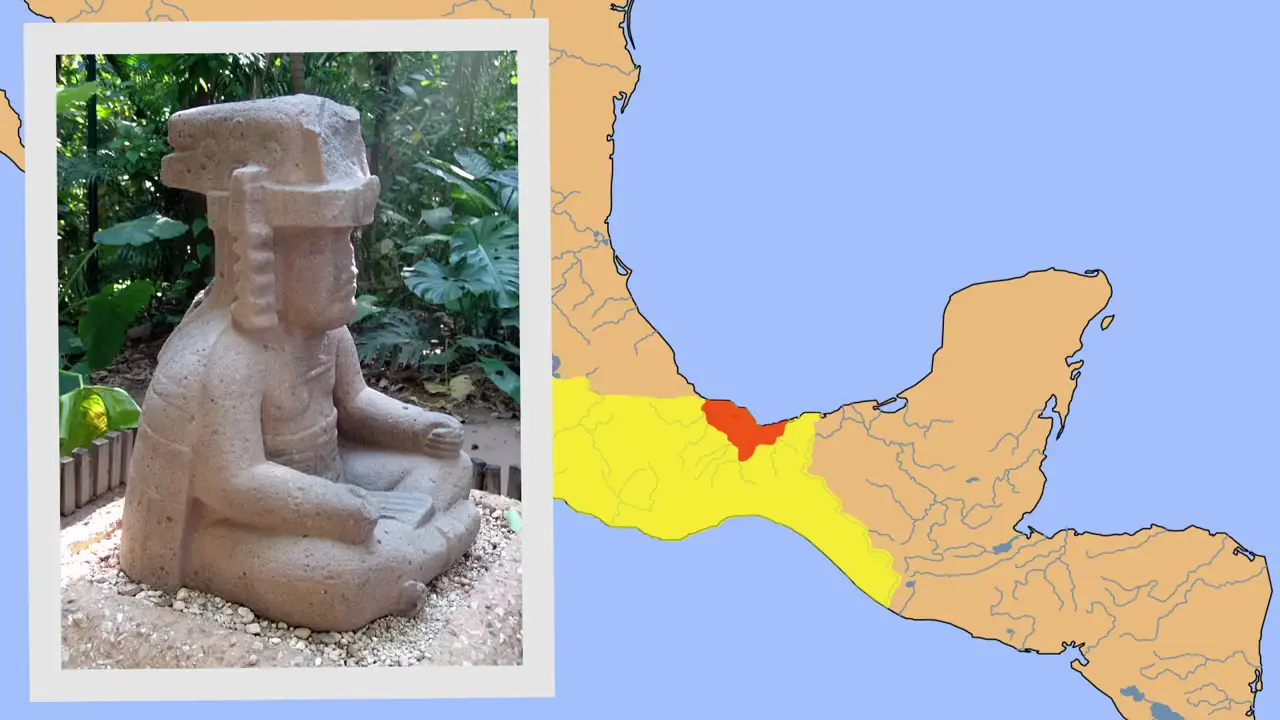
Key facts
- Olmec style art appears in the Mexican highlands, Soconusco, Guatemala, and El Salvador, but scholars do not believe these traces of an Olmec empire or imposed order
- The Mokaya site of La Blanca grew after 1000 BCE and featured a large 25 m tall pyramid and Olmec-style sculptures
- Takalik Abaj has the only colossal head outside the Olmec heartland, though it was being recarved when discovered
- Chalcatzingo in Morelos, located at the base of two granodiorite hills, contains about 30 stone carvings dating from 800 to 450 BCE, possibly carved by artists from La Venta
- Monument 1 (El Rey) at Chalcatzingo depicts a seated figure in a niche summoning rain, with vegetation blooming below
- Huajuapan and Oxtotitlan in Guerrero contain Olmec-style rock murals depicting figures in capes and jaguar-patterned clothing
- Teopanzolco-Quiahuiztlan in Guerrero has the earliest irrigation canal in Mesoamerica and four T-shaped travertine blocks carved with Olmec-style faces
- Middle formative cultures were peers of the Olmec rather than cultural scavengers, pursuing their own interests and power
Site mentioned
Sources
docs.google.com
Linked in video description
Was this story useful?
Keep exploring
Every site on this page sits on the globe, and the people who research them are on the Discord.
3D Globe · Sites by country · Story Archive · Research Library · Weekly Journal · Search
AI-generated text · images from the original sources · always verify with the sources.