

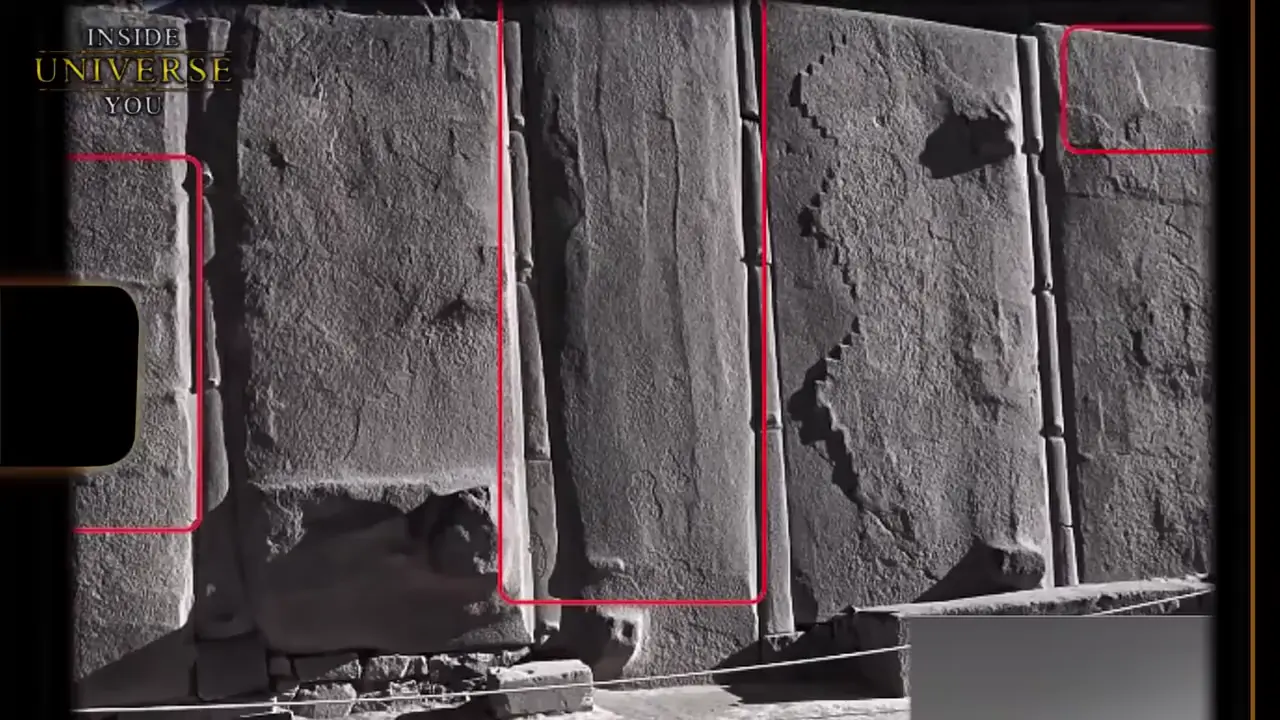
Pink granite blocks at Ollantaytambo include unfinished quarry stones and the 15th-century Inca Temple of the Sun. The site’s polygonal masonry fits without mortar, but that precision does not establish lost technology or a 12,000-year-old date. Quarry studies show hammerstone working, ramps, roads and organised transport. The video argues for stone softening, diamond tools and a Younger Dryas origin; mainstream archaeology does not substantiate those claims.
Ollantaytambo’s masonry is precise, but 12,000-year and lost-tech claims are unsupported
 Peruunverified
Site mentioned
Key facts
- Ollantaytambo was occupied earlier, but the famous Temple of the Sun and the Kachiqhata quarry works are associated with 15th-century Inca construction.
- The Temple of the Sun was built from pink granite, and unfinished blocks remain at the Kachiqhata quarry across the Urubamba River.
- Polygonal walls at Ollantaytambo are tightly fitted without mortar; that precision is well documented but does not establish lost technology or a pre-Inca date.
- The video interprets scoop or peck marks as evidence of stone softening. Quarry archaeology instead identifies hammerstone working and dressing; stone softening has not been demonstrated.
- The video’s claim that core-drill marks require diamonds is unsupported. Granite can be drilled using a hard drill and abrasive grit, and the cited evidence does not establish that the marks are core-drill holes.
- Precise saw cuts that stop mid-stone have not been established; quarry grooves and fractures can reflect block extraction.
- The 130-foot andesite transport claim is unsupported. Kachiqhata’s documented blocks are pink granite, and quarry studies identify tools, roads, ramps and hauling evidence.
- The best-known “Gateway of the Gods” is Tiwanaku’s Puma Punku in Bolivia, a separate complex normally dated to about 500–1000 CE; it is not evidence for an Ollantaytambo section predating the Inca by millennia.
- No accepted body of researchers dates Ollantaytambo to at least 12,000 years ago or links its construction to the Younger Dryas cataclysm.
Sources
Mysterious Megalithic Master Works At Ollantaytambo Peruhiddenincatours.com
In the above photo, on the left you can see granite blocks of great size fitted together with almost perfect joinery. ... pink granite blocks, some weighing up to ...
The Unfinished Obelisk at Aswantheancientconnection.com
The official theory maintains that the “scoop marks” were made with diorite balls, which ancient Egyptian workers managed to bash on the obelisk until they ...
Lost Ancient Technology Of Egypt - Hidden Inca Tourshiddenincatours.com
On the wall on the right you can see what appear to be scoop marks in the granite. Engineer Dunn theorizes that a machine was responsible for this work ...
(PDF) Peruvian polygonal masonry: how, who, when and ...researchgate.net
Ollantaytambo, masonry Since mortar is not used in the polygonal masonry, to ensure integrity of a structure,
Megalithic Polygonal Masonry Wall, Ollantaytambo Ancient ...dreamstime.com
Megalithic Polygonal Masonry Wall Containing Polished Stones with locks. Ollantaytambo Ancient Fortress Palace Wall in the Sacred Valley Mountains, Cusco Region ...
Ollantaytambo's Incredible Megalithic Structurestheancientconnection.com
Megalithic blocks are cut with precision, squared, polished, and placed together without mortar so that a sheet of paper doesn't fit between the joints of these ...
Was this story useful?
Keep exploring
Every site on this page sits on the globe, and the people who research them are on the Discord.
3D Globe · Sites by country · Story Archive · Research Library · Weekly Journal · Search
AI-generated text · images from the original sources · always verify with the sources.