

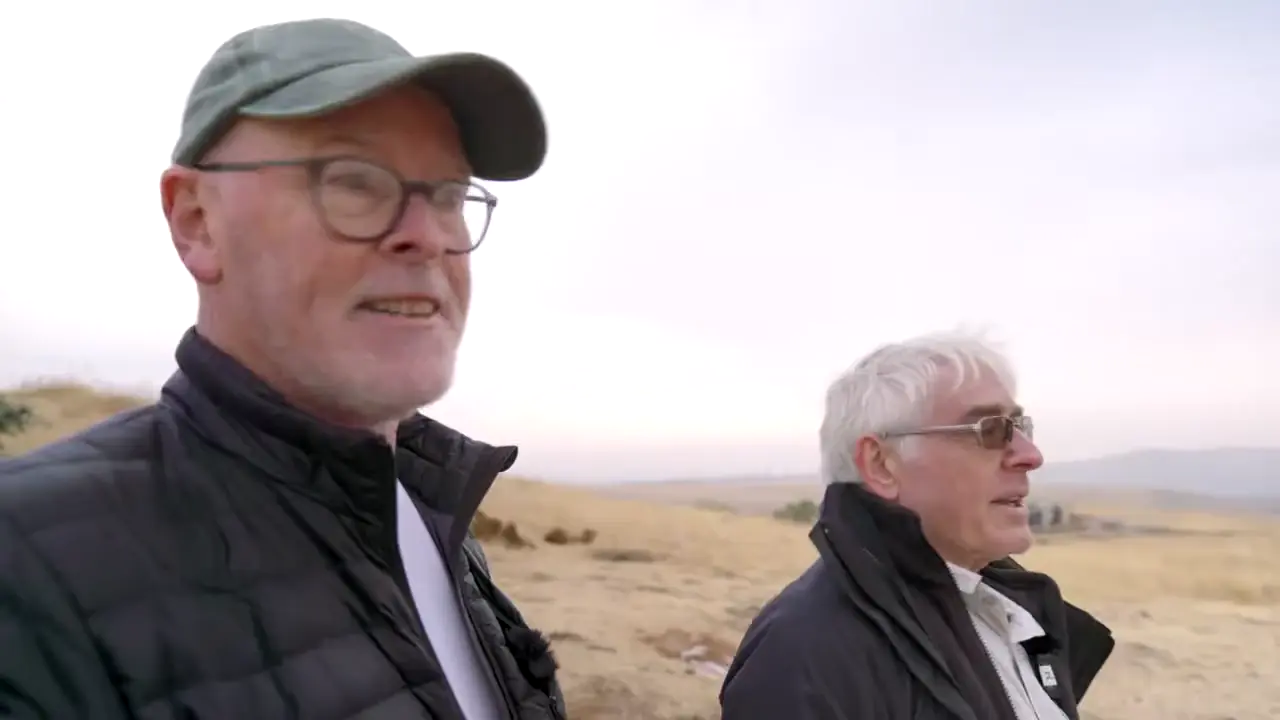
Northwest excavations at Göbekli Tepe began around 2009, about 200 meters from the main dig. Building H features animal reliefs like a leopard baring teeth 🐆, confirming Klaus Schmidt's hypothesis that special buildings sit in dips. Pillar 66 shows a dying aurochs, echoing a Çatalhöyük image a millennium later.
Northwest excavation area reveals Building H and contemporaneous settlement
 TürkiyeExcavation
Key facts
- Excavations in the northwest area began around 2009, approximately 200 meters from the main excavation area
- Building H is a special building featuring animal depictions on its pillars, including a leopard with exposed teeth
- Hypothesis by Klaus Schmidt confirmed: special buildings occupy dips in the mound while rectangular structures sit on slopes
- Building H entrance is between two parallel standing stones with steps
- Pillar 66 depicts an aurochs in death throes with tongue hanging out, compared to a similar depiction in the Catalhoyuk wall painting over 1,000 years later
Sources
Göbekli Tepeen.wikipedia.org
Exploring the 11500 year old world of Göbekli Tepetempleton.org
How Was Göbekli Tepe Built? Architecture & Engineeringgobekli-tepe.com
Göbekli Tepewhc.unesco.org
Was this story useful?
Keep exploring
Every site on this page sits on the globe, and the people who research them are on the Discord.
3D Globe · Sites by country · Story Archive · Research Library · Weekly Journal · Search
AI-generated text · images from the original sources · always verify with the sources.