

Vicente Luis Rosell Roig spent 6 years developing a model published in NPJ Heritage Science proposing helical pathways on the pyramid's edges using specific stone courses, with ramps on all four faces. The block-by-block simulation suggests the Great Pyramid could have been completed in under 27 years.
New paper proposes Integrated Edge-Ramp System for Great Pyramid construction
 EgyptTheoryNew Research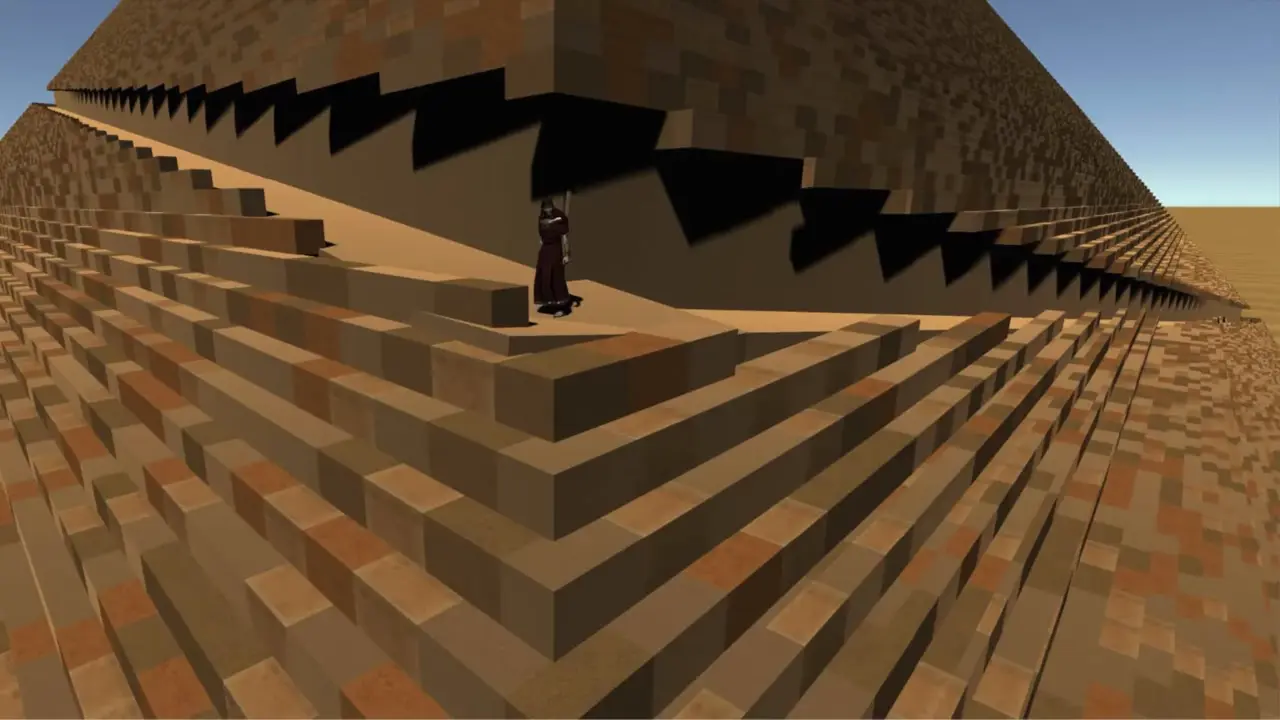
Site mentioned
Key facts
- Vicente Luis Rosell Roig published a new paper in NPJ Heritage Science journal proposing an Integrated Edge-Ramp System
- The model uses helical pathways on the edges of the pyramid formed by emitting specific courses of stone on the perimeter
- Multiple ramp systems started on each of the four faces of the pyramid, unlike Jean-Pierre Houdin's single internal spiral ramp
- Rosell Roig worked on the idea for six years, moving from hand sketches in 2020 to full 3D models simulating construction block by block
- The model suggests the Great Pyramid could be built in under 27 years
- Evidence for four perpendicular ramps exists on the smaller Sinki Pyramid, one on each face
Sources
nature.com
Linked in video description
Was this story useful?
Keep exploring
Every site on this page sits on the globe, and the people who research them are on the Discord.
3D Globe · Sites by country · Story Archive · Research Library · Weekly Journal · Search
AI-generated text · images from the original sources · always verify with the sources.