

Medieval Arabic accounts describe Egypt's pyramids as repositories of talismans, treasure, royal bodies, celestial and medicinal knowledge, poisons and Egyptian sciences. Ibn Wahshiyya, cited by Al-Maqrizi, described entrances 40 cubits below ground on each side and pyramids 100 cubits high and 100 cubits wide at the base. Al-Maqrizi's account links the reported 820 CE breach and 1,000-dinar find to workers sent by Caliph Al-Ma'mun, not Al-Mutawakkil.
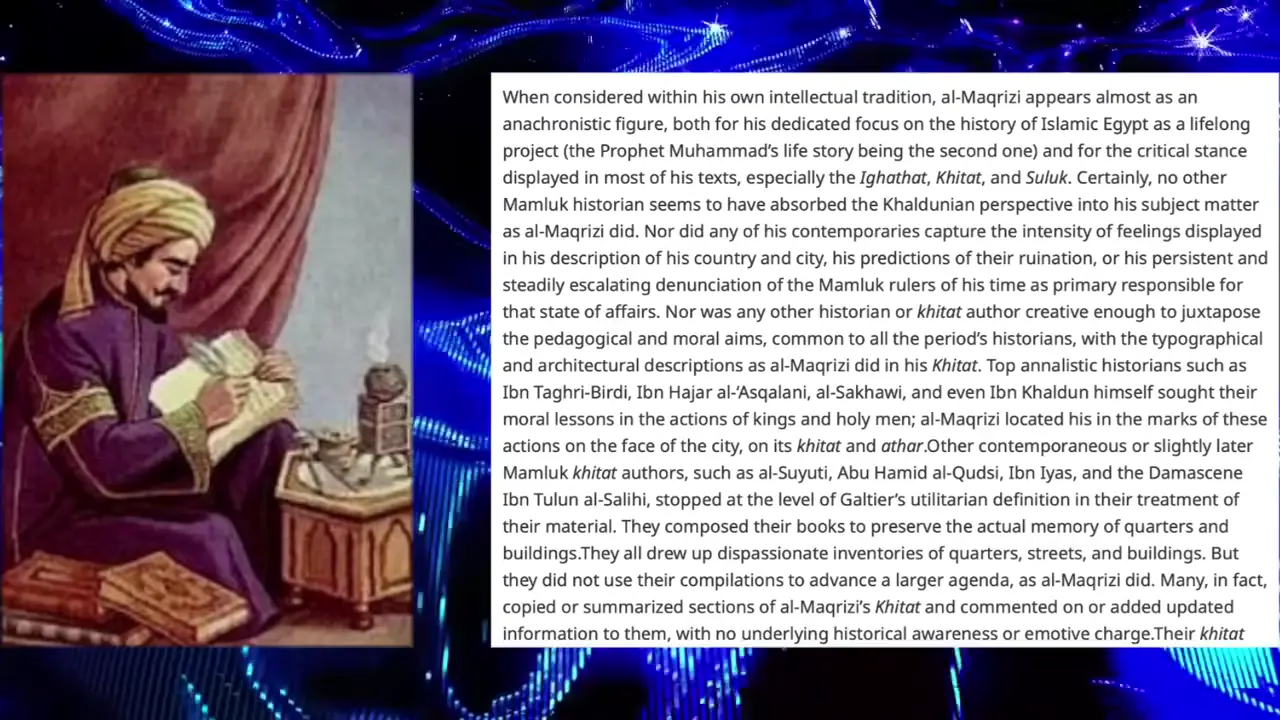
Medieval Islamic accounts attribute treasures and knowledge to Egypt's pyramids
 EgyptTheory
Key facts
- Ibn Wahshiyya, cited by Al-Maqrizi, described the pyramids as containing talismans, treasure, idols and the bodies of Egyptian kings.
- The accounts also attributed celestial knowledge, medicines, poisons and Egyptian sciences to the pyramids.
- The entrances were described as 40 cubits below ground on each side and 100 cubits from the centre.
- The pyramids were described as 100 cubits high and 100 cubits wide at the base.
- Al-Maqrizi's account connects the reported breach of the Great Pyramid around 820 CE with workers sent by Caliph Al-Ma'mun, not Al-Mutawakkil.
- The reported 1,000 gold dinars were said to lie behind walls 20 cubits thick. A dinar weighed roughly 3.5–3.75g, not 37.5g.
Sources
Was this story useful?
Keep exploring
Every site on this page sits on the globe, and the people who research them are on the Discord.
3D Globe · Sites by country · Story Archive · Research Library · Weekly Journal · Search
AI-generated text · images from the original sources · always verify with the sources.