

Mastaba 17 at Meidum had no usable route to its burial complex through the two blocked passages. Petrie reached the chambers in 1910 by digging a shaft roughly 48 ft deep through the middle and tunnelling into the complex. The video argues that the dead-end passages and plugs were dummy architecture rather than functional security measures; the purpose of their rounded door jambs remains unclear.
Mastaba 17 had blocked passages; video calls them dummy architecture
 EgyptArchitecture
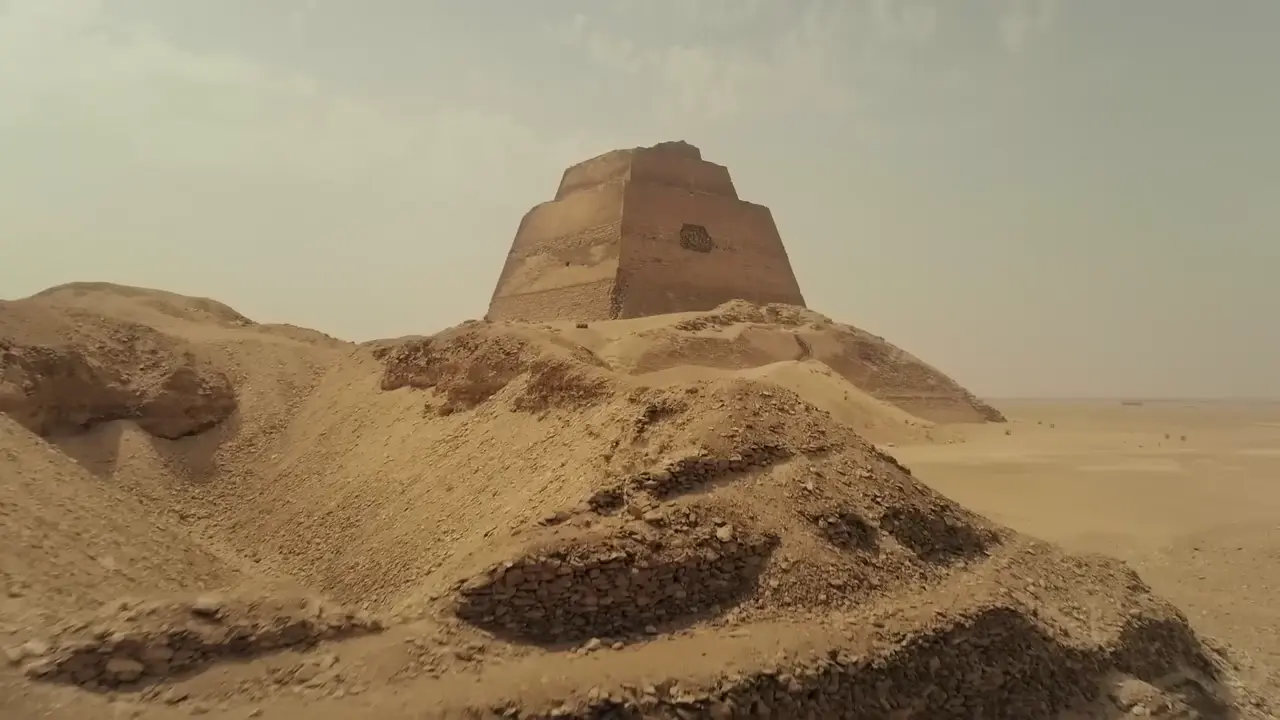
Key facts
- Mastaba 17 at Meidum had a burial complex cut into bedrock beneath a mud-brick superstructure.
- Flinders Petrie excavated it in 1910, reaching the complex by digging a shaft roughly 48 ft deep through the middle and tunnelling into it.
- Two blocked passages and doorways were found, but they did not provide Petrie with usable access to the burial complex.
- The rounded door-jamb corners are an observed feature, but their purpose has not been established.
- Calling the passages and plugs nonfunctional 'dummy architecture' is the video presenter's interpretation, not an established archaeological conclusion.
Sources
Meydum, Mastaba 17ucl.ac.uk
Mastaba 17 at Meidum A Layman's guide - ResearchGateresearchgate.net
Symbolic shape and constructional problemsresolve.cambridge.org
Saqqaraen.wikipedia.org
The Mysteries of Meidum & Mastaba 17sailingstonetravel.com
Was this story useful?
Keep exploring
Every site on this page sits on the globe, and the people who research them are on the Discord.
3D Globe · Sites by country · Story Archive · Research Library · Weekly Journal · Search
AI-generated text · images from the original sources · always verify with the sources.