

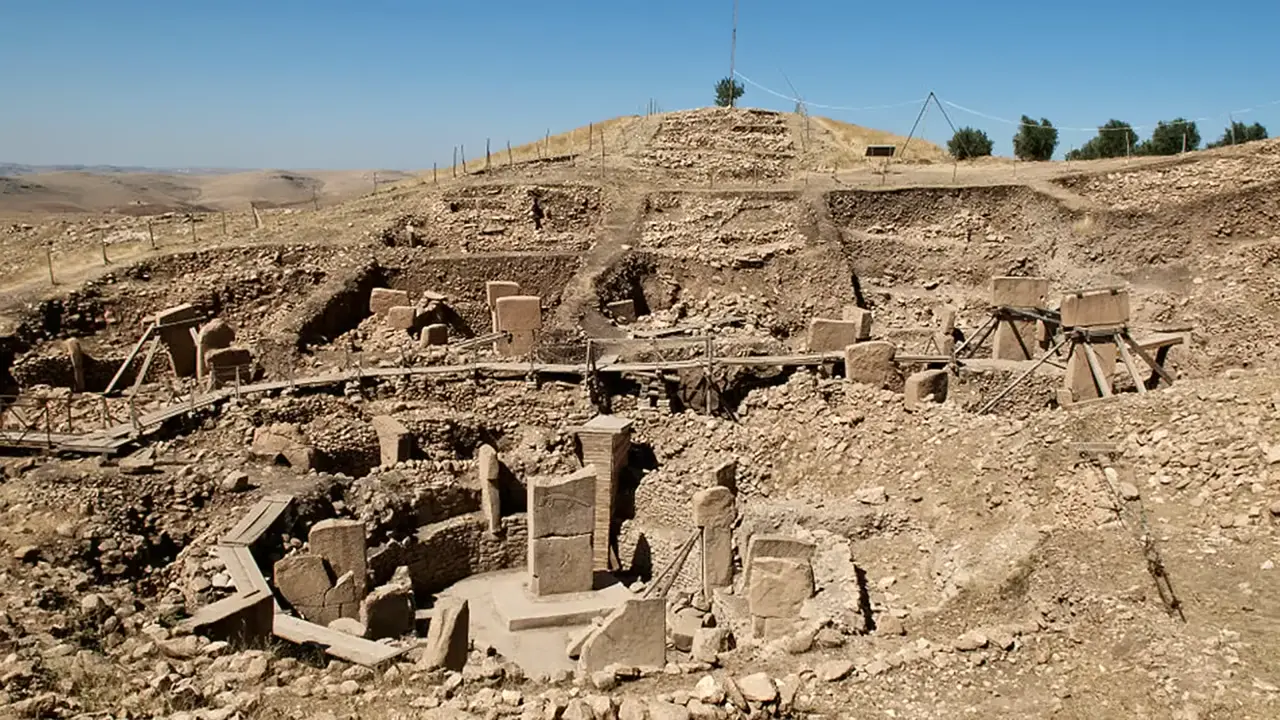
Was Göbekli Tepe deliberately backfilled? The site's 11,600-year-old date belongs to its earliest construction around 9600 BCE, not its burial. Excavation evidence indicates that people deliberately backfilled the monumental area around 8200–8000 BCE, although the sequence and the later role of erosion remain debated. The video argues that landslides could not account for the burial because too little soil was available and that some rough walls were added during backfilling; those are the presenter's claims. Its figures of 128 fully buried and 72 excavated pillars are not established totals. Göbekli Tepe covers about 22 hectares (54 acres) in southeastern Turkey and remains largely unexcavated. 🏛️
Evidence points to human backfilling at Göbekli Tepe; the details remain debated
 TürkiyeTheory
Key facts
- The approximately 11,600-year date refers to Göbekli Tepe's earliest construction around 9600 BCE, particularly Pillar 43—not to the site's burial.
- Archaeological evidence indicates deliberate human backfilling around 8200–8000 BCE, likely in stages. Erosion and landslides may have modified the mound afterward, but natural burial over centuries is not the archaeological consensus.
- The site covers about 22 hectares (54 acres), not 22 acres.
- Commonly cited excavation summaries say only about 5% of the site has been excavated. The video's figures of 128 fully buried pillars and 72 excavated pillars are estimates, not established totals.
- The video argues that there was too little soil on the hilltop and that some rough walls were later burial structures. These are the presenter's interpretations, not established facts.
Sources
Göbekli Tepe: The Mysterious Site Older Than Stonehenge | HISTORYhistory.com
Beginning excavations a year later, researchers discovered that hunter-gatherers were responsible for the site, since no domesticated plants or ...
Göbekli Tepe - Wikipediaen.wikipedia.org
Göbekli Tepe is a Neolithic archaeological site in Upper Mesopotamia (al-Jazira) in modern-day Turkey. The settlement was inhabited from around 9500 BCE to ...
FAQ – Tepe Telegramsdainst.blog
So far it was believed that the different special buildings at Göbekli Tepe were intentionally filled (or buried). Latest findings and results proved that ...
Modified human crania from Göbekli Tepe provide ...science.org
by J Gresky · 2017 · Cited by 158 — Fragments of three human skulls have been recovered, all of which carry intentional deep incisions along their sagittal axes. In one of these ...
Why Was Göbeklitepe Buried? The Backfilling Debategobeklitepe.co.uk
The deliberate-burial hypothesis remains part of the site's intellectual history and is not impossible; some deposits may yet reflect intentional human action.
Why Was Göbekli Tepe Buried? Evidence and Leading Theoriesgobekli-tepe.com
Göbekli Tepe was deliberately buried by its builders. Explore four theories: ritual closure, cosmological ending, social change, ...
Who Built Gobekli Tepe and Why Did They Bury It?allthathistory.substack.com
Then, around 8000 BCE, they deliberately buried the entire site under thousands of tons of fill. Both parts of that story are deeply strange.
Was this story useful?
Keep exploring
Every site on this page sits on the globe, and the people who research them are on the Discord.
3D Globe · Sites by country · Story Archive · Research Library · Weekly Journal · Search
AI-generated text · images from the original sources · always verify with the sources.