

Ear stelae were written prayers deposited at holy sites so a god's ear would literally "hear" the petition — and the Great Sphinx of Giza was a major pilgrimage destination. Egyptologist Selim Hassan excavated many examples in the 1930s around the Sphinx Temple of Amenhotep II. Most read "made by" plus a name. 🦅 Sphinxes, pyramid enclosures and this cult of Horemakhet ('Horus in the horizon') mattered to everyone from the 18th Dynasty on.
Ear stelae for Horemakhet found in and around the Great Sphinx of Giza
 EgyptArtifact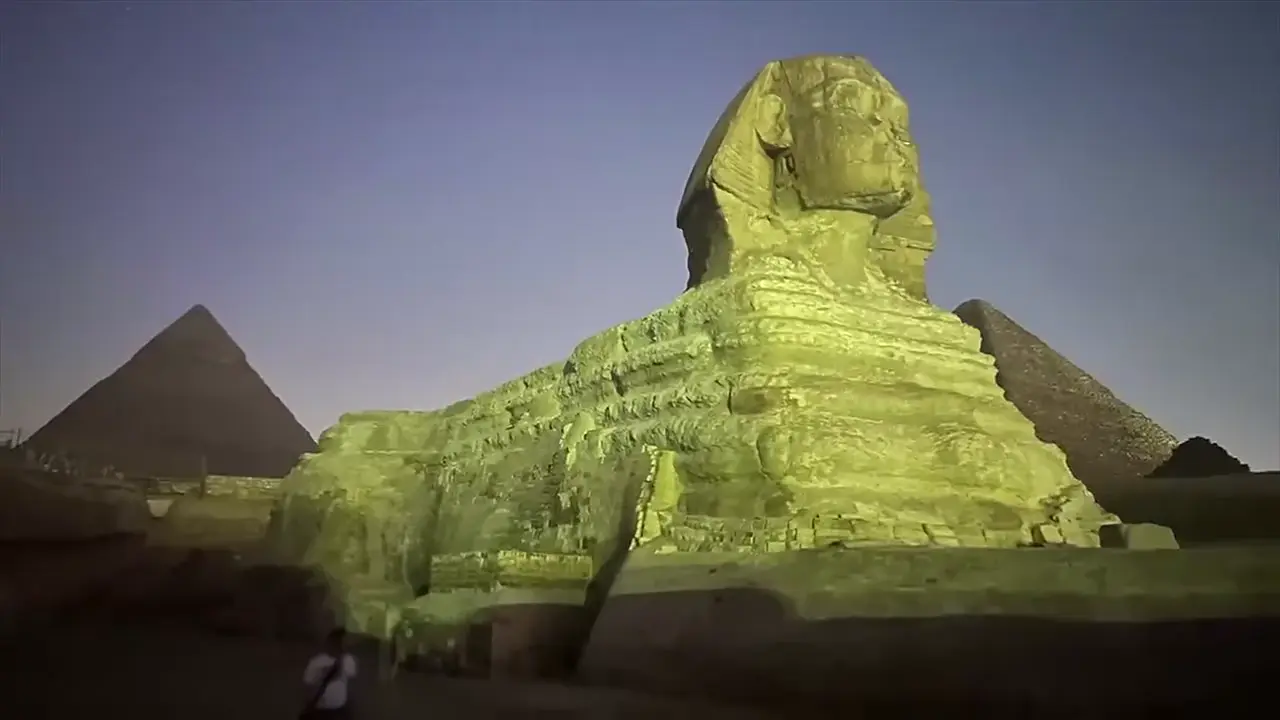
Site mentioned
Key facts
- Ear stelae (ear tablets) were left in temples and holy sites as a written prayer to a god's ear, so the deity would 'hear' the petition; they were widely deposited at pilgrimage destinations such as the Great Sphinx of Giza.
- Egyptologist Selim Hassan excavated numerous examples in the 1930s in and around the New Kingdom Sphinx Temple of Amenhotep II and on the Sphinx monument itself.
- Nearly all ear stelae carry the formula 'made by' followed by a name, which the video assumes identifies the person who uttered the prayer rather than the maker of the tablet.
- Egyptologist Wilhelm Spiegelberg proposed that multi-ear tablets relate to an obscure god said to have 77 ears and 77 eyes; the video notes a possible parallel in a text about the god Kenum at Esna describing him as 'conceived yesterday and born today, who has 77 eyes and 77 ears'.
- Proposed (unproven) functions for multi-ear tablets include one petition per ear, a backup copy in case some ears were damaged, and use by a whole family or community each speaking a prayer into an ear.
- From the 18th Dynasty onwards the Sphinx enclosure, known as Horemakhet ('Horus in the horizon'), was important to royalty and common people alike; royal visits were frequent.
- The video credits Thutmose IV with renovating the monument, Amenhotep II with a new Sphinx temple and Thutmose III with a royal rest house beside it.
- Ramesses II erected two stelae between the paws; a Dream Stele also stood in the area, and an inner sanctuary with an altar was later constructed.
- Every king from the 18th Dynasty onward was portrayed in sphinx form in statues and art, including Akhenaten.
- One tablet shows two low-relief ears with Horemakhet as a hawk between them, inscribed 'made by Huy'; it was found in a debris pile north of the temple of Amenhotep II.
- A single high-relief giant-ear tablet inscribed 'made by Mayor', with a small god figure on a pedestal, may be the largest ear stela known from Egypt.
- Mayor was overseer of works for Ramesses the Great and quarried the Khafre pyramid, its enclosure and mortuary temple to supply stone for the sun temple of Heliopolis; cliff inscriptions north and west of the Second Pyramid name him as 'director of the works of the house of Ra, Mayor'.
- Mayor also dedicated a fragmentary stela to the Sphinx and an ear tablet; the video argues he may have been seeking forgiveness for the quarrying and asking Horemakhet/Ra-Horakhty to look upon the Heliopolis temple built in his name.
- Other examples include a broken tablet with a large ear and two beak-to-beak hawks wearing the double crown, which Selim Hassan suggested may be divine hawks repeating prayers or the twin souls of Osiris and Ra, and a 31-ear tablet inscribed 'made by the clever scribe Myrr' found north of the Sphinx.
Sources
henadology.wordpress.com
Linked in video description
ear stela - Egypt at the Manchester Museumegyptmanchester.wordpress.com
The ears enabled the deity to hear people's petitions or prayers. Some stelae have dozens of ears carved on them – presumably to aid their ...
stelabritishmuseum.org
Limestone stela of Mahuia: a small, round-topped stela originally incised on its face with forty-four ears divided into six rows on each side of the stela,
Great Sphinx of Gizaen.wikipedia.org
Many New Kingdom stelae depict the Sphinx wearing a crown. If it in fact existed, the hole could have been the anchoring point for it.
Votive Ear Stele of Usersatetegypt-museum.com
The ear stele was dedicated to the goddess Nebethetepet in the hope that the deity would hear and answer to the requests of the dedicator.
Limestone ear stela - Digital Gizagiza.fas.harvard.edu
Limestone stela with ear. Architectural elements-Freestanding stelae and obelisks. Material Limestone Dimensions H 7.4 cm. Great Sphinx Great Sphinx ...
Was this story useful?
Keep exploring
Every site on this page sits on the globe, and the people who research them are on the Discord.
3D Globe · Sites by country · Story Archive · Research Library · Weekly Journal · Search
AI-generated text · images from the original sources · always verify with the sources.