

Building L on Monte Alban's main plaza features around 300 carved stone slabs dating to 500-200 BCE, depicting figures with genital mutilation, believed to be tortured war captives. Associated glyphs likely represent names or speech. The ancient name is lost, though modern Zapotecs call it Daniban ('sacred mountain') and possibly Sahandeehui ('at the foot of heaven').
Danzantes of Building L: carved stone slabs depicting defeated enemies
 MexicoGeneral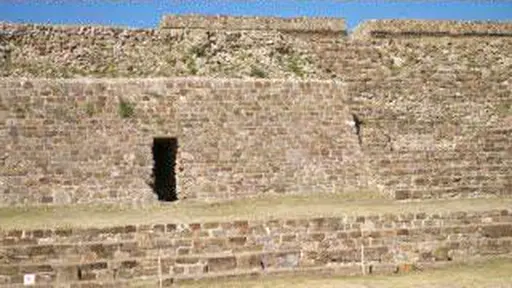
Key facts
- Building L is located on the main plaza's western side
- Approximately 300 carved stone slabs date to between 500 and 200 BCE
- The figures show evidence of genital mutilation and are believed to be tortured war captives or sacrificed prisoners
- Glyphs associated with the figures likely represent names or speak (uttering glyphs)
- The display legitimized Monte Alban's political authority and intimidated rivals
- The ancient Zapotec name for Monte Alban is lost; modern Zapotec speakers call it Daniban ('sacred mountain' or 'hill of the jaguar')
- Possible ancient name 'Sahandeehui' means 'at the foot of heaven'
- The main plaza covers 60,000 square meters, leveled from a mountaintop
- The north platform contains four small temples arranged around a central patio with colonnaded galleries
- Stela 18, the tallest monument, functioned as an astronomical instrument marking midday and solstices
Site mentioned
Sources
lugares.inah.gob.mx
Linked in video description
lugares.inah.gob.mx
Linked in video description
lugares.inah.gob.mx
Linked in video description
Was this story useful?
Keep exploring
Every site on this page sits on the globe, and the people who research them are on the Discord.
3D Globe · Sites by country · Story Archive · Research Library · Weekly Journal · Search
AI-generated text · images from the original sources · always verify with the sources.