

Cyclopean masonry is a Bronze Age technique for building mortarless walls from massive stone blocks roughly fitted together. The video argues that iron tools made close three-dimensional fitting less necessary and helped bring the practice to an end. Iron Age examples survive, so the change was not universal, and Roman concrete, mortar and squared ashlar construction did not follow as one immediate switch.
Cyclopean masonry: Bronze Age technique of massive, roughly fitted stone
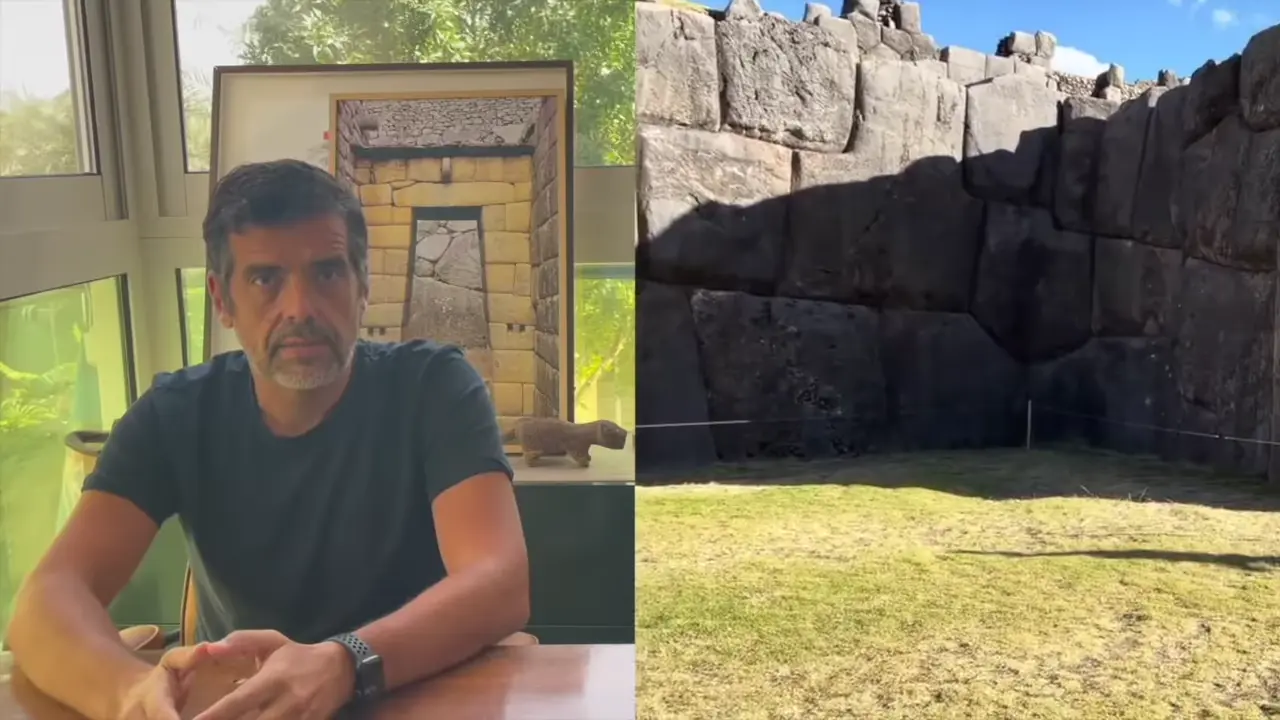
Key facts
- Cyclopean masonry is mortarless construction using massive stone blocks roughly fitted together; well-known examples date to the Bronze Age in Greece and Italy.
- Its principal examples predate widespread iron tools. Iron tools made cutting easier; the video argues that this removed the need for close three-dimensional fitting, but that causal claim is not an established universal rule.
- Cyclopean construction required planning, skilled labour and careful fitting; major examples survive at Mycenae and Tiryns.
- Block size, fit, slope, depth and faceting are construction variables, but the cited results do not support the claims that Pyrgi has the largest blocks or that Amelia has the most faceted stones.
- Stone choice depended on local geology. Etruscans used volcanic tufa and other stones; the claim that soft tufa alone caused most Etruscan structures to disappear is unsupported.
- The technique did not simply vanish in the Bronze Age; Iron Age cyclopean examples continued, including in Sardinia.
- Romans used concrete, mortar and squared ashlar, but there was no single universal Roman switch that immediately replaced cyclopean masonry.
Sources
analecta praehistorica leidensiasidestone.com
The approximate age of 300 to 400 ka makes the collagen samples among the oldest ever analyzed. In order to compare the results from Schöningen ...
The Stone age and The Iron age (highlights)prezi.com
2.6 Million years ago The Stone Age began about 2.6 million years ago, when researchers found the earliest evidence of humans using stone tools, ...
THE CITY OF THE SAINTSiapsop.com
I need hardly say that this elaborate account of the Holy City of the West and its denizens would not have seen the light so soon after the appearance of a " ...
Metabarons: Universe Guidei.4pcdn.org
Slowly, step by little step, I was going to give them the keys to the Incal Universe, which is the same as the Metabarons and TechnoPriests. A hugely immense “ ...
&w Yorh.nyc.gov
cutting drains ; they would vary the plan of drain- age, while the last is necessary so that no lake need be formed which at any time would become dry or.
THE CYCLOPEAN WALL ON THE ISTHM1JS ...ascsa.edu.gr
The total width of the wall varies between 3.75 and 4.00 m. From the surface soil came a mixed lot of pottery, mostly Roman, a few classical Greek, and 14 ...
Cyclopean Wallslivius.org
Cyclopean Walls: name for a kind of mortarless Bronze Age wall built with massive boulders. ancient Mycenae and Tiryns by the Greek author ...
Cyclopean masonryen.wikipedia.org
Cyclopean masonry is a type of stonework found in Mycenaean architecture, built with massive limestone boulders, roughly fitted together with minimal clearance
Was this story useful?
Keep exploring
Every site on this page sits on the globe, and the people who research them are on the Discord.
3D Globe · Sites by country · Story Archive · Research Library · Weekly Journal · Search
AI-generated text · images from the original sources · always verify with the sources.