

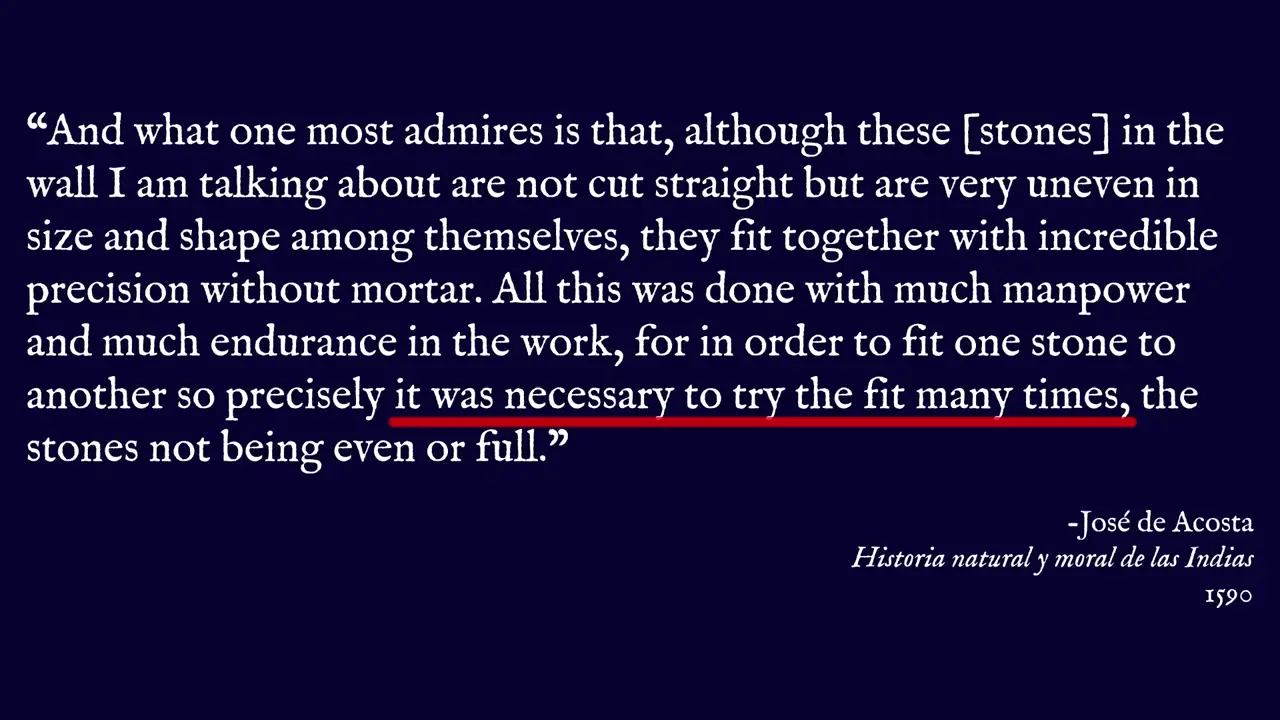
Masons shaped stones by hammering grooves into rock faces, using progressively smaller hammerstones for precision. They worked through trial and error—Acosta noted the fitting process required many attempts to achieve tight joins.
Stones fitted through trial and error using hammerstones
Key facts
- Masons hammered wide shallow troughs into rock faces then smoothed surface
- Larger hammerstones used on faces, smaller ones on edges for final fitting
- José de Acosta recorded stones fitted through many trials to achieve precision
- JP Protzen replicated fitting using only hammerstones, achieved tight bond
- Dust from cutting indicated contact areas needing more smoothing
- Wedge stones filled gaps when two work crews met in middle of wall
- Bosses (protuberances) used to leverage blocks for fitting, then removed when complete
- Only face of walls finely fitted, interior often filled with earth or rubble
Sources
docs.google.com
Linked in video description
Was this story useful?
Keep exploring
Every site on this page sits on the globe, and the people who research them are on the Discord.
3D Globe · Sites by country · Story Archive · Research Library · Weekly Journal · Search
AI-generated text · images from the original sources · always verify with the sources.