

Critics note the proposed ramps may never be testable since in the model the temporary materials used to smooth the ramp were removed as filling advanced. The model assumes 2.3 million limestone blocks while ignoring evidence of complex internal structures in other pyramids. Step-core observations at Meidum, Giza Queen's pyramids, and Meidum pyramid contradict the homogeneous assumption. Transporting all granite from Aswan before pyramid construction began seems unrealistic given Old Kingdom life expectancy. Course 206, a massive limestone course weighing over 10 tons positioned 456 feet above the base, remains unexplained.
Critiques: Ramps unverified, model oversimplifies pyramid structure
 EgyptTheory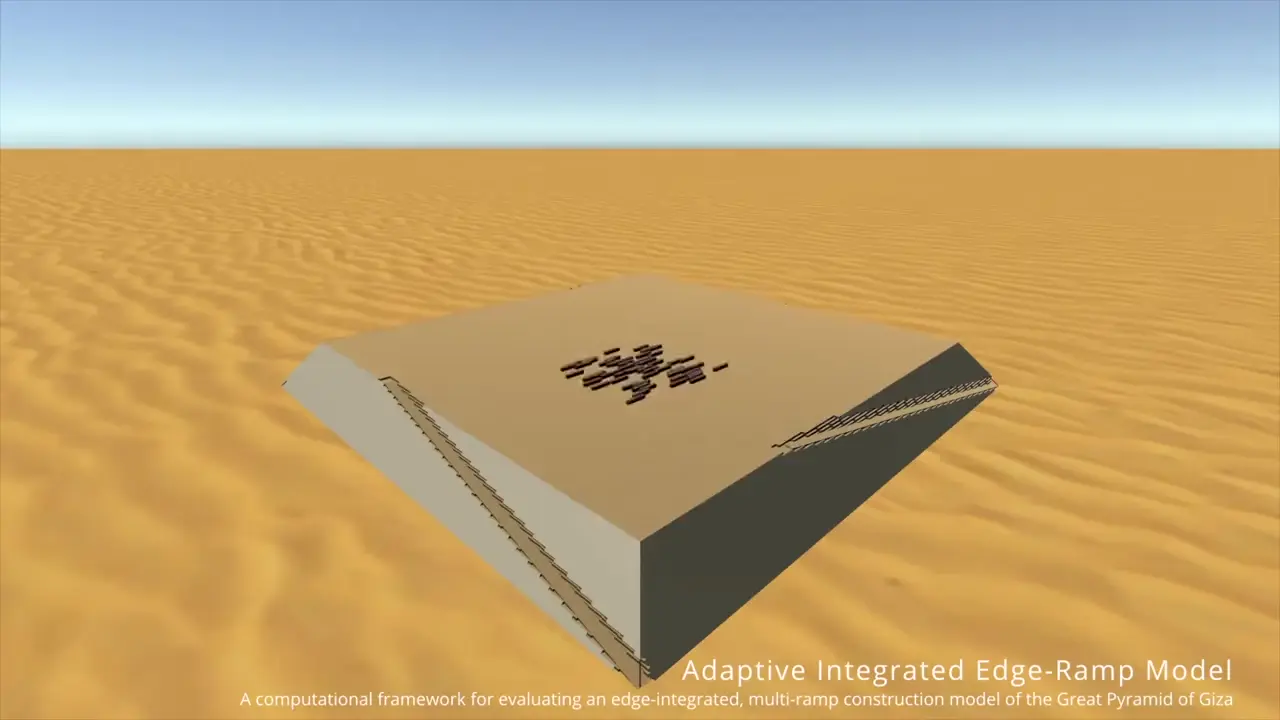
Site mentioned
Key facts
- The proposed ramps may never be testable because in the model they were back-filled with limestone
- The model assumes the Great Pyramid has 2.3 million limestone blocks, ignoring evidence of complex internal structures in other pyramids
- Step-core observations at Meidum, Giza Queen's pyramids, and Meidum pyramid contradict the homogeneous assumption
- Transporting all granite from Aswan before pyramid construction began seems unrealistic given Old Kingdom life expectancy
- Course 206, a course of limestone thicker than expected weighing over 10 tons positioned 456 feet above the base, remains unexplained by the model
- The natural mound of limestone bedrock hidden in the pyramid was not factored into the model
Sources
nature.com
Linked in video description
Was this story useful?
Keep exploring
Every site on this page sits on the globe, and the people who research them are on the Discord.
3D Globe · Sites by country · Story Archive · Research Library · Weekly Journal · Search
AI-generated text · images from the original sources · always verify with the sources.