

Burrs Hill in Rhode Island was a major burial site with 600+ artifacts including Chinese iron tripod vessels, gold lances, copper beads, and red jackets with solid gold buttons. The site was looted when used for railroad gravel in 1853. In 1913, Charles Kerr exhumed 42 remaining graves, donating items to Brown University and New York's Hay Museum. Originally 24 tripod vessels were found, but most vanished into private collections. The Narragansett tribe successfully petitioned for repatriation, and artifacts were reinterred in a concrete vault in 2017 under NAGPRA provisions.
Burrs Hill burial ground artifacts reinterred in concrete vault in 2017
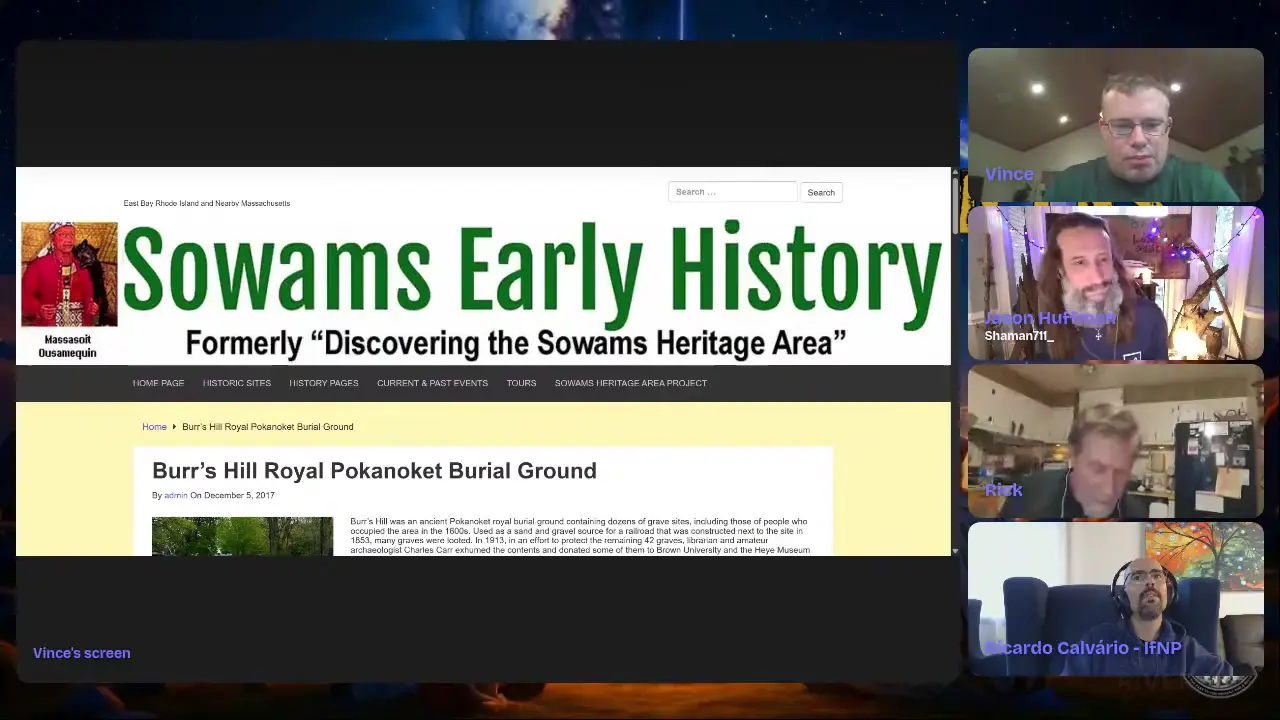
Site mentioned
📍 Burrs Hill Royal Burial Ground
Key facts
- Burrs Hill Royal Burial Ground in Rhode Island contained over 600 artifacts including Chinese tripod vessels made of iron, copper, and cast iron
- Artifacts included copper beads, gold lances, golden scrolls, red jackets with solid gold buttons embroidered with gold thread
- The site was used as a sand and gravel source for a railroad constructed in 1853, leading to looting
- In 1913, librarian and amateur archaeologist Charles Kerr exhumed contents from 42 remaining graves, donating items to Brown University and the Hay Museum of the American Indian in New York City
- Over 24 tripod vessels were originally found, but only three remain today as others disappeared into private collections
- The Narragansett tribe petitioned to have the items returned, and they were reinterred in a concrete vault in 2017 under NAGPRA provisions
Sources
MARC view: Burr's Hill, a 17th century Wampanoag burial ...catalog.hathitrust.org
‡aBurr's Hill, a 17th century Wampanoag burial ground in Warren, Rhode Island / ‡cedited by Susan G. Gibson. 260, ⊔, ⊔, ‡a[Providence, R.I.] ...
9Hugh Cole Well, Warren 10 Burr's Hill Burial ... - Dr. Weeddrweed.net
artifacts and reburied them at the site in Burr's Hill. Park in May, 2017. 4 Little Neck Cemetery, East Providence. Little Neck Cemetery lies at the north end ...
Burr's Hill, a 17th Century Wampanoag Burial Ground in ...books.google.com
A 17th century Wampanoag burial ground in Warren, Rhode Island. Front Cover. Susan G. Gibson Haffenreffer. Museum of Anthropology, Brown University, 1980.
Burr's Hillhmdb.org
Burr's Hill. Royal Pokanoket Burial Site. , The Sowams Heritage Area includes Barrington, Bristol, East Providence, Providence, and Warren RI, and Rehoboth, ...
Glocester's mysterious Indian grave - Stone Wingsstonewings.wordpress.com
The biggest mystery about this simple stone structure is why it was called an Indian burial in a Rhode Island hiking book. I have asked half ...
Was this story useful?
Keep exploring
Every site on this page sits on the globe, and the people who research them are on the Discord.
3D Globe · Sites by country · Story Archive · Research Library · Weekly Journal · Search
AI-generated text · images from the original sources · always verify with the sources.