

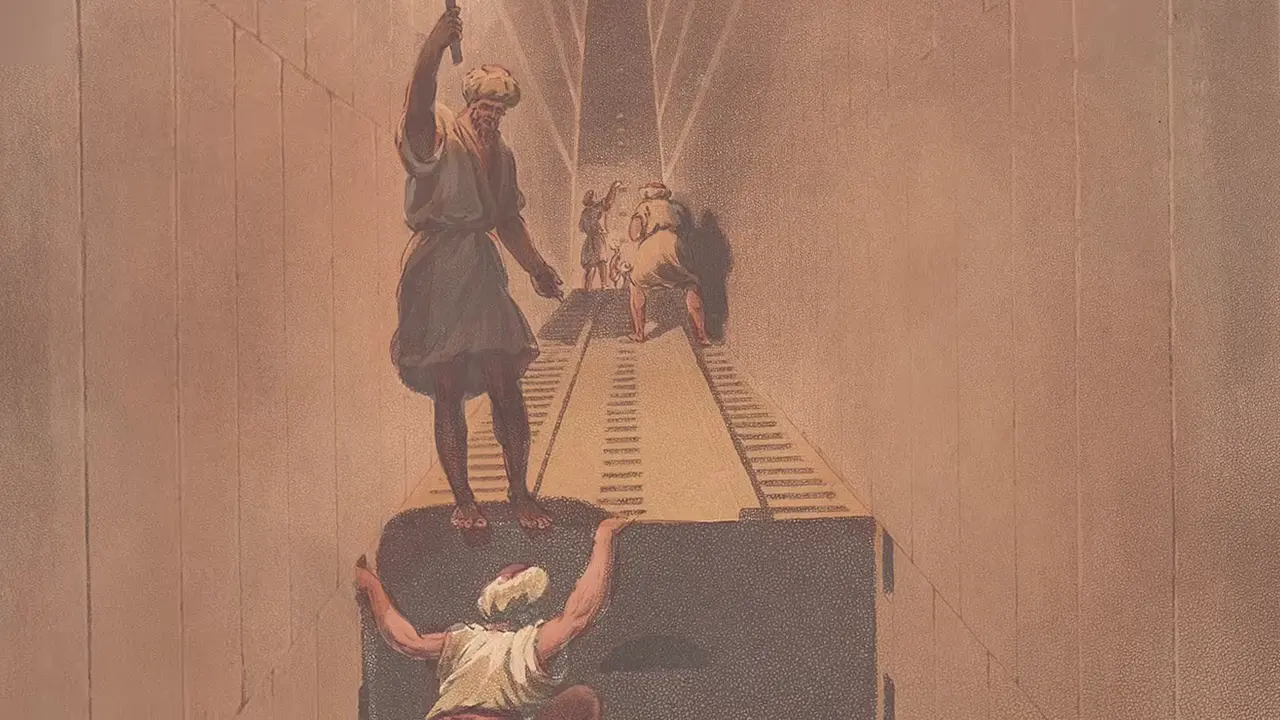
Early visitors to the Egyptian pyramids faced real dangers. Gabrielle Bremon noted water-filled hollows in 1643, Antoine Morison squeezed through sand-choked passages in 1698, and Jeeano in 1657 documented armed bandits on horseback waiting to rob exiting visitors. Even Edward Lane in 1825 still needed armed guards. These accounts show just how risky pyramid exploration was for centuries. 🏛️
Banditry and hazards faced by early pyramid explorers in Egypt
Key facts
- Gabrielle Bremon in 1643 described water-filled hollows and shifting sands near the pyramids
- Pietro della Valle in 1615 was the earliest recorded visitor to the Red Pyramid at Dahshur
- Locals intentionally filled pyramid passages with sand, either to extort payment for clearing or to occupy visitors so bandits could ambush them
- Antoine Morison in 1698 described squeezing through sand-filled passages in the Great Pyramid
- Jeeano in 1657 documented six armed Arabs on horseback waiting to rob visitors as they exited a pyramid
- Janisaries (Ottoman armed fixers) were almost essential for protection but were prone to mischief
- Karsten Niebuhr brought an astrolabe to Giza in 1761 to survey the Great Pyramid
- Edward Lane visited Giza in 1825 and still required armed guards due to bandit threat
Sources
DELLA VALLE, PIETROiranicaonline.org
Pietro Della Valle's Travel to Istanbul (1614–1615)researchgate.net
Pietro Della Valleen.wikipedia.org
The Strange Travels Of Pietro Della Valleqcurtius.com
Pietro della Valle - Jim O'Donnellaroundtheworldineightyyears.com
Autore:Gabrielle Bremont - Wikisourceit.wikisource.org
Banditry and hazards faced by early pyramid explorers in ...ancientnerds.com
Was this story useful?
Keep exploring
Every site on this page sits on the globe, and the people who research them are on the Discord.
3D Globe · Sites by country · Story Archive · Research Library · Weekly Journal · Search
AI-generated text · images from the original sources · always verify with the sources.