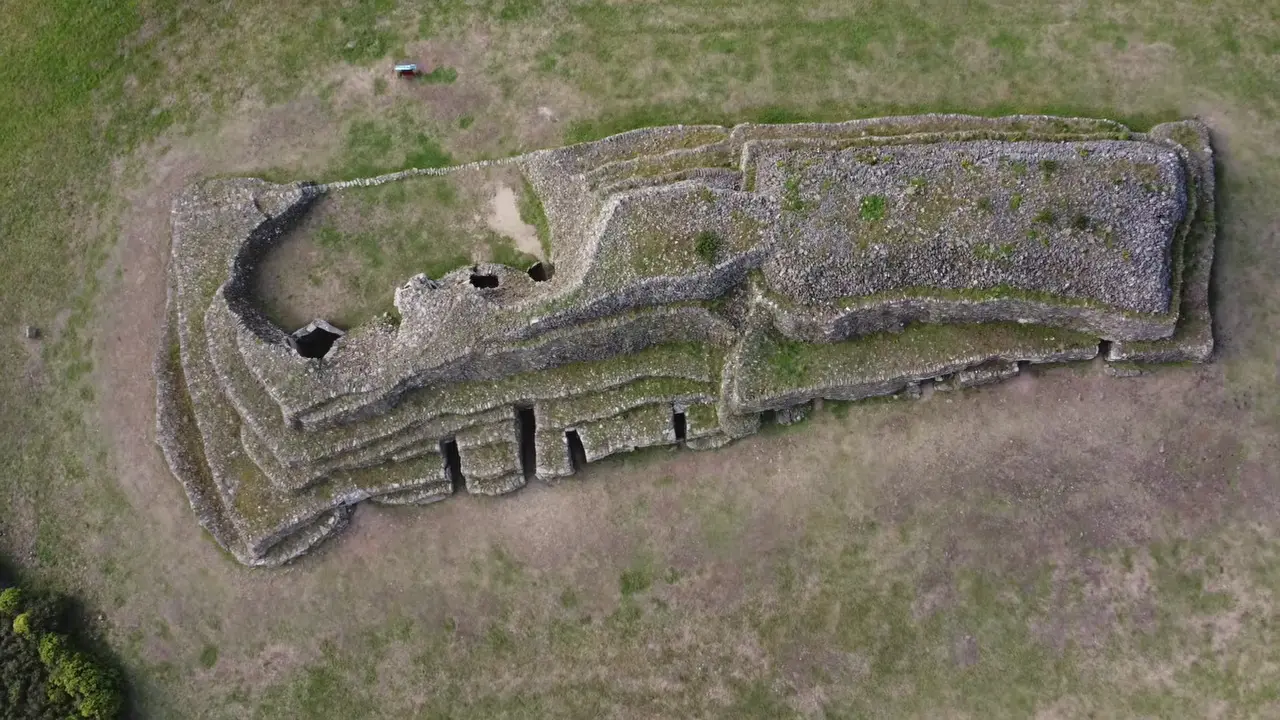
Barnenez isn't just one tomb—it's 11 passage graves (labeled A-J plus G1) grouped under one massive cairn! Chambers A-C and H use large megalithic stones, while others employ cobbled dry stone walling. The eastern end predates the western, suggesting sequential construction over time. The sophisticated Neolithic engineering here is incredible ⚒️
Key facts:
- Barnenez is called a passage tomb but actually comprises 11 passage tombs grouped under one cairn
- Chambers A, B, C, and H are more megalithic in style, while others use cobbled dry stone walling
- Tomb B is particularly megalithic and would have initially looked like a dolmen
- The DRY STONE wall built tombs are actually the OLDEST, built around 4,850-4,450 BC—newer tombs used megalithic orthostats instead
- Some tombs combine both orthostats and dry stone walling
Sources
Brittany's Cairn of Barnenez - A Neolithic Wonder | Transceltictransceltic.comThe structure was once covered in earth and stands at 8m (26ft) high. Cairn of Barnenez. There are two burial chambers and 11 passage tombs.
France: Great Cairn de Barnenez | Little Lilly Meets the Worldlittlelilly0302.wordpress.comThis massive stone cairn was built in phases. The overall structure covers 11 passages leading to what is believed to be funeral chambers.
Megalithic art | Cairn of Barnenezbarnenez.frThe Barnenez cairn contains architectural features that have been preserved for more than six millennia, such as its famous corbelled vaults.
Barnenez cairn in Finistère: guide and history - Slow Villageslow-village.comThe large cairn of Barnenez is a remarkable megalithic site located in Plouézoc'h, on the Kernéléhen peninsula. A funerary monument erected in ...
Barnenez - Wikipediaen.wikipedia.orgThe Cairn of Barnenez is a Neolithic monument located near Plouezoc'h, on the Kernéléhen peninsula in northern Finistère, Brittany, France. It dates to the ...
AI-generated text · images from the original sources · always verify with the sources.