

The Baalbek Trilithon stones weigh 900 tons each — that's 36 times heavier than Stonehenge and 10 times heavier than the largest Giza pyramid blocks. 19 meters long, 4.2 meters high, raised 9 meters on 400-ton blocks with joints so tight not even paper fits. Roman cranes could only lift 60 tons, and there's no Roman documentation. Some researchers suggest the trilithon foundation may predate the Romans by thousands of years based on erosion patterns. Ancient mystery indeed!
Baalbek Trilithon Stones: 900-Ton Megaliths Transport Mystery
 LebanonArchitecture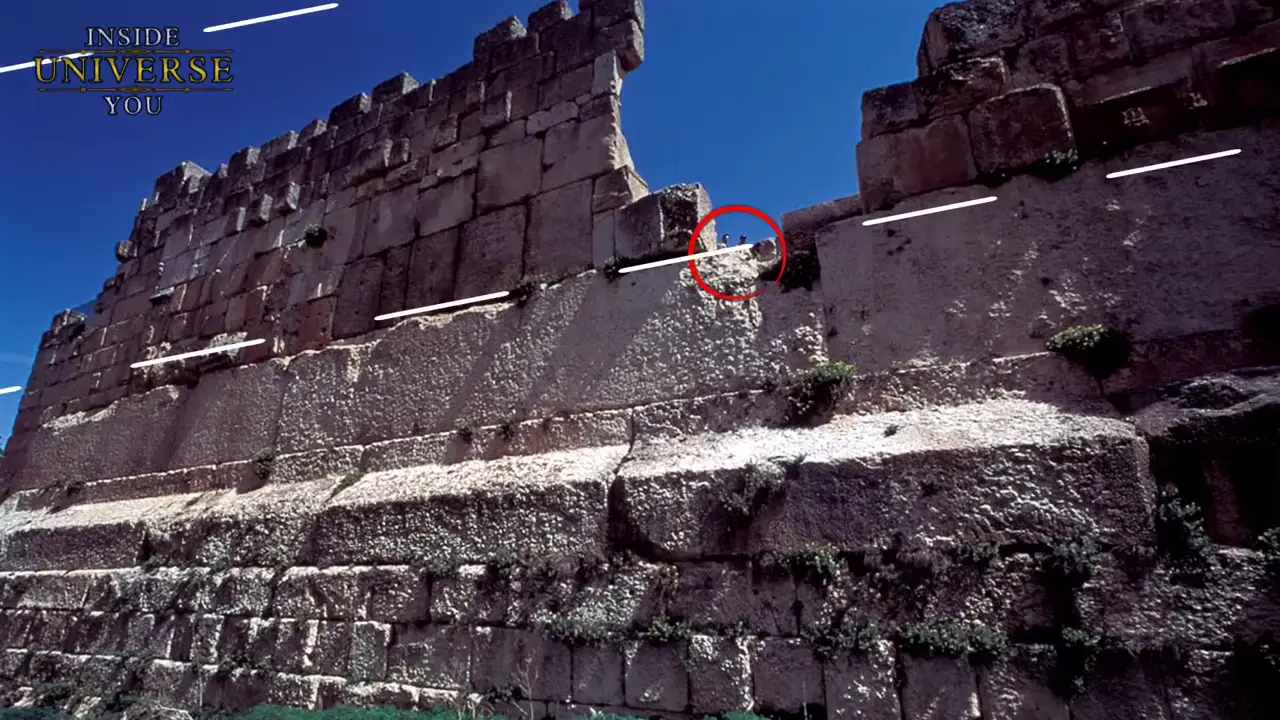
Key facts
- Each trilithon stone measures 19m (62 ft) in length, 4.2m (14 ft) in height, and 3.6m (12 ft) in thickness
- Each stone weighs approximately 900 metric tons
- The stones weigh 36 times more than the stones used to build Stonehenge
- They are about 10 times heavier than the largest stones used in the Great Pyramid of Giza
- The stones were transported from a quarry located more than half a mile away
- They were raised to a height of 9m (30 ft) and placed on top of smaller 400-ton blocks
- The joints between stones are so narrow that not even a piece of paper can fit between them
- The trilithons were buried deep within the foundation and not meant to be visible
- There is no surviving Roman documentation explaining how these stones were moved or lifted
- Roman cranes were capable of lifting only around 60 metric tons
- The trilithon stones do not contain any Lewis holes for crane lifting
- The stones show signs of wind and sand erosion not visible in the Roman masonry above
- Some researchers suggest the trilithon foundation may predate the Romans by thousands of years
Site mentioned
Sources
The Largest Stones Ever Quarried - Select Stoneselectstone.com
They include three 900-ton limestone blocks – the famous Trilithon of Baalbek ... Why are the Trilithon stones now virtually hidden beneath ...
More from Baalbek: ancient stone construction hi-tech. | Nota Beneeugene.kaspersky.com
These mammoths are called the trilithon of Baalbek. Three colossuses weighing… 800 TONS EACH!!! Again: hard to imagine what that looks like ...
Baalbek Stonesen.wikipedia.org
1,650 t). These are the first, third, and tied fifth largest known stones ever quarried in human history. They are believed to have been intended for the nearby ...
Baalbek trilithon - Watersmithswatersmiths.com
Three stones were moved onto a stone podium, and these limestones measured about 4m x 4m x 20m, and each weighed 800 tons.
The Largest Stone In The World | The Velvet Rocketthevelvetrocket.com
This is an abandoned Roman quarry (which I thought was interesting by itself) found within the Lebanese city of Baalbek: roman quarry.
Was this story useful?
Keep exploring
Every site on this page sits on the globe, and the people who research them are on the Discord.
3D Globe · Sites by country · Story Archive · Research Library · Weekly Journal · Search
AI-generated text · images from the original sources · always verify with the sources.