

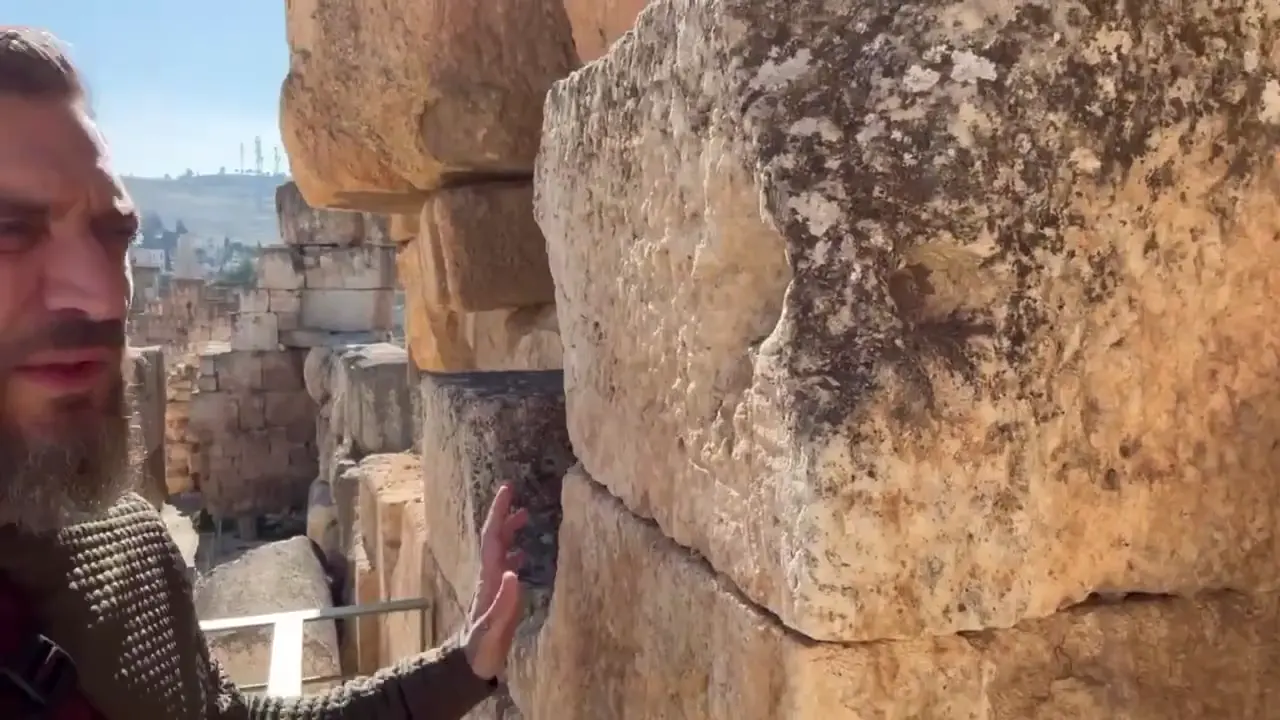
Certain Baalbek stones, including the Stone of the Pregnant Woman in the quarry, have round holes. Cut and drill marks have also been documented on some surfaces. Evidence that the holes are pinch-lifting holes is limited to specific stones, and their purpose remains debated. The video says these are the first such holes the presenter has found at Baalbek, compares them with examples on other continents, and argues that they were used to move and place massive stones.
Baalbek stones: cut marks and disputed lifting holes
 LebanonArchitecture
Site mentioned
Key facts
- Round holes occur on specific Baalbek stones, including the Stone of the Pregnant Woman in the quarry.
- Cut and drill marks have been documented on some surfaces.
- Evidence that the holes are pinch-lifting holes is limited, and their exact purpose remains debated.
- The presenter says these are the first pinch holes he has found at Baalbek.
- The video compares the holes with examples on other continents and argues that they were used to move and place massive stones.
Sources
Baalbek, Lebanon's Sacred Fortress - Andrew Collins - authorandrewcollins.com
Admittedly, the Stone of the Pregnant Woman remaining in the quarry does contain a seemingly random series of round holes in its upper surface, yet their ...
Moving the Stones of Baalbek–The Wonders of Roman Engineeringgilgamesh42.wordpress.com
The hole is placed over the center of gravity of the object, so this cannot be what was used at many of the Baalbek stones which have holes ...
Baalbek Stonesen.wikipedia.org
The Baalbek Stones are six massive Roman worked stone blocks in Baalbek (ancient Heliopolis), Lebanon, characterized by a megalithic giant unparalleled in ...
Lifting and Transportation of Monolith Stone in Baalbekacademia.edu
Research reveals the use of sophisticated lifting devices, detailed planning, and possibly a network of ramps or winches to handle the enormous stones, as ...
Baalbek Ruins, Lebanon: an extraordinary UNESCO siterachelsruminations.com
I was just blown away by the Baalbek ruins in Lebanon: a magnificent set of Roman temples and a designated UNESCO world heritage site.
The Museum Journal | Baalbekpenn.museum
How did they move these stones and lift them into position, and how did they make such joints as those that we have seen? You already know the explanation ...
More from Baalbek: ancient stone construction hi-tech.eugene.kaspersky.com
The pillars were made up out of several shorter sections – and these holes would have been filled ...
Was this story useful?
Keep exploring
Every site on this page sits on the globe, and the people who research them are on the Discord.
3D Globe · Sites by country · Story Archive · Research Library · Weekly Journal · Search
AI-generated text · images from the original sources · always verify with the sources.