

A new survey of Malta's famous cart ruts by Joel Grima of the University of Malta covers 2,628 tracks across 200+ sites using drone photography, digital mapping, satellite imagery and excavation records. Since the ruts are worn into bedrock with no organic material, they can't be radiocarbon dated — so Grima built a relative chronology instead. The balance of evidence points to a mostly classical-period network, roughly 700 BC to AD 870–880. Some tracks may predate the Phoenicians, but none is confirmed prehistoric. 🛞🏺
2026 survey: Malta's cart ruts mainly belong to the classical period
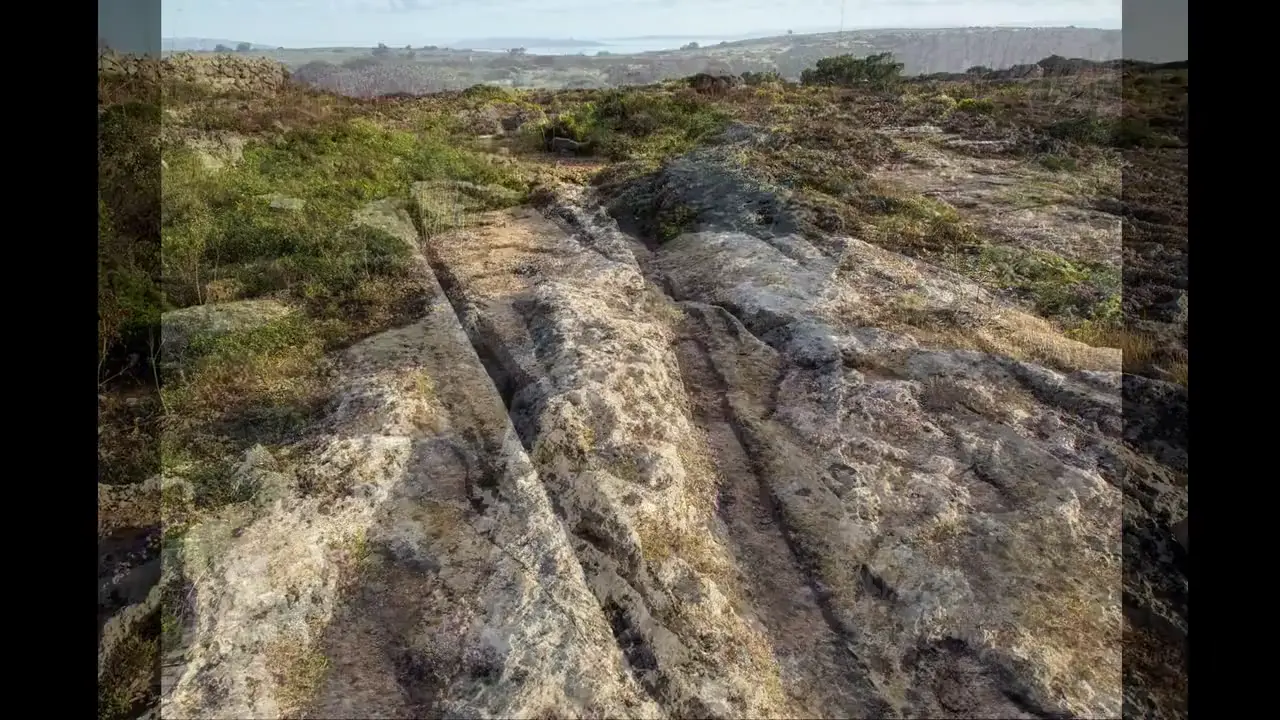
Site mentioned
📍 Cart Ruts🌍 Show on the globe
Key facts
- Joel Grima of the University of Malta led a survey of Malta's cart ruts; because the grooves worn into bedrock contain no organic material, they cannot be radiocarbon dated directly.
- The survey applied relative chronology, asking whether tracks run toward temples or Roman villas, whether quarries cut across them or are cut by them, and whether roads are laid over them.
- Data came from drone photography, digital mapping, satellite imagery and excavation records covering more than 200 sites; 2,628 tracks were surveyed.
- Grima's conclusion is that the balance of evidence indicates a predominantly classical-period transport network spanning the Phoenician and Punic eras through Roman and Byzantine times.
- Some tracks are securely Roman and contextual evidence suggests many others belong to the broader classical period, but most individual tracks still lack a secure date.
- Grima states that a prehistoric origin for some tracks cannot be excluded, while no solid evidence confirms a prehistoric date for any pair of Maltese cart ruts.
- The study defines the classical period as running from about 700 BC to AD 870–880, from the Phoenicians through the Byzantines.
Sources
Was this story useful?
Keep exploring
Every site on this page sits on the globe, and the people who research them are on the Discord.
3D Globe · Sites by country · Story Archive · Research Library · Weekly Journal · Search
AI-generated text · images from the original sources · always verify with the sources.