

Excavated in 1842-1843, Sargon II's capital Dur-Sharrukin was built around 717 BC with walls 24m thick, 7 gates, 157 towers. He died 705 BC before it was finished. His successor Sennacherib abandoned it for Nineveh, and the city was eventually abandoned and buried. 🏛️
1843 Excavation Reveals Sargon II's Abandoned Capital Dur-Sharrukin
 IraqGeneral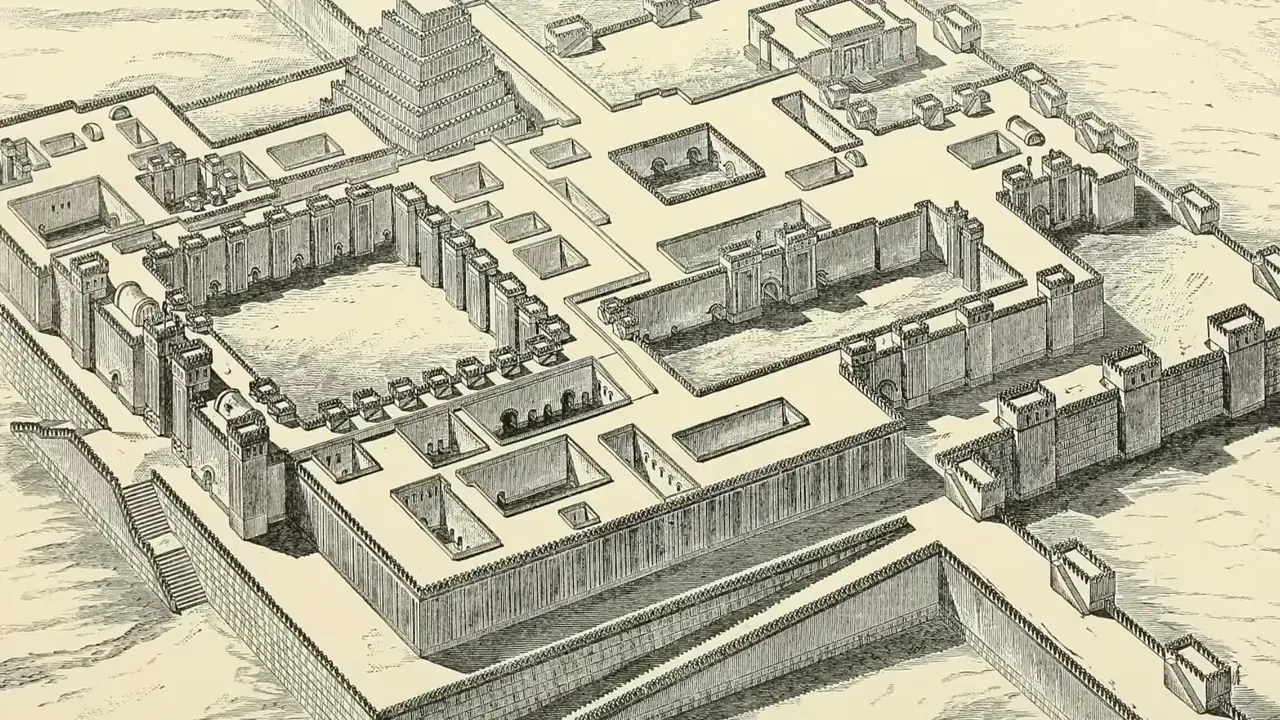
Key facts
- Construction of Dur-Sharrukin (Khorsabad) began in 717 BC under King Sargon II of Assyria
- The city was designed to be a massive capital with walls 24 meters thick, 7 gates, and 157 towers, enclosing at least 3 square km
- Sargon II died before the city was completed in 705 BC, and his successor abandoned the project, relocating the capital to Nineveh
- The city was buried by time, known to medieval Arabs as a mound
- French archaeologist Paul-Émile Botta began excavations at the site in 1843 but was forced to stop by the Ottoman government for lack of official permission
- Excavations resumed in 1844 after Botta purchased the land with financial backing
- The site was confirmed as Dur-Sharrukin (not Nineveh) when excavations at nearby Kuyunjik confirmed that location as Nineveh
- Artifacts from the excavations began being shipped to European museums, with items lost in the 1855 disaster
Site mentioned
Sources
Dur-Sharrukin - Wikipediaen.wikipedia.org
The great city was entirely built in the decade preceding 706 BC. After the unexpected death of Sargon in battle, the capital was moved 20 km south to Nineveh.
The city | Khorsabad - Ministère de la Culturearcheologie.culture.gouv.fr
Founded by Sargon II king of Assyria, the city of Khorsabad, ancient Dur-Sharrukin, extended over 300 hectares and housed a magnificent palace.
Khorsabad - Google Arts & Cultureartsandculture.google.com
The great Assyrian king Sharrou-ken (The Hebrew transcription of his name is Sargon II) founded his new capital Dûr-Sharrukin, the "fortress of Sargon ...
New Structures Discovered at Sargon II's Capital City of Dur-Sharrukinbiblearchaeology.org
Their work revealed the city's water gate, the palace gardens, city walls, and five large buildings, including a 127-room villa that is twice ...
The Palace of Sargon II - The Cour Khorsabadlouvre.fr
King Sargon II died in a bloody battle in 705 BC and his body was never found. The mystery of his disappearance led to fears of divine punishment, so his son ...
Was this story useful?
Keep exploring
Every site on this page sits on the globe, and the people who research them are on the Discord.
3D Globe · Sites by country · Story Archive · Research Library · Weekly Journal · Search
AI-generated text · images from the original sources · always verify with the sources.