
 Yemen
YemenThe Temple of Awwam is one of the most important sites in the study of the archaeology of the Arabian Peninsula [1]. The Awwam Temple was the most important site of pilgrimage in pre-Islamic Yemen, centered around the god Almaqah [1]. The oldest inscription found in the complex was in reference to the building of the temple's massive enclosure known as The great wall of Awwam by Mukarrib Yada`'il Dharih I in the middle of the 7th century BCE [1]. Partial excavation of Awwam peristyle in 1951–1952 by the American Foundation for the Study of Man that was led by Wendell Philips, cleared the entrance court almost completely and made numerous discoveries [1].
Text: Wikipedia – 'Temple of Awwam' (revision of 2026-07-24), CC BY-SA 4.0 · sentences selected and shortened by an AI system · source →Awam Tempel - Mahram Bilqis
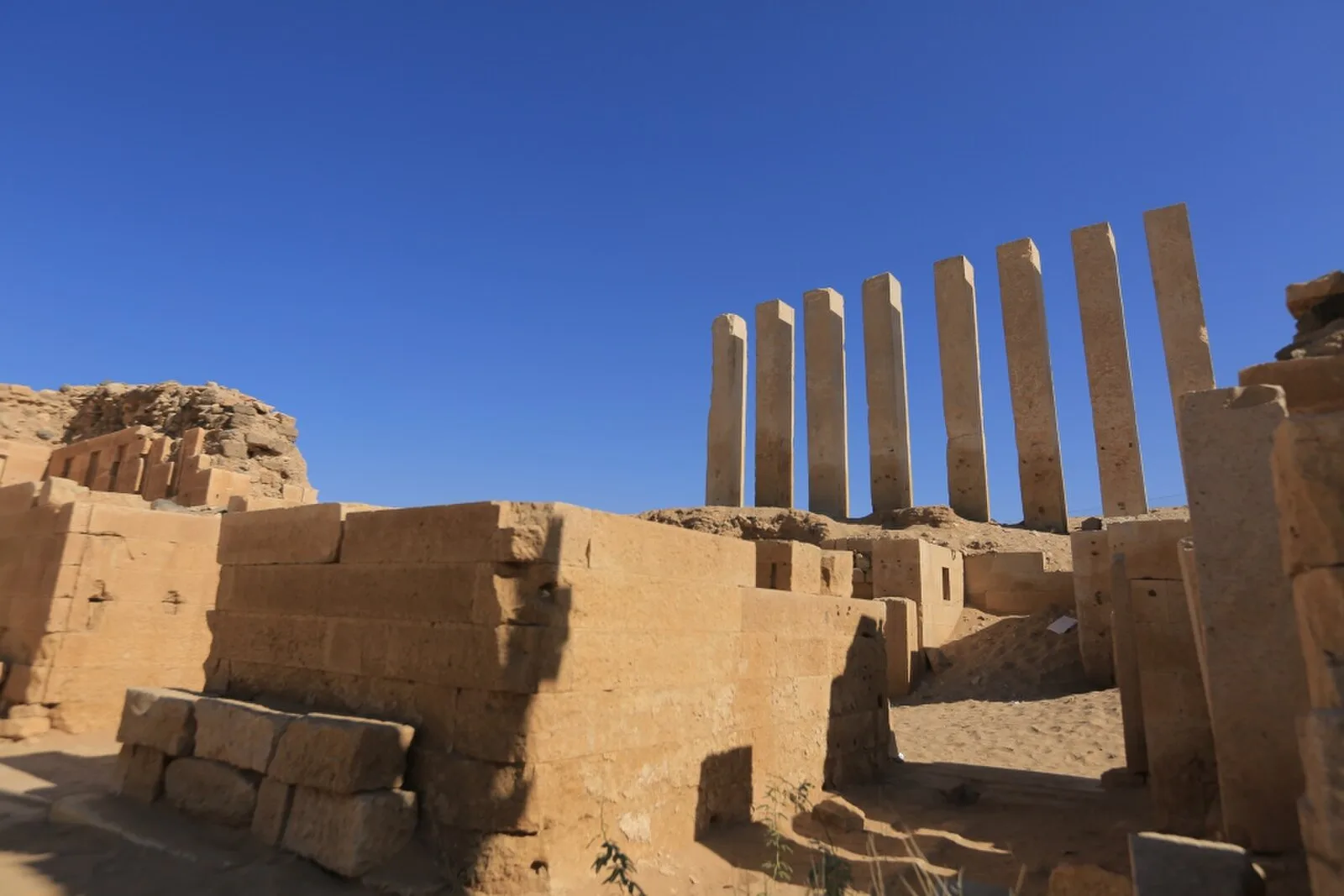
Also known as: 마흐람 빌키스, Avvam Tapınağı, Awwam, Awwams tempel, Awwam-Tempel, Heiligdom van de koningin van Sheba, Heiligtum der Königin von Saba, Kuil Awwam, Mahram Bilqis, Mara Bilquis, Palácio da Rainha de Sabá, Sanctuary of the Queen of Sheba
| Type | Temple complex |
|---|---|
| Period | 1500 - 500 BC |
| Country | Yemen |
| Coordinates | 15.4045° N, 45.3558° E |