
 Romania
Situated at the top of a steep hill, the Dacian fortress of Căpâlna was built in the second half of the 1st century BC as a military defense, guarding the entrance from the Sebeș Valley to the capital of the Dacian kingdom, Sarmizegetusa Regia [1]. Archeological findings include ceramics, iron and bronze tools, silver and bronze jewellery and Roman coins from the Republican and Imperial periods [1]. The fortress was witness to Dacian - Roman battles during Trajan's Dacian Wars [1]. In the first war, the fort was occupied by the Romans [1]. Ultimately, it was burnt and destroyed by the Romans around 106 AD [1]. The fortress is encircled by an elliptical wall (c. 270 m long) [1]. The fort follows the architectural principles of the Dacian Fortresses of the Orăștie Mountains; the wall being the typical murus Dacicus [1]. The site was listed as a UNESCO World Heritage Site in 1999 [1].
Text: Wikipedia – 'Dacian fortress of Căpâlna' (revision of 2026-07-31), CC BY-SA 4.0 · sentences selected and shortened by an AI system · source →Dacian Fortress of Căpâlna
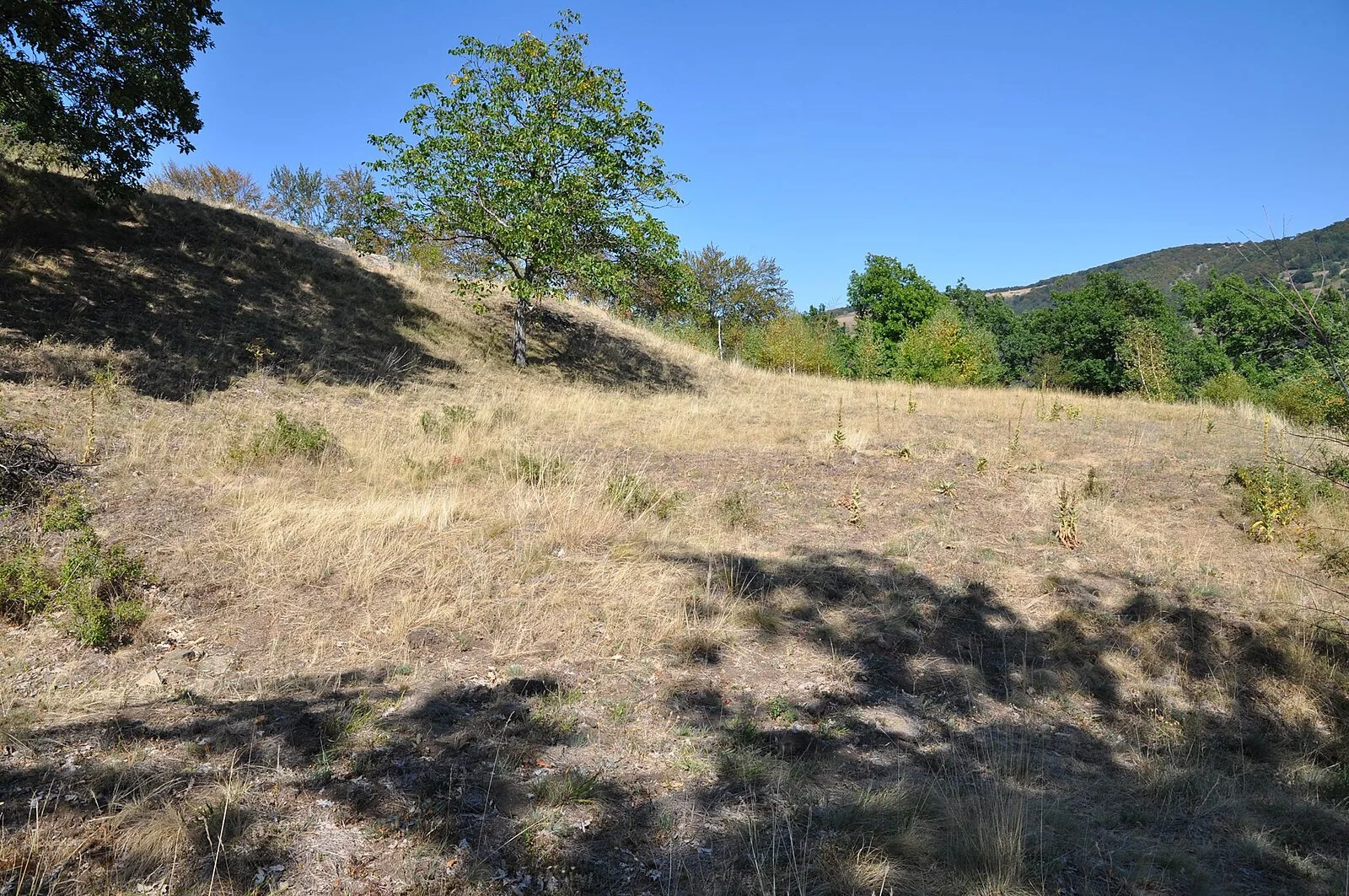
Also known as: Capalna Dacian fortress, Căpâlna Daçya Kalesi, Căpâlna Fortress, Cetatea dacică de la Căpâlna, Cod:LMI:AB-I-s-A-00020, Fortalesa dàcia de Căpâlna, forteresse dace de Capalna, Sebeskápolnai dák vár
| Type | Fortress/citadel |
|---|---|
| Period | 500 BC - 1 AD |
| Country | Romania |
| Coordinates | 45.8224° N, 23.6036° E |