
 Hungary
Aquincum was an ancient city, situated on the northeastern borders of the province of Pannonia within the Roman Empire [1]. The ruins of the city can be found in the Óbuda district of Budapest, the capital city of Hungary [1]. Aquincum was originally settled by the Eravisci, a Celtic tribe [1]. Aquincum served as a military base, having been part of the Roman border protection system called limes [1]. Around AD 41–54, a 500-strong cavalry unit arrived, and a Roman legion of 6,000 men was stationed there by AD 89 [1]. The city gradually grew around the fortress, and after Pannonia was reorganised by the Romans in AD 103, Aquincum became the capital city of the Roman province of Pannonia Inferior until the administrative reform of Diocletian more than a century later [1]. Under Hadrian, the city obtained municipal status, while under Septimius Severus, Aquincum became a colonia [1]. The most important monuments in Aquincum are the two amphitheatres: the Aquincum Civil Amphitheatre and the Aquincum Military Amphitheatre, built in the 1st century AD [1].
Text: Wikipedia – 'Aquincum' (revision of 2026-09-07), CC BY-SA 4.0 · sentences selected and shortened by an AI system · source →Aquincum
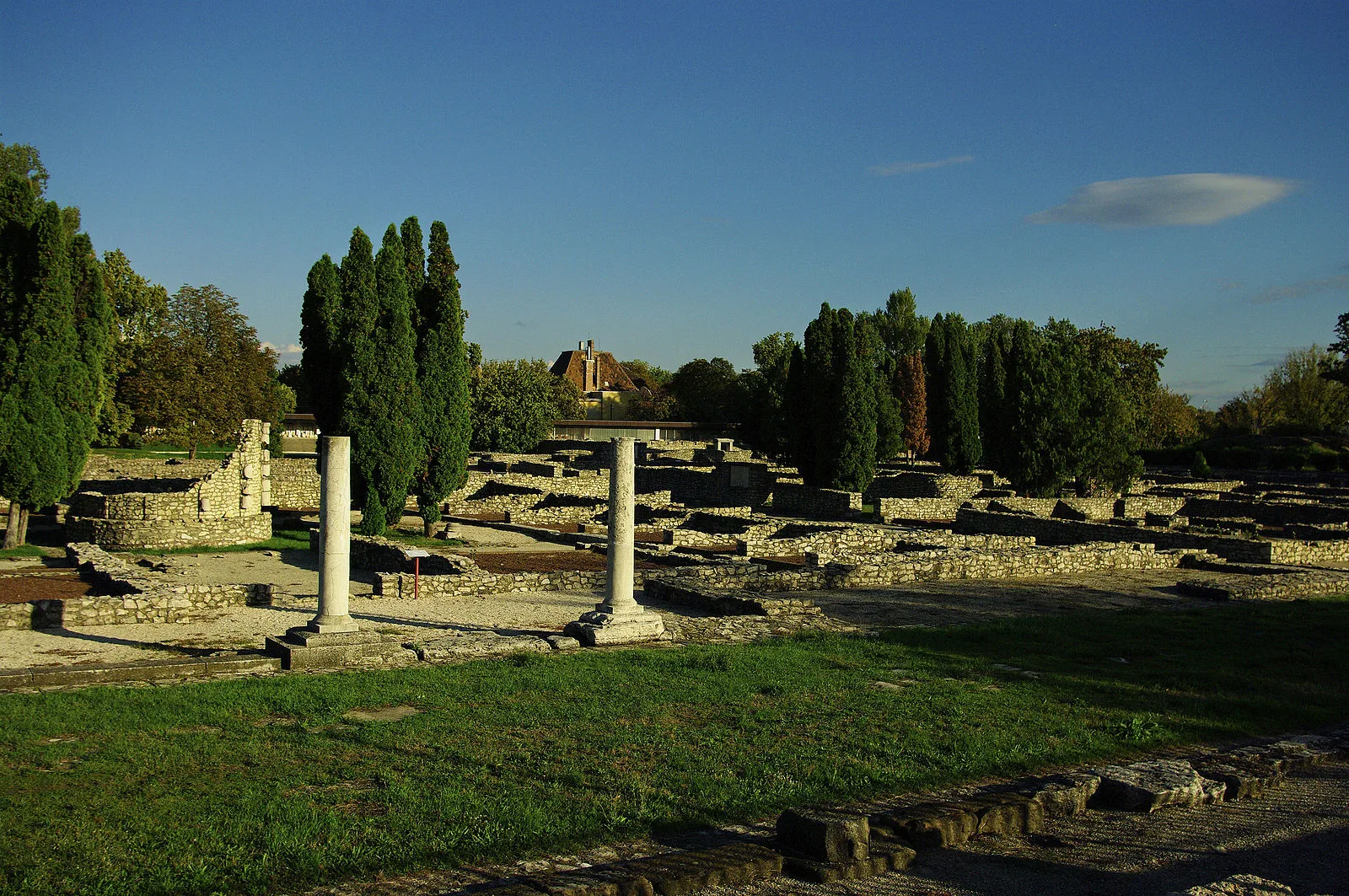
Also known as: 아퀸쿰, 아쿠인쿰, Akvink, Akvinka, Akvinkum, Aquinco, Aquincum-Museum, Aquincum (történelmi település), Castra Aquincum, Ακούιγκον, Аквинк, Аквинкум
| Type | City/town/settlement |
|---|---|
| Period | 1 - 500 AD |
| Country | Hungary |
| Coordinates | 47.5643° N, 19.0494° E |