 ANCIENT NERDS
The Watchers Nephilim Tradition Across Ancient Cultures
This paper argues that the popular fallen-angels reading of Genesis 6:1-4 is historically more recent and more contested than its popularizers acknowledge, and that the mainstream scholarly position treats the passage's fourfold interpretive plurality as a deliberate feature rather than a defect to be resolved through a single sensationalistic reading. It contends that the Sethite interpretation emerged not from neutral exegesis but from apologetic pressure against pagan critics like Celsus and Julian the Apostate, and that 1 Enoch's non-canonical status means Jude's quotation of it should be read as citation rather than endorsement of its full cosmology. Ultimately, the paper concludes that significant works in the field, including Stuckenbruck's, Annus's, and Sanders's contributions, remain hypotheses under active debate rather than settled consensus.
According to 1 Enoch, the giants that once walked the earth stood 3,000 ells tall. The text describes them consuming humanity’s resources, then turning to cannibalism — devouring humans, animals, fish, and drinking blood — until their violence triggered the Great Flood. When the waters receded, a problem remained: the disembodied spirits of those giants refused to depart, roaming the earth as “evil spirits upon the earth” and providing Second Temple Judaism with an explanation for the existence of demons — an explanation largely absent from the canonical Hebrew Bible. [1] [2] [3] [4]
Centuries after these traditions were first committed to Aramaic between roughly 300 and 200 BC, the Book of Jubilees proposed a stark amendment: only 90 percent of those giant-spirits were to be imprisoned, with a tenth remaining under the authority of Mastema, prince of the demons, to serve as instruments of divine punishment. Among the Dead Sea Scrolls, scholars later identified fragments of a Book of Giants that elaborated the Watchers/Nephilim material with dream visions, named figures including Ohyah, Hahyah, and Mahway — and, remarkably, a character scholars identify with Gilgamesh. [5] [6]
The Biblical Foundation: Genesis 6 and the Watchers Tradition
Genesis 6:1-4 occupies six verses in the Hebrew Bible and says almost nothing about who these figures actually are. The passage reports that “the sons of God” (bene ha-elohim) saw the “daughters of men,” took them as wives, and produced offspring called the Nephilim—described without elaboration as “the mighty men who were of old, the men of renown”. The same Hebrew noun reappears only in Numbers 13:33, where Israelite spies describe the sons of Anak in Canaan as descendants of the Nephilim. The text never names the sons of God, never names the women, never explains why the unions were wrong, and never resolves how beings destroyed in the coming Flood could reappear generations later in Canaan. The Septuagint translators rendered “bene ha-elohim” as “angels of God” (angeloi theou) and “Nephilim” as “gigantes,” embedding an interpretive choice into the Greek Bible that would shape centuries of reception. [7]
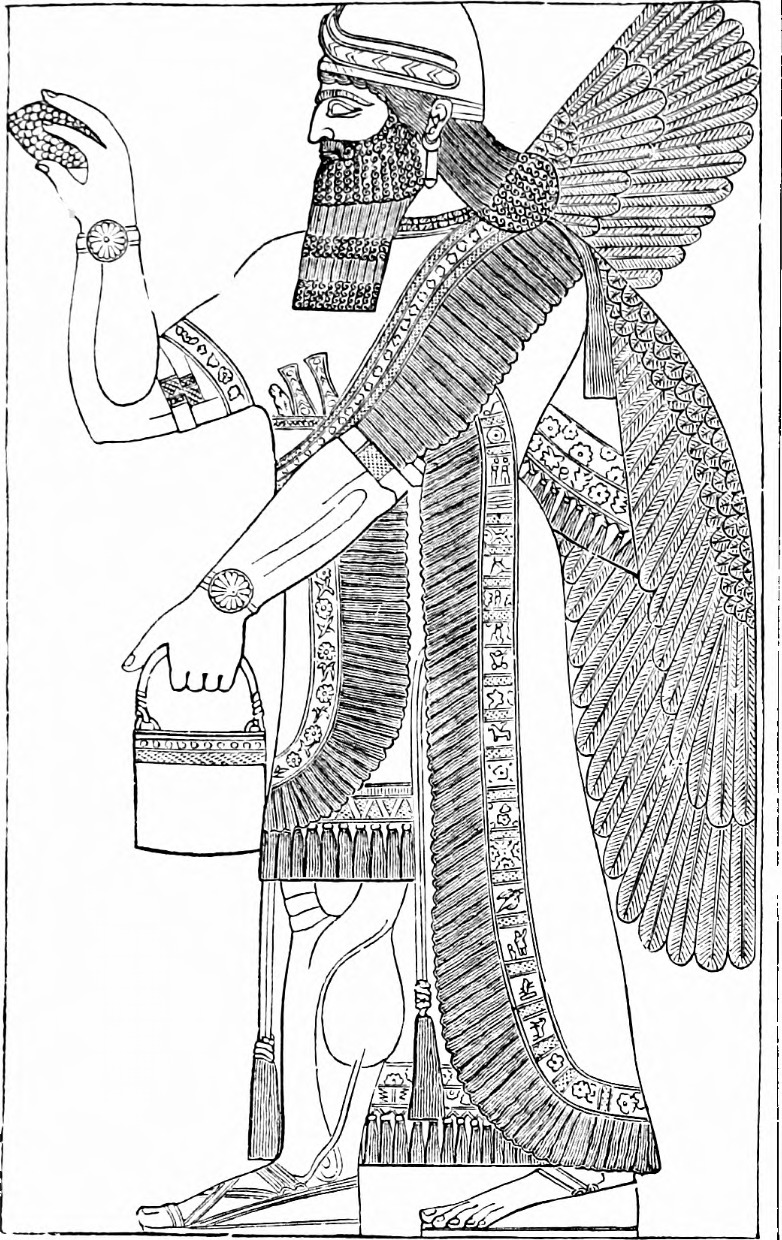
Illustration: A dictionary of religious knowledge (electronic resource)- for popular and professional use, comprising full information on Biblical, theological, and ecclesiastical subjects (1875). Photo: Internet Archive Book Images / Wikimedia Commons. Source
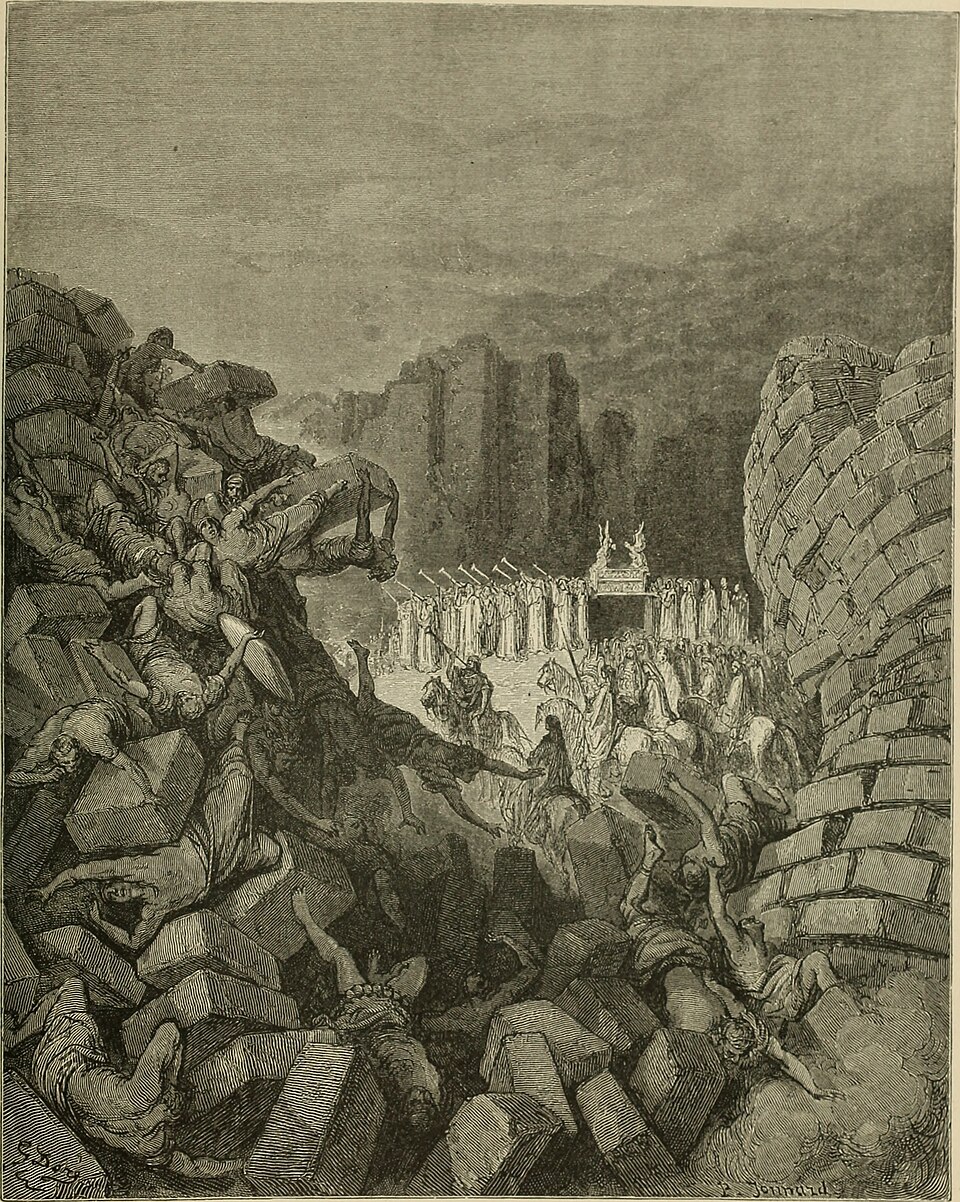
Illustration: The Bible panorama, or The Holy Scriptures in picture and story (1891). Photo: Internet Archive Book Images / Wikimedia Commons. Source
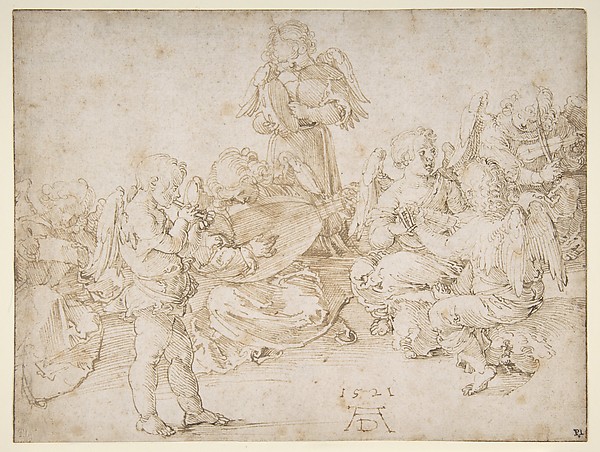
. According to chapters 6-11, two hundred angels led by Shemihazah descended on the summit of Mount Hermon in the days of Jared, swore a mutual oath, and bound themselves with a curse before taking human wives. The offspring they produced are described as giants 3,000 ells tall who consumed human provisions, then devoured humans, animals, fish, and drank blood. The book assigns specific forbidden teachings to specific Watchers: Azazel taught metalworking—swords, knives, shields, breastplates—along with bracelets, ornaments, eye-paint (antimony), precious stones, and dyes; Semjaza taught enchantments and root-cutting; Armaros taught spell-breaking; Baraqijal taught astrology; Kokabel taught the constellations; Ezeqeel taught cloud-knowledge; Araqiel taught earth-signs; Shamsiel taught sun-signs; and Sariel taught the lunar course. Divine response comes in chapter 10 through four archangels: Raphael binds Azazel hand and foot in the desert of Dudael; Gabriel incites the Nephilim to destroy one another in battle; Michael binds Shemihazah and his associates for seventy generations in the valleys of the earth; and Uriel warns Noah of the coming flood. The narrative thus relocates the moral cause of the Flood from human wickedness (as in Genesis 6:5-7) to angelic transgression and the violent, cannibalistic excess of the giants.
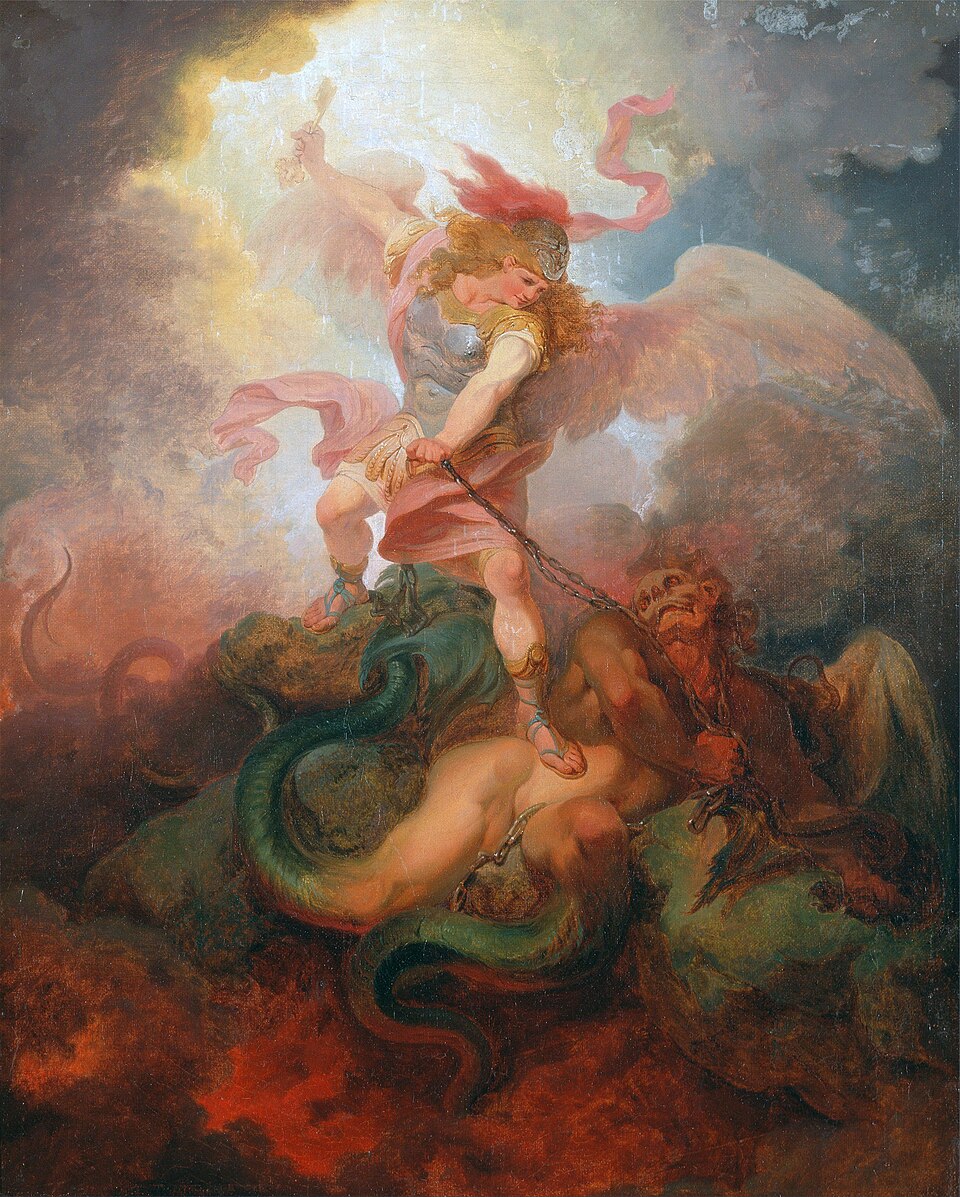
Illustration: Philippe-Jacques de Loutherbourg - The Angel Binding Satan - Google Art Project. Photo: Philip James de Loutherbourg / Wikimedia Commons. Visualizes the central punishment that parallels Raphael’s binding of Azazel and gives the divine response…. Source

Music-Making Angels. Photo: Albrecht Dürer / The Met / Open Access. Visualizes the paragraph’s narrative opening — the named act of the oath — which is…. Source
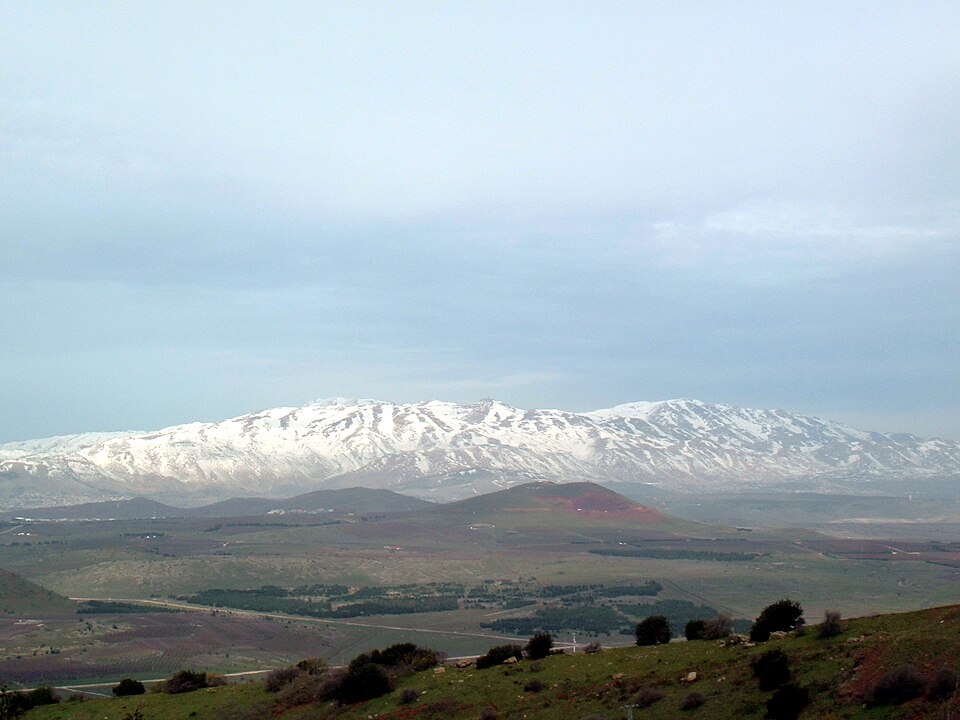
Illustration: Hermonsnow. Photo: Almog / Wikimedia Commons. Snowy Mount Hermon as seen from Mt. Bental, in the occupied Golan Heights. Source
Two parallel Second Temple witnesses extend and reshape this material. The Book of Jubilees (c. 160-150 BCE), the third most attested text at Qumran, reframes the Watchers tradition under the figure of Mastema—the prince of hostility—who successfully petitions God to allow one-tenth of the disembodied Nephilim spirits to remain on earth as demons after the Flood. The Book of Giants, preserved in Aramaic manuscripts at Qumran (1Q23, 2Q26, 4Q203, 4Q530-532, 6Q8), narrates the story from the giants’ perspective: it names specific characters including Ohya, Hahya, and Mahway (son of the angel Barakel), and notably identifies one of the giants as Gilgamesh, importing the Babylonian hero directly into the Enochic tradition. This Mesopotamian borrowing is reinforced by the figure Hobabish, which scholars identify as a linguistic echo of Humbaba from the Epic of Gilgamesh. Both texts frame the introduction of evil into the world through forbidden revelation, with the Jubilees tradition emphasizing that the disembodied Nephilim spirits became the demons that afflict humanity—a mythology largely absent from the canonical Hebrew Bible. [8]
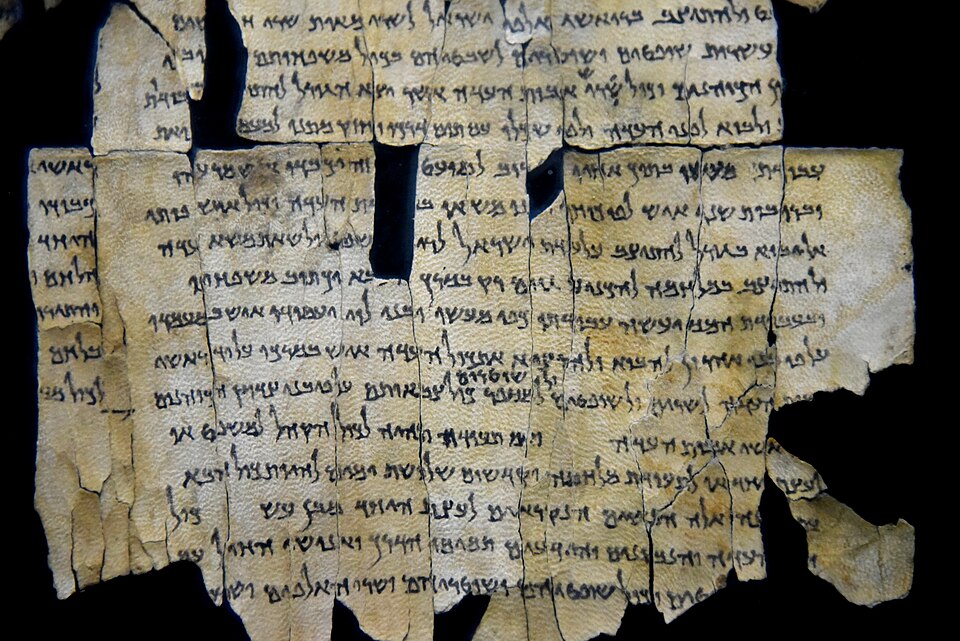
Illustration: Part of Dead Sea Scroll 28a from Qumran Cave 1. The Jordan Museum, Amman. Photo: Osama Shukir Muhammed Amin FRCP(Glasg) / Wikimedia Commons. Source
The tradition’s persistence in Second Temple Judaism is recorded in the Dead Sea Scrolls community’s preservation of multiple Aramaic copies of 1 Enoch (the Book of Giants was, by one reckoning, more popular at Qumran than 1 Enoch itself). The New Testament writers absorbed the tradition explicitly: Jude 1:14-15 directly quotes 1 Enoch 1:9, attributing the prophecy to “Enoch, the seventh from Adam”; Jude 1:6 and 2 Peter 2:4-5 describe angels who “did not stay within their own position of authority” and were cast into chains awaiting judgment, with 2 Peter 2:4 employing the rare Greek verb ταρταρόω (“cast into Tartarus”)—the only biblical occurrence of a term drawn from Greek mythology’s prison of the Titans. Three principal interpretive options for the original “sons of God” have been advanced in the history of exegesis: fallen angels (the earliest and longest-dominant view, attested in 1 Enoch itself), the Sethite line intermarrying with the Cainite line (popularized by Augustine and dominant in Western Christianity from the fourth century onward), and powerful human rulers or tyrants. What remains unresolved across all three readings is the central puzzle the biblical text itself never addresses: how a race explicitly destroyed in the Flood could reappear, generations later, as the inhabitants of Canaan encountered by the Israelite spies. [9] [10]
Ancient Near Eastern Origins and Cross-Cultural Parallels
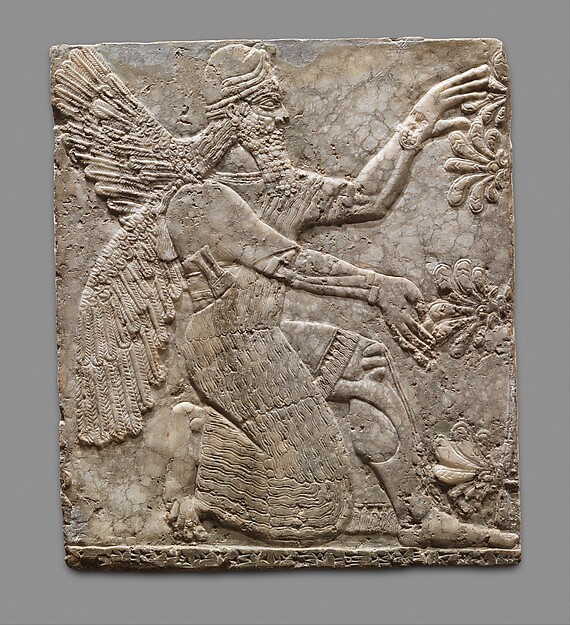
The Book of the Watchers (1 Enoch 1-36), the earliest Jewish apocalypse composed around the 3rd century BCE under significant Babylonian religious influence, did not emerge in a cultural vacuum. Peer-reviewed scholarship argues that the Jewish Watchers narrative originated as a deliberate “counter-narrative” to the Mesopotamian tradition of the seven antediluvian sages known as the apkallu (Sumerian abgal). The apkallu were seven semi-divine sages created in the Apsû by the god Ea/Enki and sent into the human world to teach civilization—the arts of writing, mathematics, agriculture, medicine, and craftsmanship—before the great flood. In the Mesopotamian tradition, civilization was of divine origin and was mediated to humans from the divine sphere through these emissaries of divine wisdom; in Genesis 1–11, by contrast, civilization is associated with a downward moral spiral resulting from illicit human acquisition of divine knowledge beginning in Genesis 3. The Watchers tradition inverts this template: where the Mesopotamian apkallu were celebrated culture-bringers sent upward from the Apsu, the Enochic Watchers are angels who descended unauthorized, took human wives, taught forbidden knowledge (sorcery, metallurgy, weapons), and produced violent giant offspring (the Nephilim) resulting in divine punishment. [11]
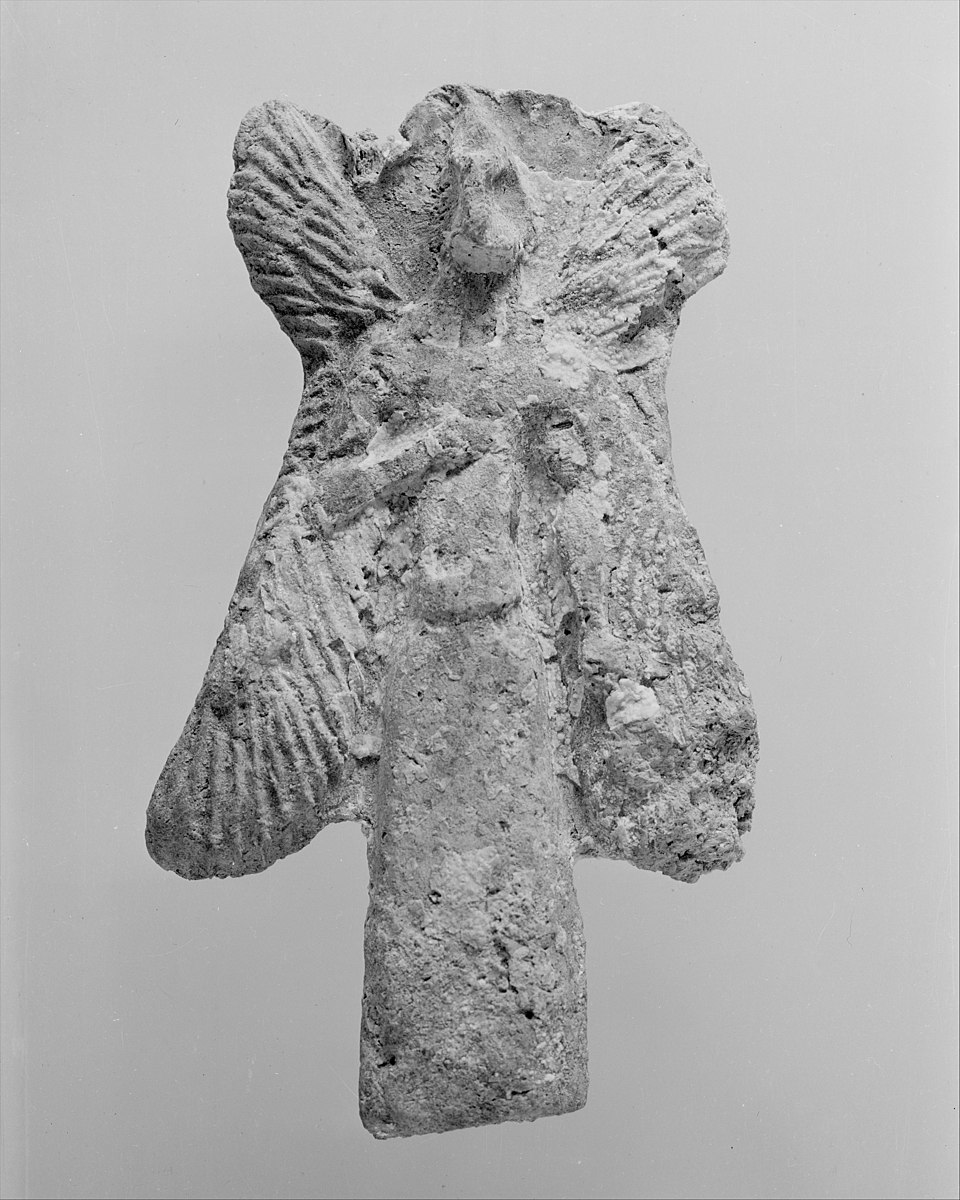
Illustration: Apkallu figure- bird-headed, winged figure carrying a bucket MET 158484. Photo: Wikimedia Commons. Assyrian; Sculpture; Ceramics-Sculpture. Source
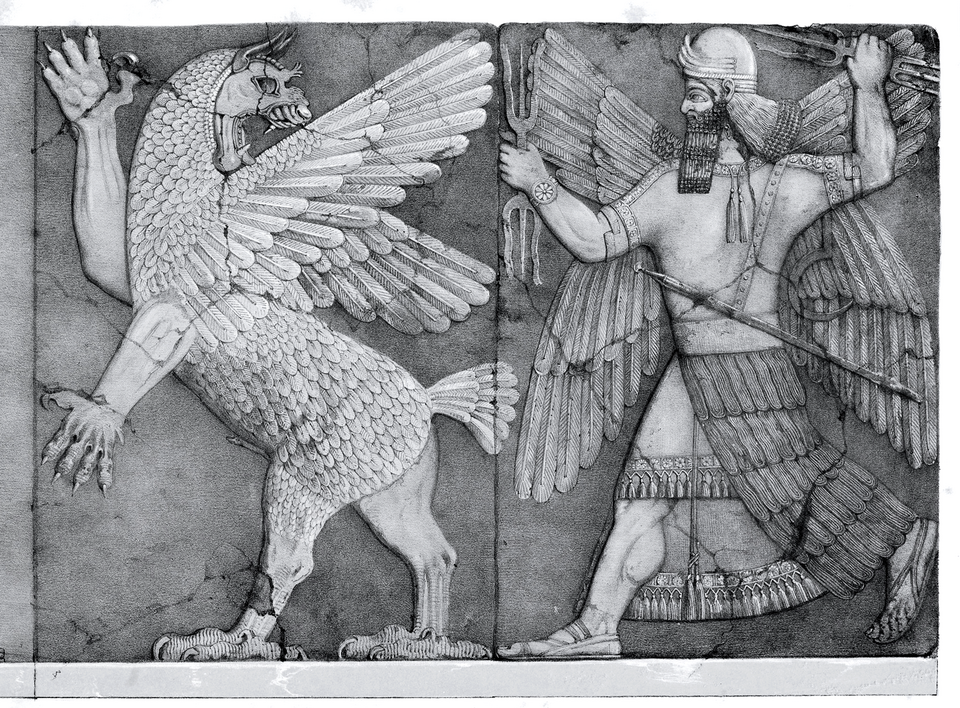
Chaos Monster and Sun God. Photo: editor Austen Henry Layard , drawing by L. Gruner / Wikimedia Commons. The bird-apkallu is the second of the three recognized apkallu iconographic forms; showing this distinct…. Source
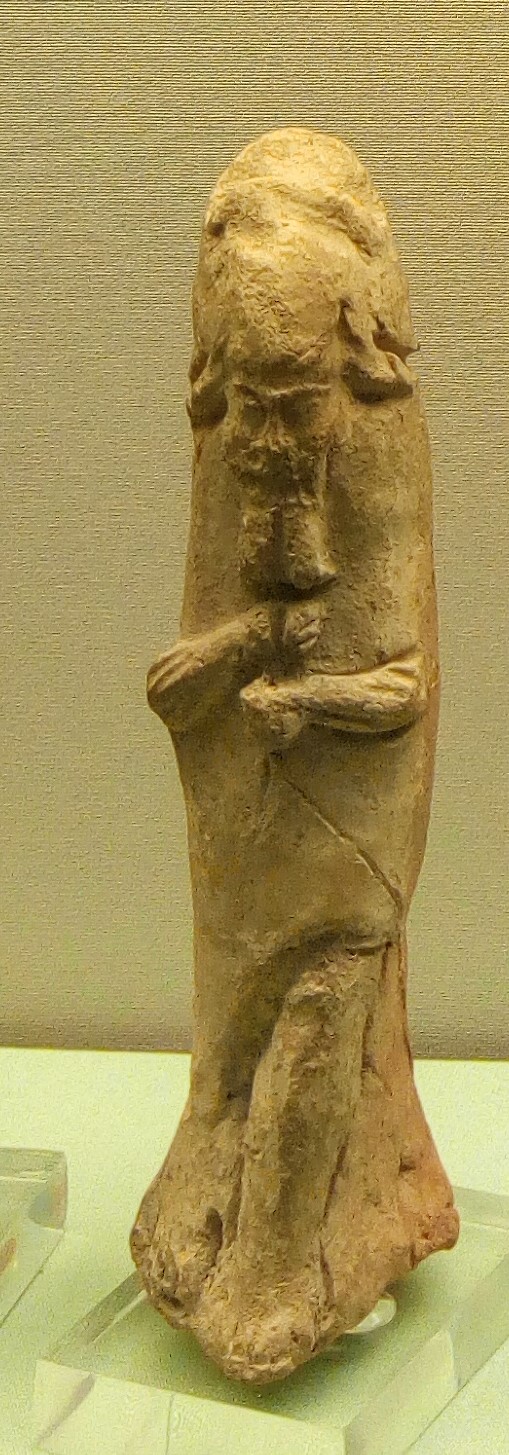
Illustration: Apkallu statuette. Photo: Zunkir / Wikimedia Commons. Source
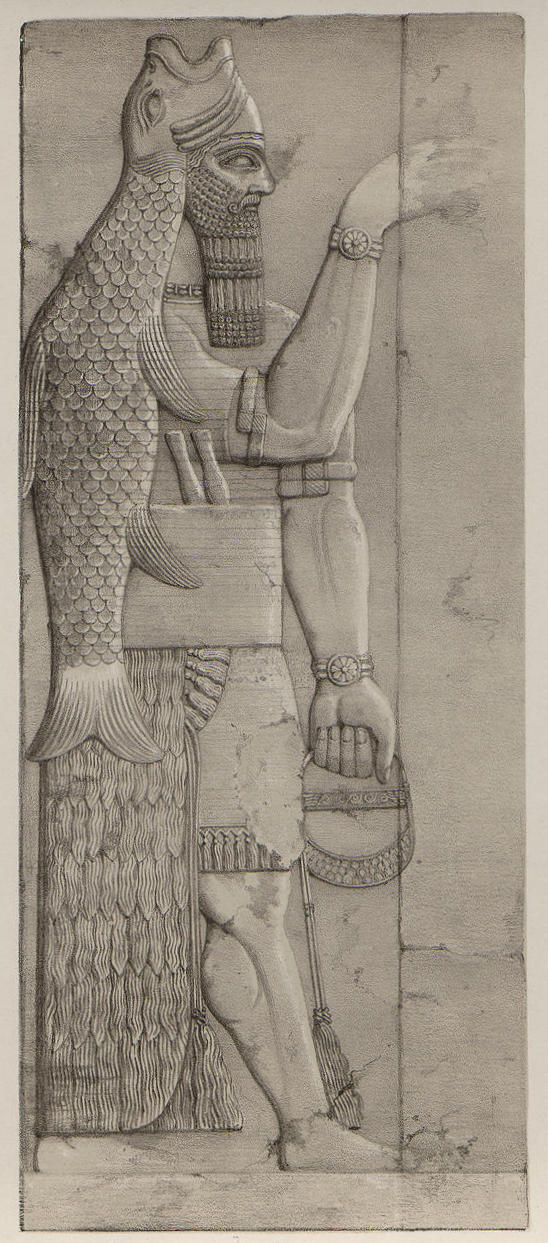
Plate 6 fish god (A second series of the monuments of Nineveh) 1853 (cropped). Photo: unknown - drawing from ancient bas relief / Wikimedia Commons. Source
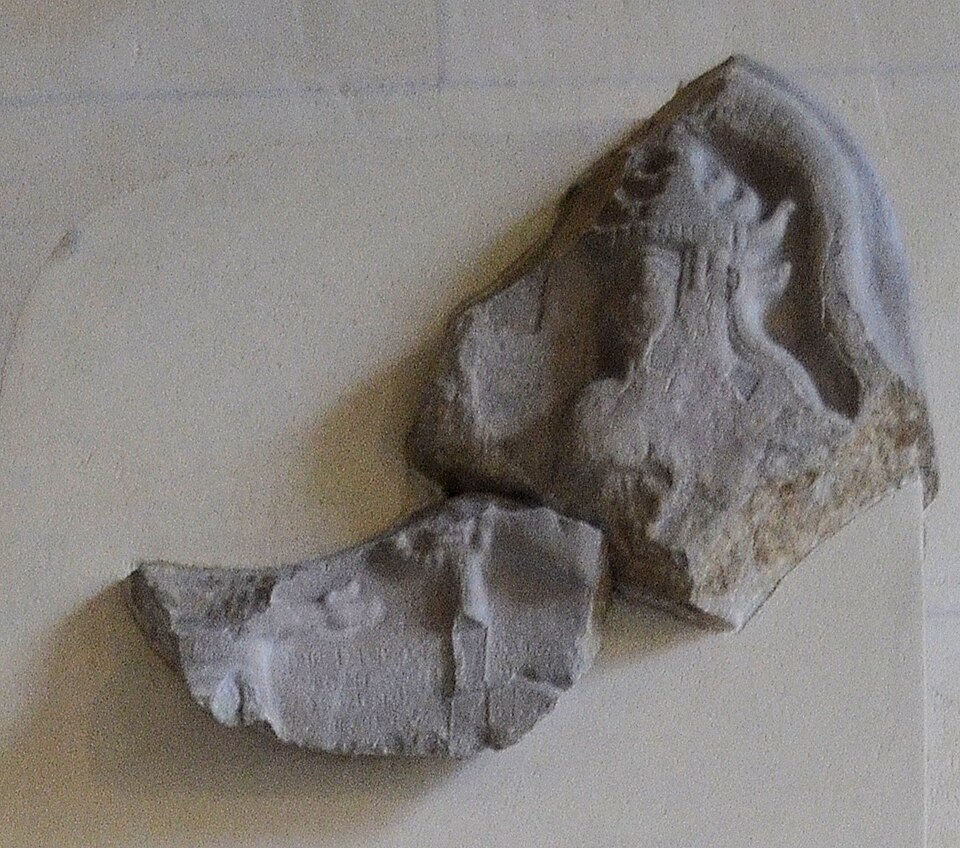
Illustration: Untash Napirisha stele, Louvre Sb 12 (1421) possible Inshushinak. Photo: Darafsh / Wikimedia Commons. The paragraph identifies Ea/Enki as the specific deity who created the apkallu in the Apsû;…. Source
Relief panel. Photo: The Met / Open Access. Source
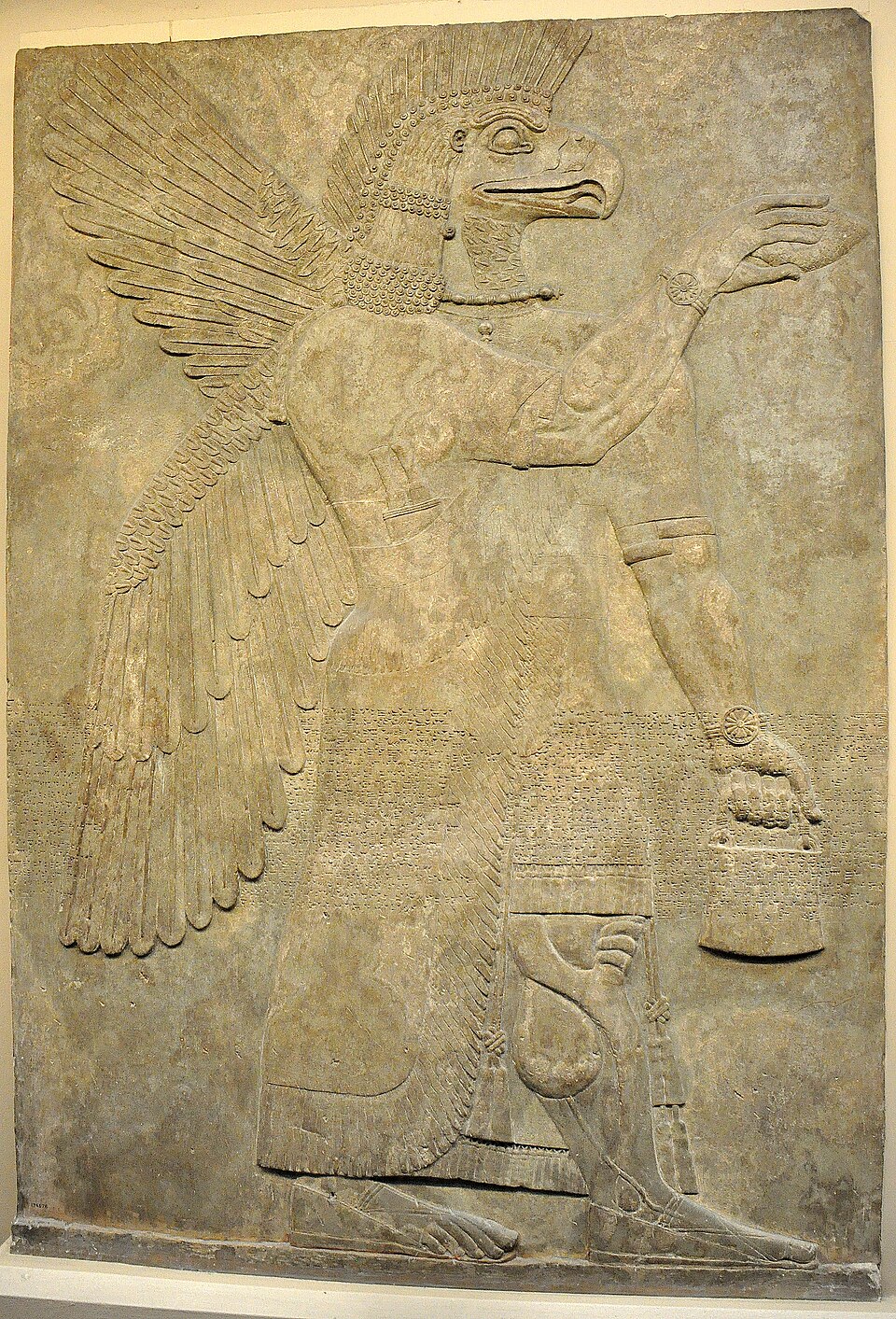
Wall relief depicting an eagle-headed and winged man, Apkallu, from Nimrud. Photo: Osama Shukir Muhammed Amin FRCP(Glasg) / Wikimedia Commons. Source
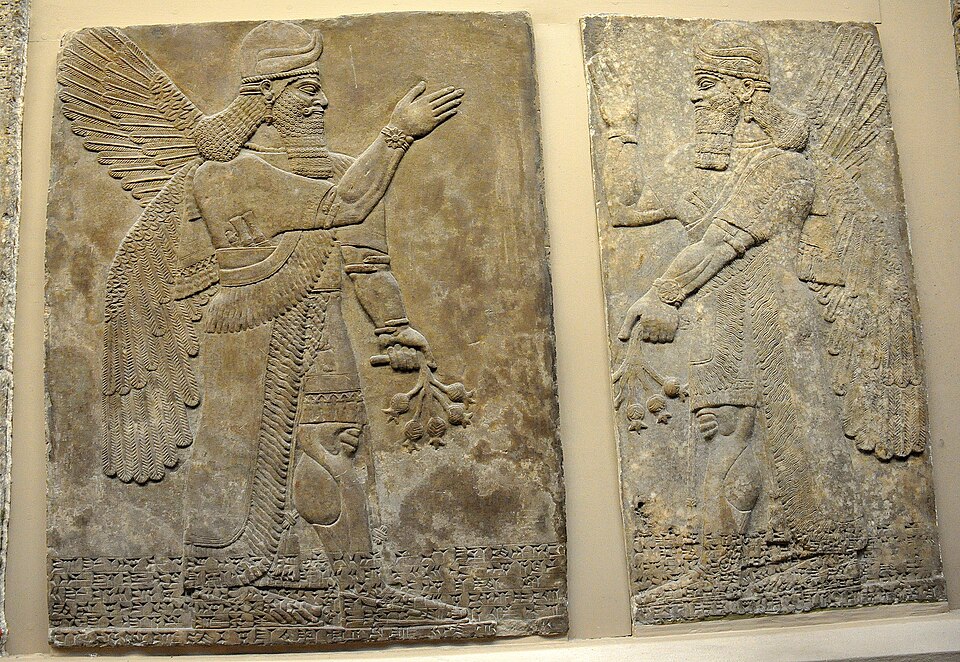
A pair of protective spirits, Apkallu, from Nimrud. Photo: Osama Shukir Muhammed Amin FRCP(Glasg) / Wikimedia Commons. Source
The apkallu appear iconographically in three distinct physical forms per Frans Wiggermann’s landmark 1992 analysis: human-faced genii with horned crowns, bird-headed apkallu (attested only in Assyrian contexts), and fish-cloaked purādu-fish apkallu (the original Babylonian type described by Berossus) [12] [13]
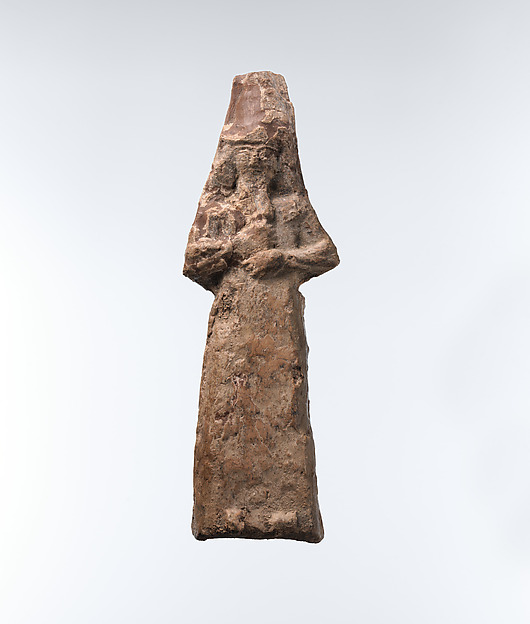
Illustration: Apkallu figure: male with a fish-skin hood. Photo: The Met / Open Access. The fish-cloaked type is identified as the original Babylonian form distinct from the Assyrian variants;…. Source
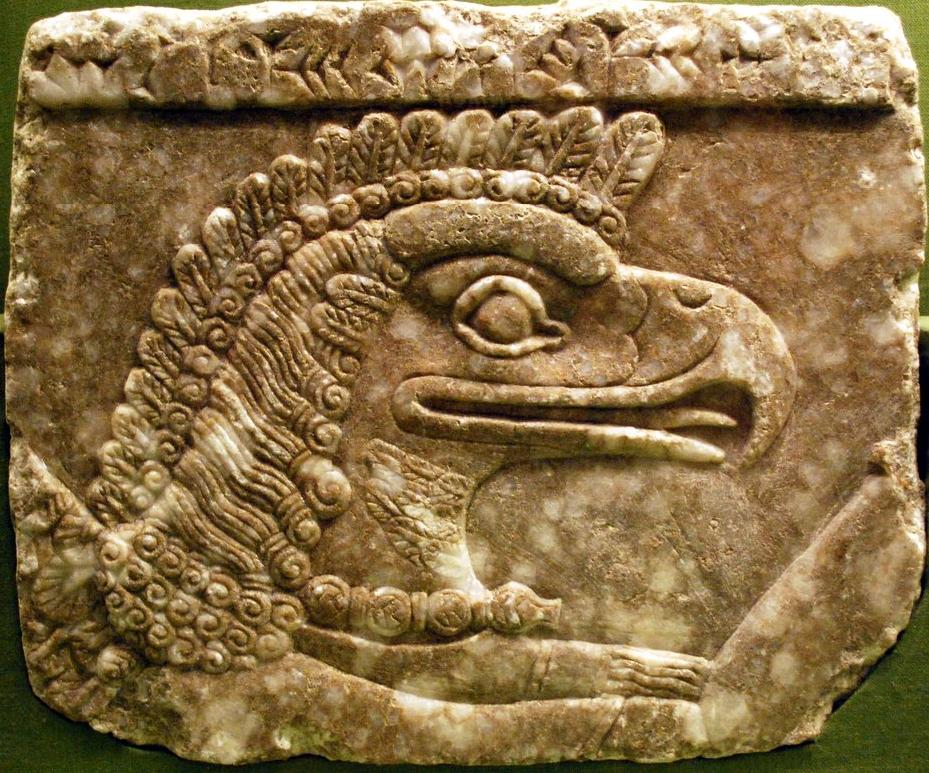
Illustration: Nimrud Apkallu. Photo: Anonymous (Nimrud)Unknown author / Wikimedia Commons. Source
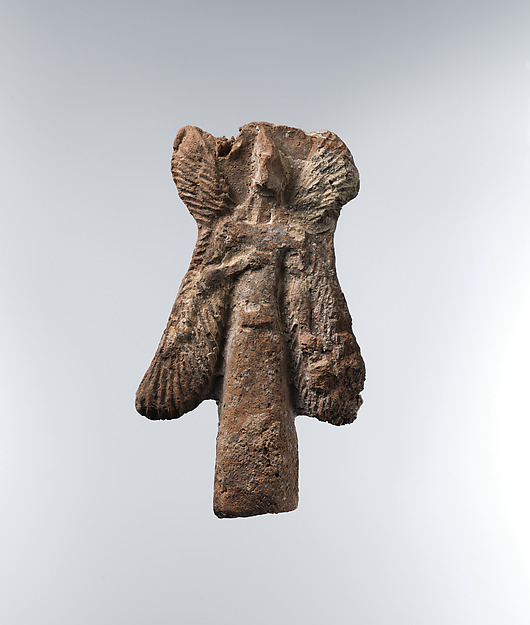
Illustration: Apkallu figure: bird-headed, winged figure carrying a bucket. Photo: The Met / Open Access. The bird-headed form is restricted to Assyrian contexts per the paragraph; a visual confirms the…. Source
. The bird and fish forms occur in groups of seven. The curricular specifics of the Watchers’ teaching in 1 Enoch 8 map closely onto known Mesopotamian scholarly disciplines: charms and enchantments, root-cutting (herbal medicine), astronomy/celestial signs, metallurgy, and cosmetics correspond to actual Mesopotamian priestly-scholarly arts. Significantly, Amar Annus argues that this inversion did not require wholesale invention of the apkallu’s “dark side”—some Mesopotamian traditions already portrayed the sages ambivalently. In the anti-witchcraft ritual series Maqlû, apkallu appear as sorcerers against whom incantations are directed, and in Bīt Mēseri some post-Flood apkallu anger the gods through transgression. Berossus’s Babyloniaca (c. 290 BCE) describes the first apkallu Uanna/Oannes as emerging from the Erythraean Sea with the body of a fish combined with human feet, arms, head, and voice, teaching humans writing, mathematics, city-building, temple-founding, law-giving, and agriculture.
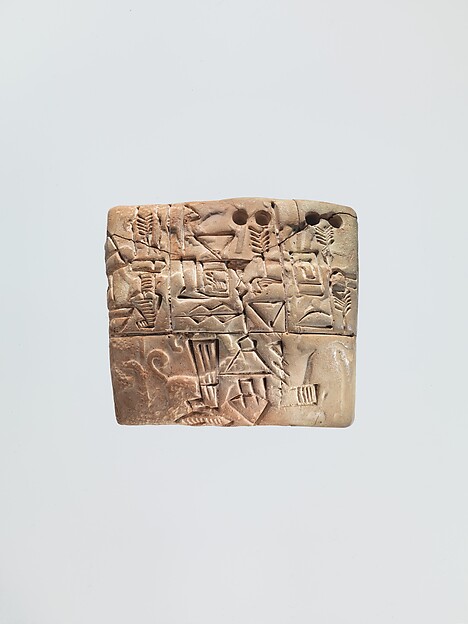
Proto-Cuneiform tablet with seal impressions: administrative account of barley distribution with cylinder seal impression of a male figure, hunting dogs, and boars. Photo: The Met / Open Access. Source
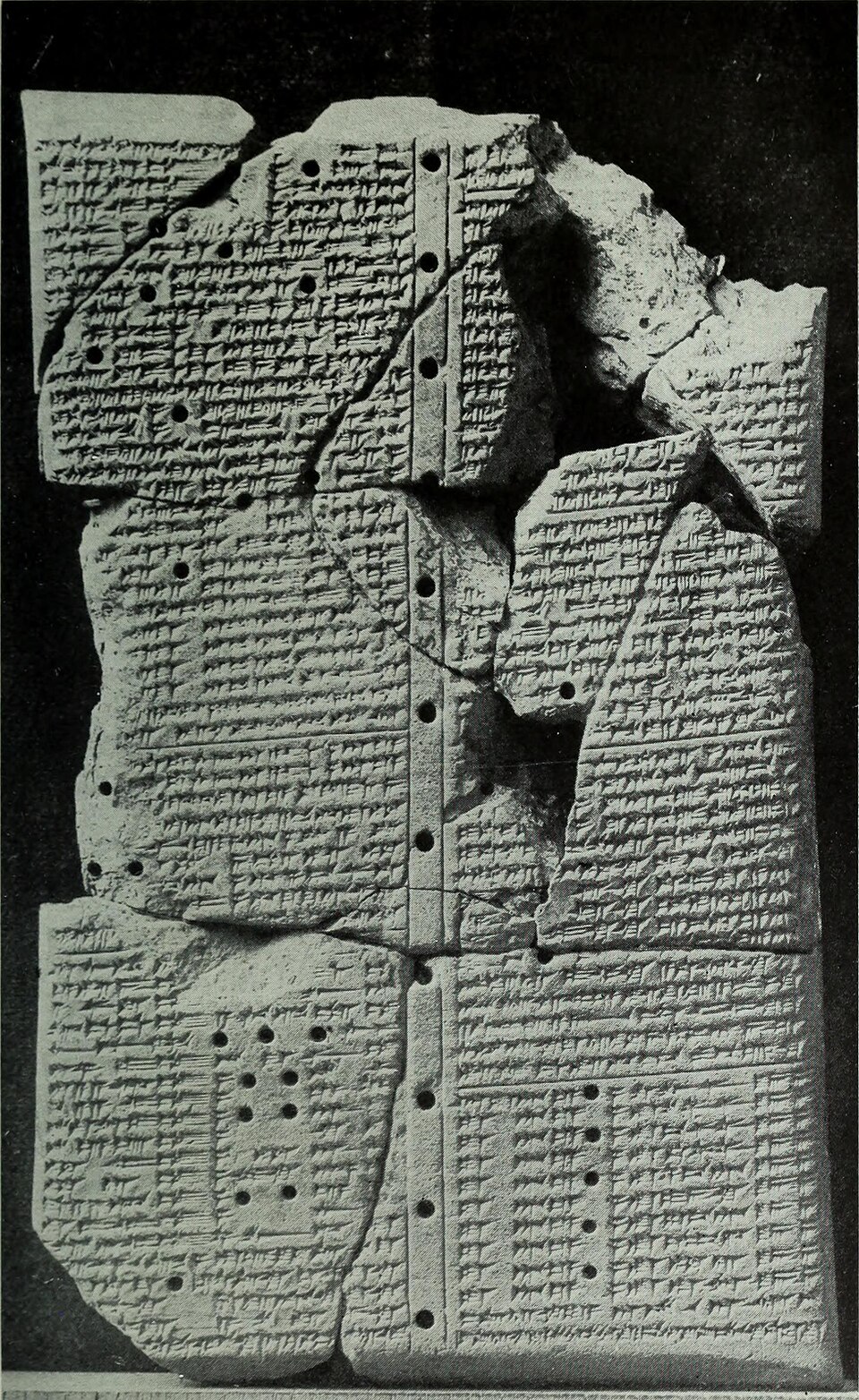
The religion of Babylonia and Assyria especially in its relations to Israel (1908). Photo: Internet Archive Book Images / Wikimedia Commons. Source
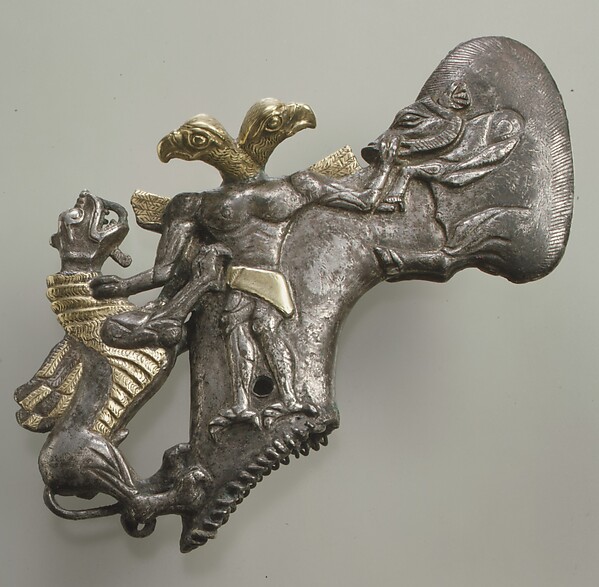
Illustration: Shaft-hole axe head with bird-headed demon, boar, and dragon. Photo: The Met / Open Access. Source
The biblical patriarch Enoch in Genesis 5 lives exactly 365 years before his translation—a number corresponding to the days of a solar year. This connects Enoch to the Mesopotamian antediluvian king Enmeduranki of Sippar: both occupy the seventh position in their respective lists, both are removed from earth before the flood, and Sippar was the cult-center of the sun god Šamaš. The seventh apkallu, Utu-abzu, Enmeduranki’s counselor, is explicitly said in tablet III of Bīt Mēseri to have “ascended to heaven”—and Assyriologist Rykle Borger concluded that the mythological conception of Enoch’s ascension derives from this Utu-abzu tradition. The Gilgamesh Epic provides another structural parallel: Gilgamesh is described as “two-thirds divine, one-third human,” the son of the mortal king Lugalbanda and the wild-cow goddess Ninsun. This explicit demigod tradition shows that Mesopotamian culture routinely accepted divine-human hybrid offspring as legitimate legendary figures—an acceptance that the Hebrew Bible’s framing of the Nephilim as the cause of corruption (rather than celebrated heroes) actively polemicizes. The Atrahasis Epic (c. 17th century BCE) provides the Mesopotamian template for the flood itself, including humanity’s creation from clay mixed with the blood/flesh of a slain god (Geshtu-e, “a god who had intelligence”) as a labor force for the higher gods—offering a strikingly different etiology for divine-human relations than the Watchers narrative. [14]
Hesiod’s Catalogue of Women (7th–6th century BCE) describes gods mating with mortal women to produce a race of demi-god heroes, and Zeus decides to end this mingling through the Trojan War—a structurally parallel resolution to the Genesis 6 Flood, both designed to terminate an era of divine-human sexual union. The Gigantes of Greek mythology were born from the blood of Uranus (castrated by his son Cronus) that fell upon Gaia; they subsequently waged the Gigantomachy against the Olympian gods, with the mortal hero Heracles required as divine ally because the giant Alcyoneus was immortal while fighting on his native Pallene soil. The Greek Prometheus parallel is also instructive: Prometheus (whose name means “Forethought”) stole fire—the first knowledge—from Zeus and taught humans the necessary arts, directly paralleling the Mesopotamian Oannes/Adapa tradition of a divine or semi-divine being emerging from the sea to instruct humanity in writing, mathematics, agriculture, and building. Josephus himself explicitly noted affinities between Genesis 6:1–4 and Greek traditions about giants, observing that the deeds ascribed to the biblical figures “resemble the audacious exploits told by the Greeks of the giants”. [15]
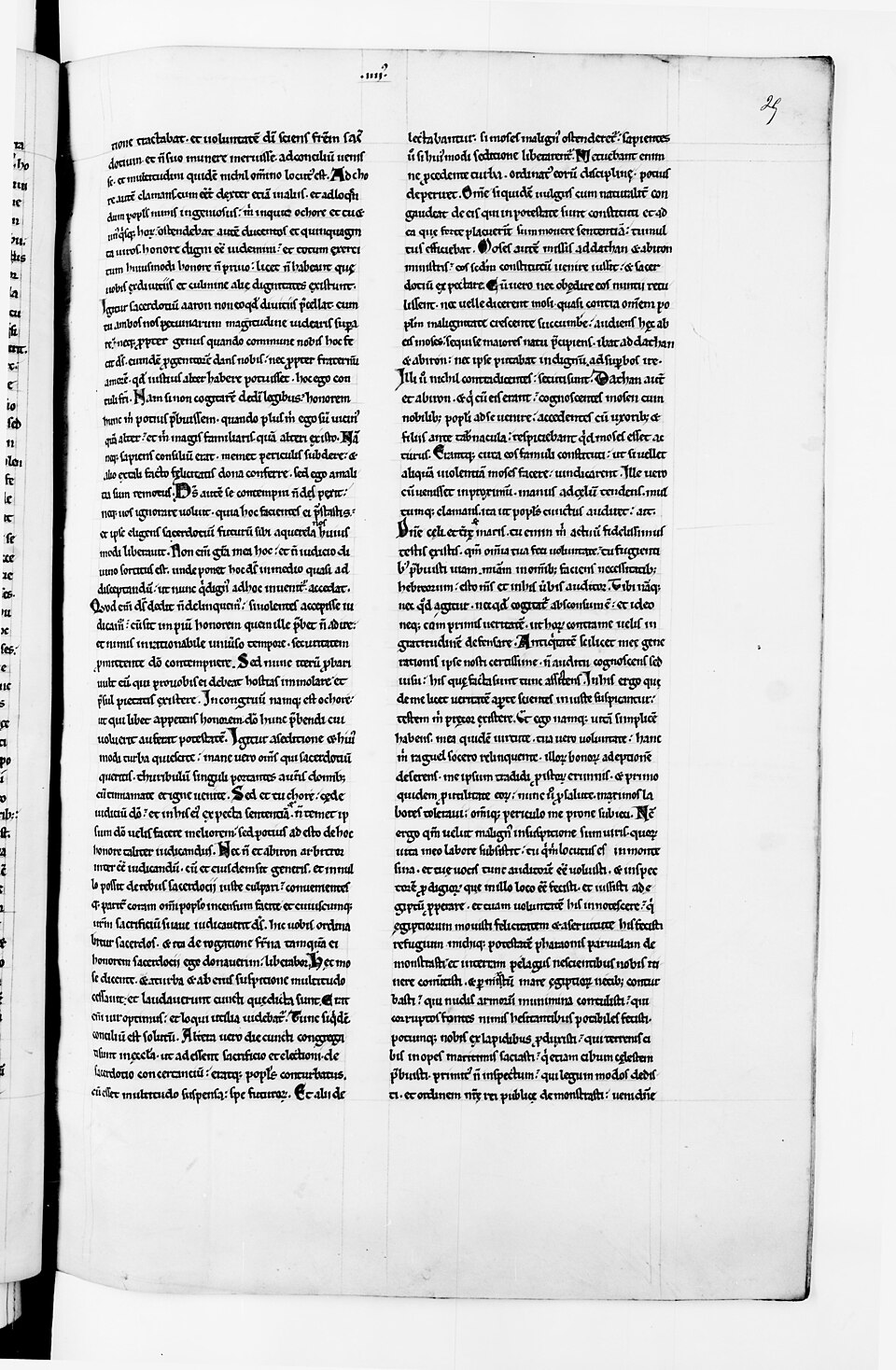
Illustration: Flavius Josephus, Antiquitates judaicae. — Id., Bellum judaicum. - btv1b10866638w (054 of 508). Photo: Flavius Josèphe (0038?-0100?). Auteur du texte / Wikimedia Commons. Source
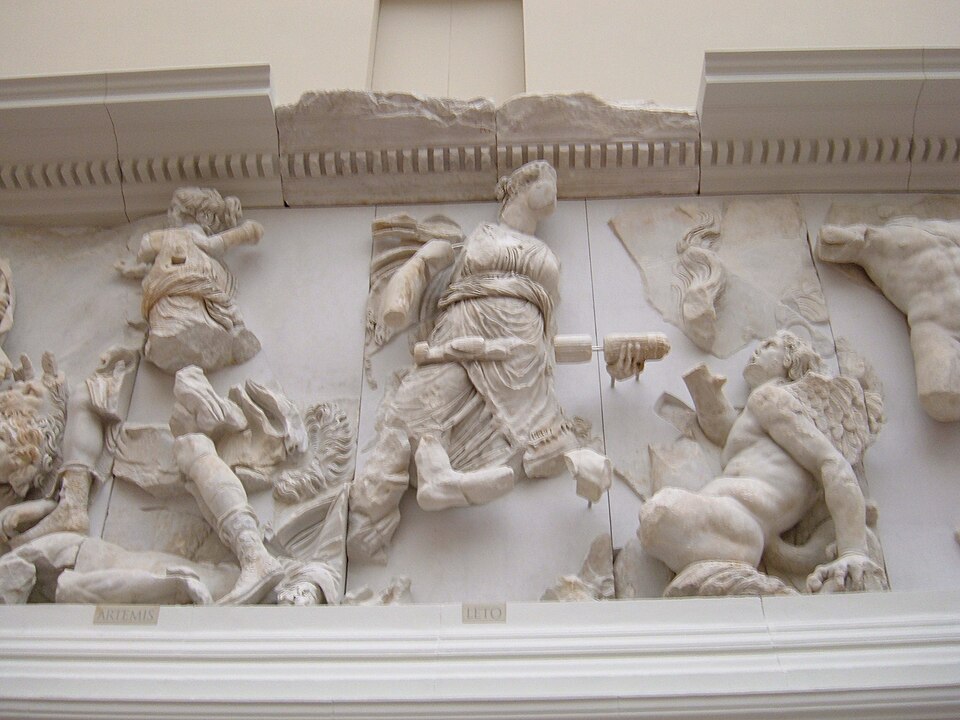
Illustration: Pergamon Altar Gigantomachy frieze section 2. Photo: BrokenSphere / Wikimedia Commons. A section of the Gigantomachy frieze of the Pergamon Altar at the Pergamon Museum in Berlin, Germany. Source
Reception and Interpretation Through History
The Epistle of Jude, dated between AD 50 and 80, contains the longest unambiguous citation of an extra-canonical work in the New Testament — a near-verbatim quotation of 1 Enoch 1:9 attributed to “Enoch, the seventh from Adam” — demonstrating that within decades of the Watcher tradition’s textual formulation, it had already penetrated the highest strata of Christian scripture. That early Christians inherited the angelic reading of Genesis 6:1–4 wholesale from Second Temple Judaism is now well established: 1 Enoch (c. 300–200 BCE) presented three intertwined causes for the antediluvian corruption — Asael’s teaching of forbidden knowledge (weapons, adornments, sorcery), Shemihaza-led angels mating with human women to produce three-thousand-ell giants, and the giants’ spirits becoming demons — and this material circulated widely enough by the first century BCE that 3 Maccabees, Wisdom of Solomon, and the Septuagint manuscripts themselves sometimes rendered benei ha-elohim as “angels of God” rather than “sons of God”. [16]
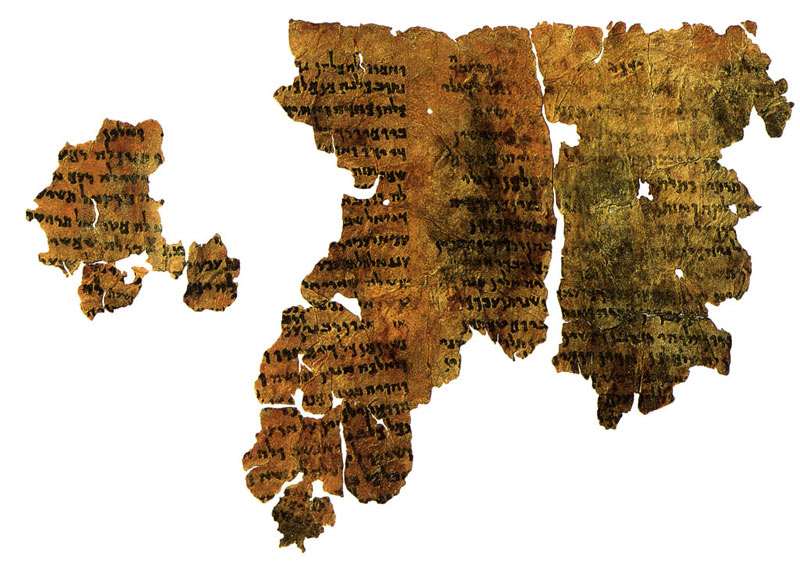
4Q201. Photo: Unknown authorUnknown author / Wikimedia Commons. The Enoch Scroll - DSS 4Q201 - ca. 200-150 B.C.E. Source
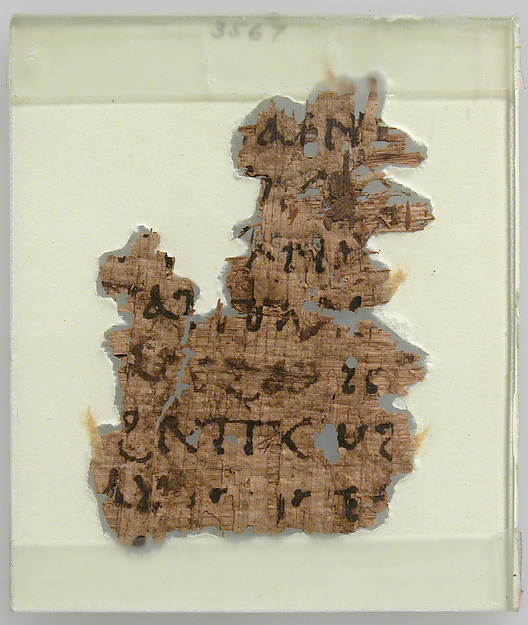
Illustration: Papyrus Fragment. Photo: The Met / Open Access. Source
But the interpretive picture fractured after roughly the third century, when mainstream Christian theology began retreating from the angelic reading and rabbinic Judaism aggressively suppressed it. Rabbi Shimon ben Yochai, a third-generation Tanna active around AD 130–160, reportedly cursed those who read “sons of God” as angels, and from that point onward the dominant rabbinic interpretation identified the benei ha-elohim as descendants of Seth, as human judges, or as the offspring of royal polygamy. Rashi derived Nephilim from naflu (“they caused the world to fall” through bringing the Flood), while Nachmanides alone acknowledged but did not fully endorse the angelic reading. In Christian circles, Augustine’s mature theology reframed the angelic fall as ahistorical and instantaneous — angels lacking bodies cannot change over time, so their fall is definitive, and demons operate only through “aerial bodies” and deceptive appearances — a position that effectively marginalized the procreative Watcher tradition. John Chrysostom reportedly called the fallen-angel reading “blasphemous,” and Luther and Calvin in the Reformation period treated the Sethite interpretation as the obvious meaning. Yet the ancient tradition never disappeared: it survived in the Palestinian Targum’s identification of Nephilim with the fallen Shamhazzai and Uzziel, in the Zohar’s 1:58a, and in Pirqe de-Rabbi Eliezer’s re-elaboration. [17]
Into this suppressed tradition stepped Islamic exegesis, which carried the Watcher motif into a new theological register. Tertullian had already used the term “demon” inclusively in the Western Latin tradition to cover both the fallen Watchers and their Nephilim offspring. [18]
The recovery of 1 Enoch in the West began in 1773 when the Scottish explorer James Bruce brought three Ge’ez manuscripts back from Ethiopia, and Richard Laurence published an English translation in 1821 — material that had remained canonical only within the Ethiopian Orthodox Tewahedo Church since the fifth century. The 1947–48 discovery of Aramaic fragments at Qumran (4Q201, 4Q204, and the Book of Giants manuscripts 4Q203, 4Q530–532, 6Q8) revealed that Hasmonean-period copies of 1 Enoch preceded the Epistle of Jude, definitively placing the Watcher tradition in pre-Christian Jewish textual form. Loren Stuckenbruck’s monumental The Myth of Rebellious Angels (WUNT 335, 2014) systematically traced the fallen-angel myth across the Book of Giants, Jubilees, the Dead Sea Scrolls, Tobit, Daniel, Philo, and into the New Testament — Synoptic Gospels, John, Acts, Paul’s letters, and Revelation — including, in one notable chapter, a treatment of 1 Corinthians 11:10 (“because of the angels”) as Pauline engagement with the Watcher template. Mesopotamian parallels sharpened the comparative case: scholars including Gebhard Selz argue the Enochic Watcher tradition derives from the apkallu, the seven antediluvian sages of Mesopotamian tradition, with Rykle Borger showing that the seventh apkallu Utu-abzu was explicitly said to have “ascended to heaven” — the very ascension later attributed to Enoch. [4] [2] [3] [1]
Connecting the Dots
The Watchers did not invent forbidden knowledge; they plagiarized it. In Mesopotamian tradition, the apkallu were Ea’s emissaries created in the Apsu and sent to the human world to teach the foundational arts of civilization. In 1 Enoch 6–8, Azazel taught humans the making of swords, knives, shields, and breastplates, while other Watchers taught enchantments, root-cutting, astrology, and the constellations—the same curriculum that parallels the apkallu’s teaching. The structural inversion is precise: where Mesopotamian tradition frames civilization as a divine gift transmitted downward to elevate humanity, the Book of the Watchers recasts that exact transmission as the central theological sin that triggers the flood. Russell Gmirkin argues the Genesis 6 passage was composed by combining the Greek motif of gods mating with mortals with the Mesopotamian flood tradition, and the apkallu-Watcher parallel is the structural fingerprint of that contact—divine knowledge becomes corruption depending on which side of the boundary the recipient stands. [19] [20]
The motif radiated outward with extraordinary range. Mani’s third-century Book of Giants drew on both 1 Enoch and the Qumran Book of Giants and was translated into Middle Persian, Parthian, Sogdian, Old Turkic, Coptic, and Greek, carrying Jewish angel-descent traditions into Central Asia. The Quran codified a related cluster into orthodox Islam: Surah al-Baqarah 2:102 names two fallen angels, Harut and Marut, who taught magic to humans in Babylon, explicitly locating the fallen-angels-teaching-forbidden-knowledge motif in Mesopotamia [21] [22]. Across these traditions the giants also tend to survive the catastrophe meant to end them. The Hebrew Bible preserves the Anakim, Rephaim, Emim, and Zamzummim as giant-clans inhabiting lands east and west of the Jordan, with Og of Bashan identified as the last of the Rephaim in Deuteronomy 3:11. Norse mythology presents the identical structure: the Jötnar are the most ancient race, persisting throughout the mythic timeline and intermarrying with the Aesir rather than being destroyed. The cross-cultural pattern of gods who breed with mortals, transmit illicit arts, and yet leave giant descendants behind spans Greek Gigantes, Norse Jötnar, biblical Anakim, and Native American traditions without requiring diffusion to explain the parallels—the structural convergence itself is the finding.
The troubling implication of literal angel-human hybridity drove systematic interpretive responses. The Septuagint translated Nephilim as gigantes, replacing the etymological “fallen ones” with a physical descriptor that shaped every subsequent Christian reading. Mary Douglas’s purity-categories framework reads Genesis 6:1–4 as a violation of cosmic boundaries rather than literal reproduction, explaining the flood through categorical pollution rather than hybrid offspring. The Sethite interpretation, crystallizing among fourth- and fifth-century church fathers such as Julius Africanus, Cyril of Alexandria, and Augustine, partly in response to pagan critics like Celsus and Julian the Apostate who weaponized the angelic reading against Christianity, domesticated the passage by reducing the sons of God to Seth’s righteous line. Josephus, writing in the first century, claimed giant bones were displayed at Hebron in his own day, “bearing no resemblance to any that have come within men’s ken”—an early instance of physical-evidence claims that recur in Native American, Inuit, and British Gogmagog folklore [23]. Each interpretive move—translation, purity framework, euhemerism, or claimed bones—attempts to neutralize the same core problem: a tradition in which the divine and human literally intermingled, and the record of that intermingling refuses to stay buried.
The Other Side
The mainstream scholarly reading of Genesis 6:1-4 refuses to settle on a single interpretation, and the textual evidence explains why. The Septuagint renders Nephilim as γίγαντες (gigantes), but the Hebrew root n-p-l points to “fallen ones” or “those who cause others to fall” – a semantic range that does not require gigantism. The crucial parallel passage at Deuteronomy 32:8 survives in three competing textual traditions: the Masoretic Text reads “sons of Israel,” the Septuagint reads “angels of God,” and 4QDeut^q reads “sons of God,” while the Samaritan Pentateuch sides with the Masoretic against the divine-beings reading. This triangulation undercuts any confident claim that “sons of God” (benei ha-elohim) was the original formulation. Modern scholarship now typically distinguishes not three but four interpretive options for Genesis 6:1-4: the Sethite view, the divine-kings view, the fallen-angels-with-Nephilim-as-offspring view, and the fallen-angels-but-Nephilim-not-offspring view, the last splitting the angelic reading specifically to address the Numbers 13:33 problem of Nephilim reappearing after the Flood. The “sons of God” in mainstream Catholic and Reformed exegesis remain human figures (judges or the Sethite line, following Augustine and Aquinas), a position that has not been displaced by newer popular readings. [24]
The historical-theological pedigree of the fallen-angels reading is more recent and more contested than its popularizers acknowledge. The Sethite interpretation, dominant in much of Christian history, emerged not from neutral exegesis but from apologetic pressure: pagan critics such as Celsus and Julian the Apostate used the angelic reading against Christianity, and Church Fathers including Julius Africanus, Augustine, and later Aquinas developed the human-sons reading partly in response. The Book of Enoch itself is not canonical scripture for either Judaism or mainstream Christianity, and Jude’s quotation of 1 Enoch 1:9 is read by most patristic and modern commentators as citation rather than endorsement of the book’s full cosmology. Loren Stuckenbruck’s The Myth of Rebellious Angels – the standard scholarly monograph on the topic – treats the angelic interpretation as one stream among several, while Amar Annus’s influential counter-narrative thesis about the Watchers as inversion of Mesopotamian apkallu lore is itself a hypothesis under active debate rather than consensus, and Seth Sanders’s From Adapa to Enoch has been received by reviewers as an important but contested contribution to a still-open question. The mainstream position, in short, holds that Genesis 6:1-4 is a deliberately terse text whose fourfold interpretive plurality is a feature, not a defect to be resolved by collapsing it into a single sensationalistic reading. [25]
What We Actually Know
The oldest preserved version of the Watchers tradition — the Book of the Watchers (chs. 1–36 of 1 Enoch) — dates to c. 300–200 BCE, originally composed in Aramaic, with fragments among the Dead Sea Scrolls and the complete text surviving only in Ge’ez. The Nephilim/giants of 1 Enoch 7 are described as enormous (3,000 ells in 1 Enoch), consuming humanity’s resources, then turning to cannibalism including devouring humans, animals, fish, and drinking blood — their violence triggering the Flood. The divine response of 1 Enoch 10 assigns punishment across four archangels: Raphael binds Azazel in the desert of Dudael; Gabriel incites the Nephilim to destroy each other in battle; Michael binds Shemihazah and his associates for seventy generations; Uriel warns Noah. After the Flood, the disembodied spirits of the destroyed Nephilim became evil spirits/demons roaming the earth; 1 Enoch 15:8–10 calls them “evil spirits upon the earth” — providing Second Temple Judaism with an etiology for the existence of demons, largely absent from the canonical Hebrew Bible. The Book of Jubilees (c. 160–140 BCE) interprets the Nephilim story so that Mastema, prince of the demons, requests that only 90% of the disembodied Nephilim-spirits be imprisoned with 10% remaining under his authority to carry out divine punishment. [1] [2] [3] [4]
Three main scholarly interpretations of “sons of God” (bene ha-elohim / benei elohim) in Genesis 6:1–4 exist: (1) fallen angels (the earliest, attested in 1 Enoch and held by Tertullian); (2) the Sethite line who intermarried with the Cainite line (associated with Augustine, popularized 4th–5th centuries CE); (3) powerful human rulers/tyrannical kings (rabbinic tradition, Rashi/Ibn Ezra-tangent). The Sethite interpretation crystallized in the 4th–5th centuries CE among church fathers (Julius Africanus, Cyril of Alexandria, Augustine) partly in response to pagan critics (Celsus, Julian the Apostate) who used the traditional angelic reading against Christianity; this view remained dominant through the medieval period and Reformation. The Hebrew Bible contains only brief references to Nephilim. [25]
References
[1] The Benei Elohim, the Watchers, and the Origins of Evil — https://www.thetorah.com/article/the-benei-elohim-the-watchers-and-the-origins-of-evil (accessed 2026-08-28)
[2] The Book of Enoch: Watchers, Giants & the Genesis 6 Story — https://chasingthegiants.com/the-book-of-enochs-story-of-the-watchers-sins-the-giants/ (accessed 2026-08-28)
[3] The Watchers and Giants of the Book of Enoch That Still Haunt Us — https://www.thecollector.com/watchers-giants-enoch/ (accessed 2026-08-28)
[4] Watchers & Nephilim Research Guide - William J. Oxfield — https://williamjoxfield.com/nephilim-watchers-research.html (accessed 2026-08-28)
[5] (PDF) Angels and Demons in the Book of Jubilees — https://www.academia.edu/57460535/Angels_and_Demons_in_the_Book_of_Jubilees (accessed 2026-08-28) [Academic]
[6] Angels and Demons in the Book of Jubilees … — https://core.ac.uk/download/pdf/159489538.pdf (accessed 2026-08-28) [Academic]
[7] Who Are the Sons of God, Daughters of Man, and Nephilim? — https://equip.sbts.edu/article/who-are-the-sons-of-god-daughters-of-man-and-nephilim/ (accessed 2026-08-28) [Academic]
[8] Gilgamesh in the Book of Giants: Uncovering … — https://jeremypaytonbooks.com/2025/12/24/gilgamesh-in-the-book-of-giants/ (accessed 2026-08-28)
[9] Book of Enoch: Summary, Who Wrote It, When Written - Bart Ehrman — https://www.bartehrman.com/book-of-enoch/ (accessed 2026-08-28)
[10] What’s Hidden Inside the Book of Enoch? [10:26-12:01] — Michael Button (YouTube) — https://youtu.be/sNLcU9wdsvg?t=626 (accessed 2026-08-28)
[11] Amar Annus (2024). The Story of the Watchers as a Counter Narrative: Enochic Responses to the Authority of Mesopotamian Sages. Religions. DOI: 10.3390/rel15091024 (accessed 2026-08-28)
[12] Enmeduranki - Samizdat — https://therealsamizdat.com/tag/enmeduranki/ (accessed 2026-08-28)
[13] Apkallū (Seven Sages) — https://www.livius.org/articles/concept/apkallu/ (accessed 2026-08-28)
[14] Correspondences Between Apkallu and the Nephilim - Samizdat — https://therealsamizdat.com/2015/06/25/correspondences-between-apkallu-and-the-nephilim/ (accessed 2026-08-28)
[15] Genesis 6:1-4 and its Ancient Near Eastern Context - Samizdat — https://therealsamizdat.com/tag/the-nephilim-were-on-the-earth-genesis-61-4-and-its-ancient-near-eastern-context/ (accessed 2026-08-28)
[16] What Is 1 Enoch and Why Does Jude Quote It? — https://seminary.grace.edu/what-is-1-enoch-and-why-does-jude-quote-it/ (accessed 2026-08-28) [Academic]
[17] THE NEPHILIM! A Word Study and History of Interpretation — https://classictheology.org/2021/09/10/the-nephilim-a-word-study-and-history-of-interpretation/ (accessed 2026-08-28)
[18] Chapter 2 Demonology in the Patristic and Medieval Eras in — https://brill.com/display/book/9789004350618/B9789004350618_002.xml?language (accessed 2026-08-28)
[19] Fallen angel — https://en.wikipedia.org/wiki/Fallen_angel (accessed 2026-08-28) [Reputable]
[20] Who are the “Watchers” in Jewish Literature? - Word from the Bird — https://michaelfbird.substack.com/p/who-are-the-watchers-in-jewish-literature (accessed 2026-08-28)
[21] Surah Al-Baqarah Ayah 102 - Read, Listen, Translation … — https://quran.com/al-baqarah/102 (accessed 2026-08-28)
[22] HĀRUT and MĀRUT - Encyclopaedia Iranica — https://www.iranicaonline.org/articles/harut-and-marut/ (accessed 2026-08-28)
[23] Flavius Josephus, Antiquities of the Jews 5.125 — https://lexundria.com/j_aj/5.125/wst (accessed 2026-08-28)
[24] Reassessing Deuteronomy 32:8: The Samaritan Pentateuch … — https://truthwatchers.com/deut-328-samaritan-pentateuch/ (accessed 2026-08-28)
[25] Those Elusive Sons of God: Genesis 6:1–4 Revisited - Bible Interpretation — https://bibleinterp.arizona.edu/articles/those-elusive-sons-god-genesis-61-4-revisited (accessed 2026-08-28) [Academic]
Keep exploring
Every site on this page sits on the globe, and the people who research them are on the Discord.
3D Globe · Sites by country · Story Archive · Research Library · Weekly Journal · Search