

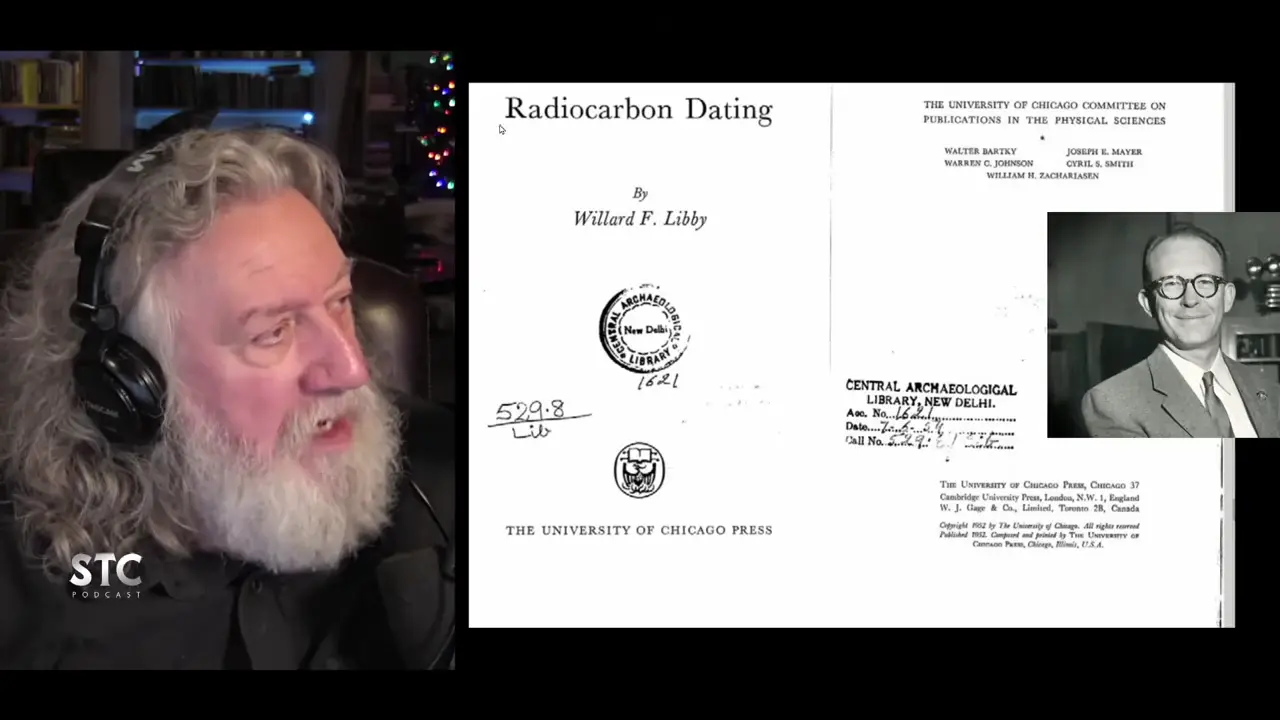
Willard F. Libby developed radiocarbon dating in the late 1940s, publishing his method in 1952 through University of Chicago Press, revolutionizing archaeology. Using carbon-14 decay rates, it dates organic material up to ~60,000 years. Uncalibrated dates can be off by 1,000-1,500 years. Tree-ring counting helps calibrate them 🏺🔬
Willard Libby Develops Radiocarbon Dating in 1952
Key facts
- Willard F. Libby published his radiocarbon dating paper in 1952 through University of Chicago Press
- Radiocarbon dating allows estimation of elapsed time using known radioactive decay rate of carbon-14
- Method works on organic material and can date up to approximately 60,000 years
- Radiocarbon dates diverge from calibrated calendar dates as you go further back
- Calibrated dates use dendrochronology (tree-ring counting) for verification
- Uncalibrated radiocarbon dates appear younger than actual dates by up to 1,000-1,500 years
- Calibrated years before present (cal BP) represent actual calendar years
Sources
howtube.com
Linked in video description
Was this story useful?
Keep exploring
Every site on this page sits on the globe, and the people who research them are on the Discord.
3D Globe · Sites by country · Story Archive · Research Library · Weekly Journal · Search
AI-generated text · images from the original sources · always verify with the sources.