

The were-jaguar motif showing human-jaguar hybrids may have been inspired by children with Down syndrome, which causes distinctive facial features including a cleft head and enlarged eyes. The Olmec believed those exhibiting these traits were descended from a Jaguar God, granting them spiritual authority. Archaeological evidence from sites like Chalcatzingo suggests children with these characteristics may have formed an elite spiritual class within Olmec society.
Were-Jaguar and Ectodermal Dysplasia in Olmec Iconography
Site mentioned
📍 Olmec Heartland
Key facts
- The were-jaguar motif represents human-jaguar hybrid figures central to Olmec religion
- Ectodermal dysplasia was prevalent among indigenous children of Mexico in the 1970s
- Ectodermal dysplasia often causes two fangs in front teeth
- Children with this condition were likely venerated as being 'touched by the gods'
- Shamans would gather children and take them into caves for ceremonies in Guerrero, Mexico
- Cave paintings show shamans sitting atop altars performing ceremonies
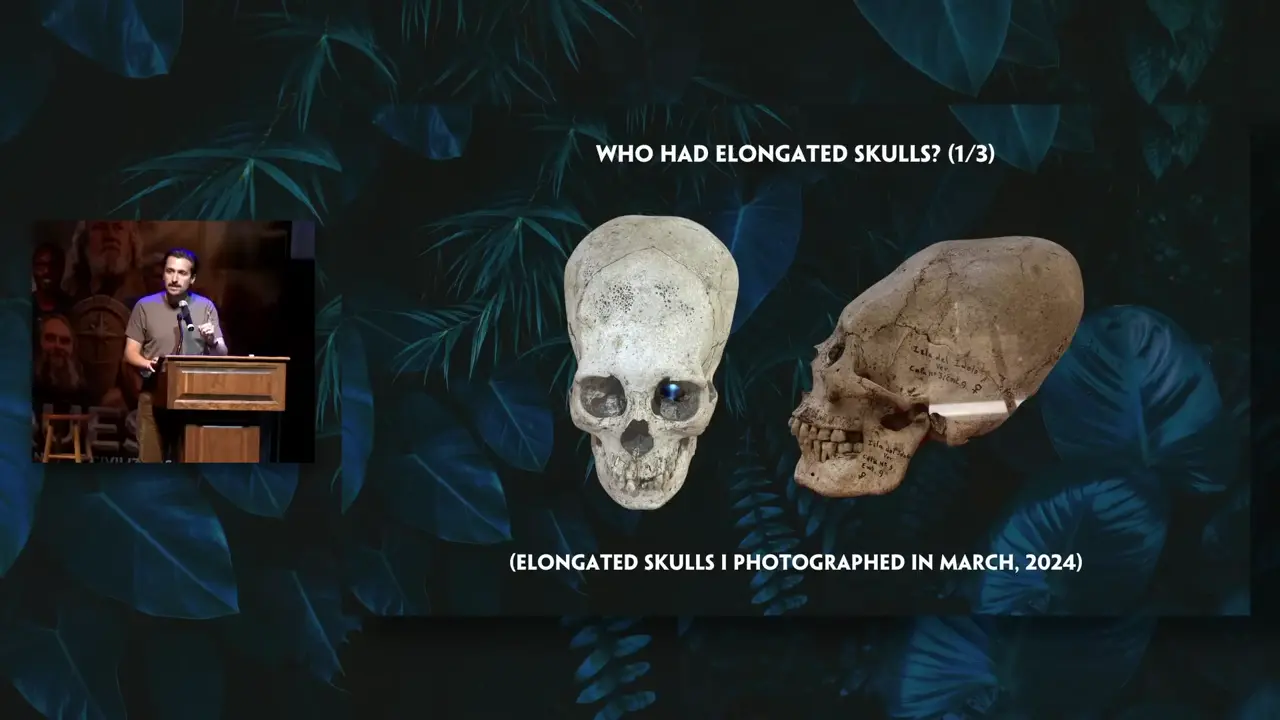
- Elongated skulls appear in Olmec iconography and actual preserved bodies found at Chalcatzingo
- The were-jaguar children may represent Olmec royalty or spiritual class
Sources
Jaguar Cult — Down's Syndrome — Were-Jaguar - Penn Museumpenn.museum
A comparison of many of the Olmec were-jaguar representations with individuals affected by Down's syndrome shows such striking similarities.
The Olmec: The Children of the Were-Jaguar | Uncovered Historyuncoveredhistory.com
The Olmec, or at least the royal lineage, believed they were descended from a Jaguar God, who they depicted with a cleft head, large eyes and feline snout.
Olmec werejaguar – The Artistic Adventure of Mankindarsartisticadventureofmankind.wordpress.com
The were-jaguar motif is characterized by almond-shaped eyes, a down-turned open mouth, and a cleft head. It appears widely in the Olmec ...
Olmec Figure of a Werejaguar , c. 900 to 500 BCE - Barakat Gallerybarakatgallery.eu
The Olmec were-jaguar was a popular theme in Olmec art, and these figures often varied greatly in style, depicting figures which were almost entirely feline ...
The Power to Dominate: Jaguar Symbology in the Olmec Traditionhistoricalmx.org
As a symbol of dominance, having jaguar lineage grants ruling power over the physical world of the Olmecs, along with the spiritual world.
Was this story useful?
Keep exploring
Every site on this page sits on the globe, and the people who research them are on the Discord.
3D Globe · Sites by country · Story Archive · Research Library · Weekly Journal · Search
AI-generated text · images from the original sources · always verify with the sources.