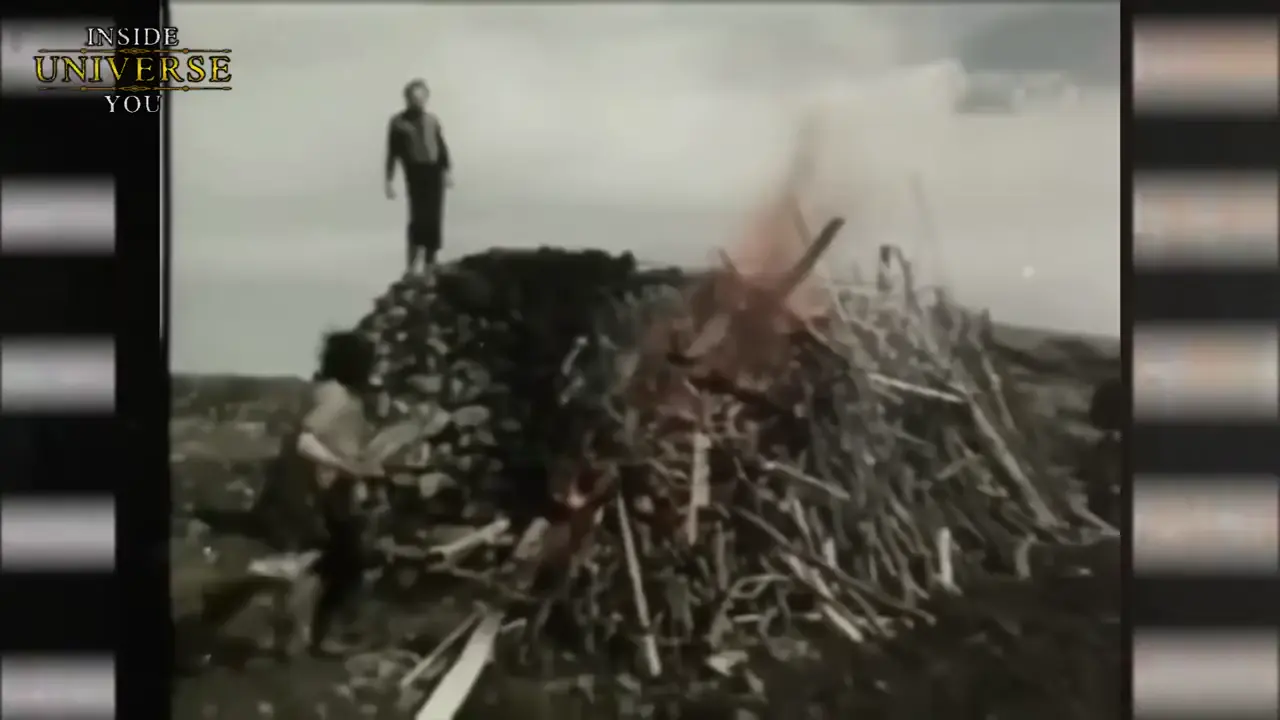
🔥 Fascinating puzzle: dozens of Scottish Iron Age hillforts show vitrified stone. A 1980 replica experiment with a 22-hr timber fire only reached ~800°C, well below what was previously thought necessary. New research suggests melting began HIGH on walls & spread inward — but heat came from OUTSIDE. Timberlacing channels distributed the fire's heat through the structure. Partially understood!
Key facts:
- Vitrification of stone can occur at temperatures around 1,100-1,200°C (about 2,000°F), though the exact mechanism remains debated
- Early observers including the Royal Society of Edinburgh noted the artificial nature of vitrification in the 18th century
- Archaeologist Ian Rolston's 1980 experiment with replica Iron Age wall and 22-hour timber fire reached only ~800°C
- Vitrification patterns show melting beginning high within walls and spreading downward, affecting both interior and exterior surfaces
- Heat was distributed through timberlacing channels within the stone structure
Sources
Mystery of Vitrified Forts - Brigantes Nationbrigantesnation.comIt was during a trip to Scotland, in the Summer of 1997, that I first heard of vitrified hillforts. It was near Urqhart Castle, south of Inverness. As ancient ...
Through a glass darkly…Vitrified Forts - Bill Lloyd Musicbilllloyd.co.ukA new theory behind the vitrification of stone forts in order to accumulate static electricity. It is a speculative theory and needs to be proved or disproved ...
The vitrification experiment - the urban prehistoriantheurbanprehistorian.wordpress.comThis post tells the story of an urban prehistoric experiment that took place almost 40 years ago in a local authority waste disposal tip (aka a ...
Want to Build a Strong Fortress? Set It On Fire | National Geographicnationalgeographic.comHow did Iron Age people, who built these structures in the first millennium B.C., manage to heat entire stone walls to 2,000 degrees Fahrenheit ...
The Mystery of the Vitrified Forts - Skeptoid Podcastskeptoid.comSome 60 ancient stone forts in Scotland have vitrified walls, with the stone melted into glass. Here's what we know.
AI-generated text · images from the original sources · always verify with the sources.