

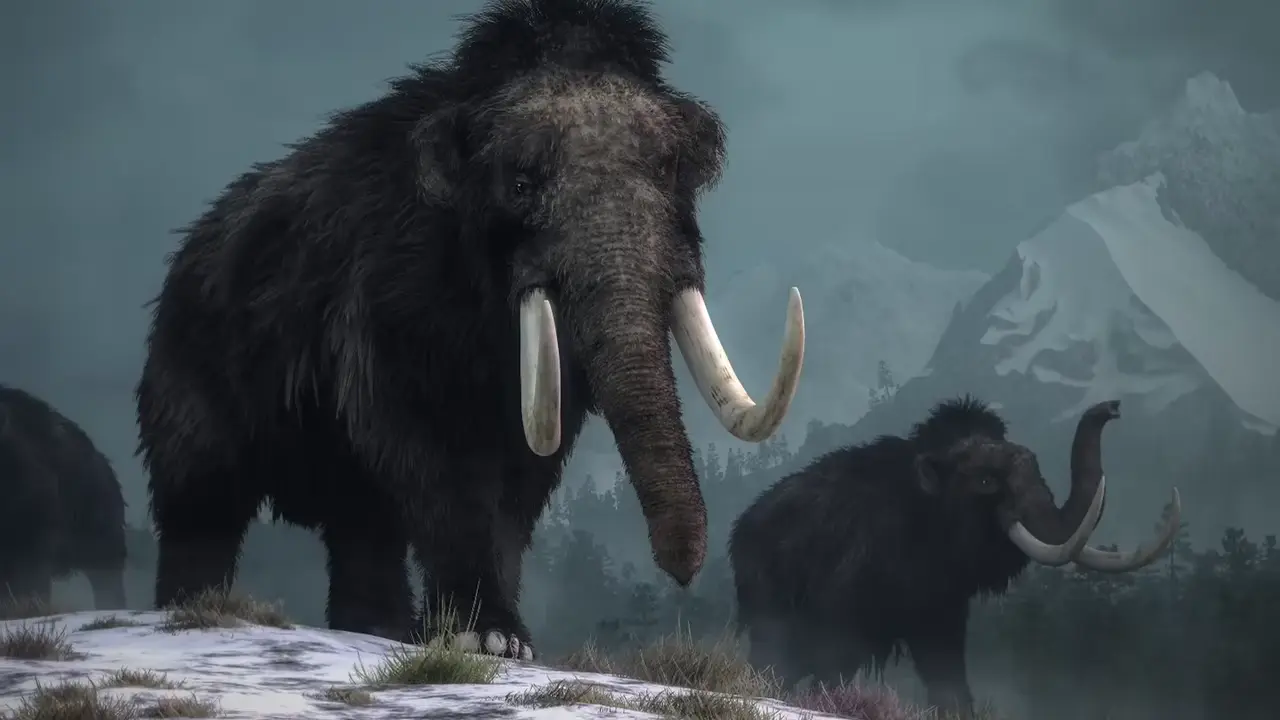
Woolly mammoths disappeared from mainland Eurasia in the early Holocene; broad summaries put most regional populations gone by about 10,000 years ago, and exact dates varied. Göbekli Tepe was built from about 9600 to 8200 BC, overlapping that broad window but not at one exact instant. Builders raised T-shaped limestone pillars and carved foxes, snakes, boars, aurochs and birds with stone tools; no metal tools or writing system are known. The video argues that the builders' grandparents hunted mammoths and that oral stories shaped the reliefs. The chronology does not establish a two- or three-generation link, and no woolly-mammoth relief is documented at the site.
Video's 2–3-generation Göbekli Tepe–mammoth link is unsupported
 TürkiyeGeneral
Key facts
- Final mainland-Eurasian woolly mammoth extinction is dated to the early Holocene. Broad summaries say mammoths were largely extinct by about 10,000 years ago, while exact regional dates varied.
- Göbekli Tepe's earliest monumental enclosures date to about 9600 BC, and construction continued until roughly 8200 BC.
- The construction period overlaps the broad early-Holocene extinction window, but the dates do not establish that the builders' grandparents hunted mammoths or that the gap was only two or three generations.
- Göbekli Tepe has T-shaped carved limestone pillars set in enclosures. Builders used stone tools; no metal tools or writing system are known.
- The video argues that mammoth-hunting ancestors and oral stories influenced the carvings. This is not established by the archaeology, and no woolly-mammoth relief is documented at the site.
Sources
Göbekli Tepe – The first 20 Years of Researchdainst.blog
Göbekli Tepe before the start of excavations in 1995 (Photo O. Durgut, copyright DAI). Göbekli Tepe was for the first time recognized as an ...
How Göbekli Tepe is Reshaping Our Understanding of the Neolithicpopular-archaeology.com
The earliest of the structures that have been excavated thus far indicate that they were built between 9500 and 9000 BCE, based on radiocarbon ...
Göbekli Tepe - Wikipediaen.wikipedia.org
a Neolithic archaeological site in Upper Mesopotamia (al-Jazira) in modern-day Turkey. The settlement was inhabited from around 9500 BCE to at least 8000 BCE.
Göbekli Tepe: The Mysterious Site Older Than Stonehenge | HISTORYhistory.com
More than 11,000 years ago, hunter-gatherers built a monumental stone complex that is thought to be the world's first temple.
Gobekli Tepe | Location, History & Significance - Lesson - Study.comstudy.com
Göbeklil Tepe is known to have been occupied from around 11,000 BCE to 8,000 BCE. It was occupied by hunter-gatherer and semi-nomadic peoples.
Woolly mammothen.wikipedia.org
During the Younger Dryas age, woolly mammoths briefly expanded into north-east Europe, whereafter the mainland populations became extinct.
Latest mammoth dates for each region of Europeresearchgate.net
Radiocarbon‐dated fossils indicate woolly mammoths were extirpated from mainland Beringia around 13 000 years ago. However, environmental DNA in permafrost ...
The extinction of woolly mammoth (Mammuthus ...sciencedirect.com
by AJ Stuart · 2005 · Cited by 207 — Final extinction of mammoth seems to have occurred in mainland Eurasia (both in Europe and northern Siberia) in the very early Holocene (Stuart et al., 2002).
Was this story useful?
Keep exploring
Every site on this page sits on the globe, and the people who research them are on the Discord.
3D Globe · Sites by country · Story Archive · Research Library · Weekly Journal · Search
AI-generated text · images from the original sources · always verify with the sources.