

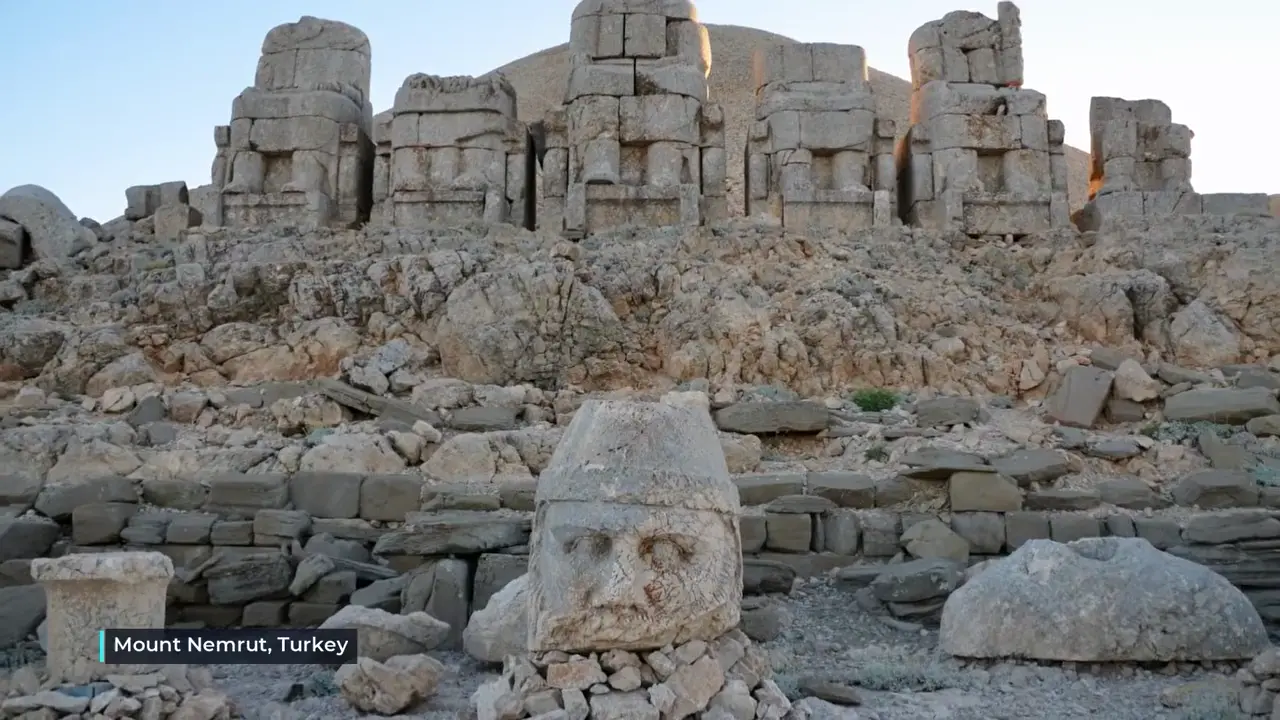
The colossal guardian statues atop Mount Nemrut, the 1st-century AD tumulus sanctuary of Antiochus I of Commagene, are read by LaCroix as emphasizing Plato's fifth element, quintessence — called ether in Greek alchemy. A symbolic reading, not an archaeological finding. 🗿
Video links Mount Nemrut's guardian statues to Plato's fifth element, quintessence
 TürkiyeTheory
Key facts
- LaCroix argues that the colossal guardian statues at Mount Nemrut emphasize the fifth classical element, which he calls the key to reincarnation.
- Plato named the fifth element quintessence; Greek classical alchemy called it ether, and other traditions called it spirit or consciousness.
- The fifth element is described as the underlying field of all things, animating the four classical elements like spirit animating an alchemical mixture.
- The discussion links the classical elements to the five Platonic solids, with the dodecahedron associated with the ether.
- Mount Nemrut (Nemrut Dagi) in southeastern Turkey is the 1st-century AD tumulus sanctuary of Antiochus I of Commagene, whose summit terrace carries colossal seated and headless guardian statues.
Sources
The Fifth Element (1997) - Plotimdb.com
The Fifth Element | Film Reviewspiritualityandpractice.com
The Fifth Elementen.wikipedia.org
The Fifth Elementrottentomatoes.com
Leeloo | Fifth Element Wiki - Fandomfifth-element.fandom.com
Was this story useful?
Keep exploring
Every site on this page sits on the globe, and the people who research them are on the Discord.
3D Globe · Sites by country · Story Archive · Research Library · Weekly Journal · Search
AI-generated text · images from the original sources · always verify with the sources.