

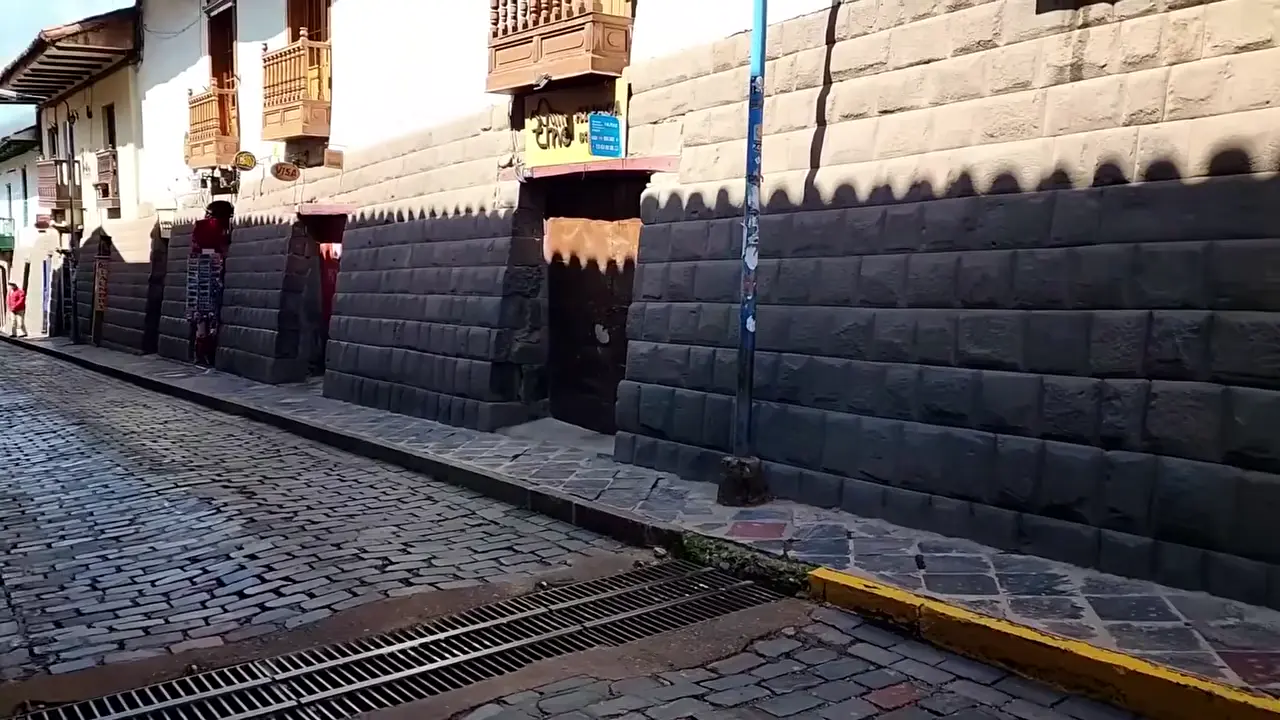
The video argues that the Inca dry-stone walls of Sacsayhuamán were engineered to resist earthquakes 🏛️ Huge stones were carefully cut to fit tightly without mortar, while UNESCO describes Cuzco’s masonry as granite or andesite. The monumental walls date to 15th-century Inca construction. The cited evidence supports the dry-stone technique, but not claims of thousands of years without deterioration or categorical superiority over modern construction.
Video argues Sacsayhuamán’s Inca walls were engineered for earthquakes
Key facts
- The monumental Sacsayhuamán walls are attributed to 15th-century Inca construction, so the claim of thousands of years of survival is not supported.
- Its dry-stone walls use huge stones carefully cut to fit together tightly without mortar.
- UNESCO describes Cuzco’s walls as meticulously cut granite or andesite; the cited results do not identify Sacsayhuamán’s stone as basalt.
- The claims that the walls flex with seismic forces and outperform modern mortar-based construction are the presenter’s interpretation, not findings established by the cited results.
- Basalt is generally around 6–7 on the Mohs scale, while diamond is 10, so basalt is not “right next to diamond.”
- The cited results do not verify inward-sloping sides, broken stones from modern window-cutting, inferior modern construction across the street, unmatched modern precision, or the absence of moss and deterioration.
Sources
The Anti-Seismic Megalithic Walls - The Ancient Connectiontheancientconnection.com
These ancient builders utilized a variety of advanced technologies, including polygonal masonry, precise cuts, drill holes, metal clamps, and scoop marks.
The Engineering Secret Behind Machu Picchu's Stonework | HISTORYhistory.com
The dramatic interlocking stone walls at Machu Picchu have proven to be highly earthquake-resistant. Tom Metcalfe. Getty Images/iStockphoto.
Monuments, Megaliths, and Inca Builders - Roseanne Chambersroseannechambers.com
Other walls were composed of irregular shaped polygonal blocks that are fit together like a jigsaw puzzle. One famous cut block in a wall in ...
The Enigma of Perfectly Fitted Stones: How the Incas Built Without ...casadelsolhotels.com
The hardness of these materials was crucial for the structures to resist seismic movements, which were frequent in the Andean region. These dense rocks with ...
Sacsayhuamánen.wikipedia.org
Dry stone walls constructed of huge stones were built on the site, with the workers carefully cutting the boulders to fit them together tightly without mortar.
City of Cuzco - UNESCO World Heritage Centrewhc.unesco.org
Of the first, it preserves impressive vestiges, especially its plan: walls of meticulously cut granite or andesite, rectilinear streets running within the walls ...
Sacsayhuaman, peru walls Stock Photos and Imagesalamy.com
RF 2M95DP6–Tourists admire a section of the massive stone walls at Sacsayhuaman built by the Incas during the 15th century at Cusco in Peru. heart_plus.
The fortress of Sacsayhuaman - Cusco - Ticket Machu Picchuticketmachupicchu.com
The main wall of Sacsayhuaman is built in zigzag with giant stones up to 5 meters high and 2.5 meters wide (between 90 and 125 tons of weight). The south side ...
Was this story useful?
Keep exploring
Every site on this page sits on the globe, and the people who research them are on the Discord.
3D Globe · Sites by country · Story Archive · Research Library · Weekly Journal · Search
AI-generated text · images from the original sources · always verify with the sources.