

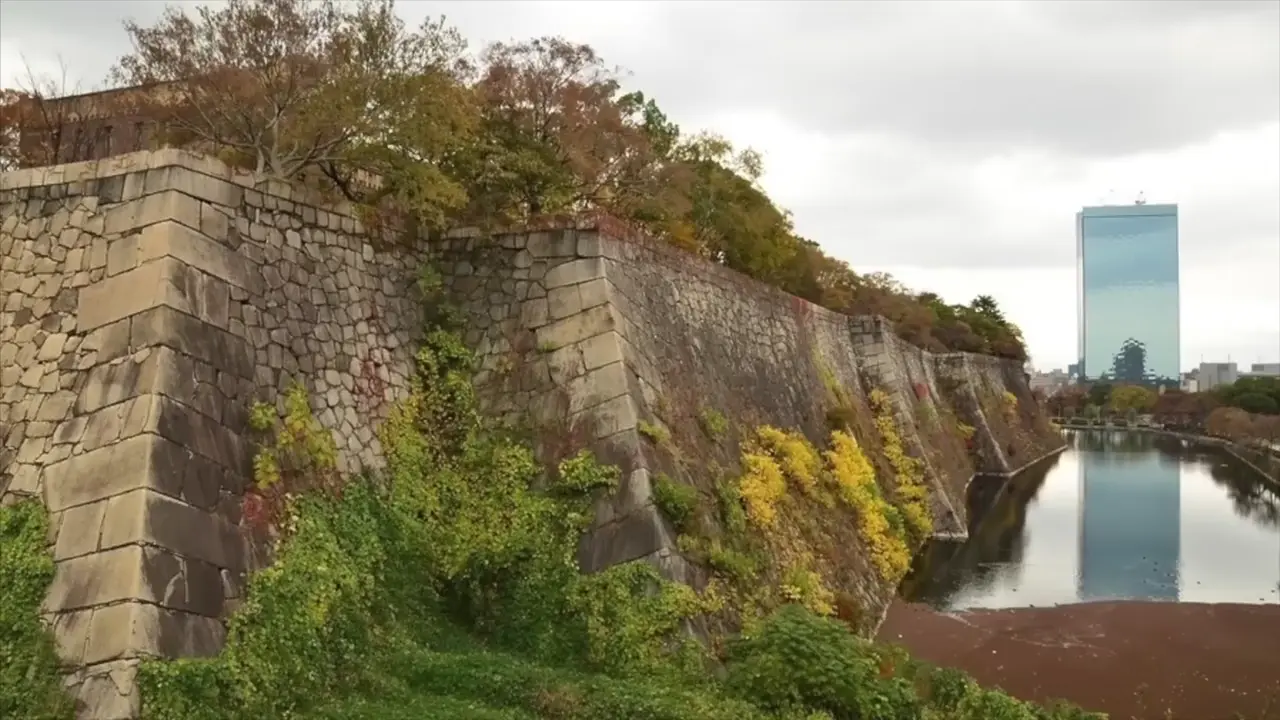
Bozura-zukuri: Japanese castle walls were dry-laid, allowing fitted stones limited movement during earthquakes. The video compares them with ancient Peruvian masonry, but the two are separate traditions. Clever seismic design.
Bozura-zukuri: Japanese castle walls dry-laid to flex during earthquakes
Key facts
- The technique is bozura-zukuri (坊座造; bōzura-zukuri), a traditional Japanese dry-stone wall method—not Boerdo or Burdock piling.
- Bozura walls use large facing stones with smaller stones packing the joints, generally without mortar.
- The characteristic wall face is gently convex or bulging, not an ovate form resembling a 'boerdo' flower.
- Bozura-zukuri developed within Japan's tradition of earlier rough and irregular stone-wall construction; 'disordered piling' is not the standard technical term.
- Dry joints allow limited movement and can improve earthquake resilience, but they do not guarantee that walls will escape damage.
- The video compares bozura walls with ancient Peruvian and Inca masonry; these are separate traditions, and the comparison does not demonstrate a common technique or origin.
- There is no universal basis for claiming that this masonry is more stable than mortared brick walls; performance depends on design, materials, workmanship, and earthquake loading.
Sources
Ancient Incans Earthquake Proof Walls Inspire These 3-D Printed ...fastcompany.com
The brilliant ancient civilization figured out how to make seismically stable structures using stones that fit together like Legos.
Burdock piling - Grokipediagrokipedia.com
Workers fit each roughly cut or naturally formed stone without mortar, relying on their burdock-root-like shape with large depth relative to exposed width to ...
Burdock piling - Wikipediaen.wikipedia.org
This stone fill is called kuri ishi (栗石, chestnut stones) because of their small size. No mortar was used in the building of castle walls, which allowed the ...
Japan's Stone Wall Culture from Ancient Times to Todayseattlejapanesegarden.org
Japanese stone walls are layers of history, artistic expressions of nature and human ingenuity, and silent symbols of strength.
Zagunis Castle Walljapanesegarden.org
This authentic, Japanese medieval-style Castle Wall, measuring 18.5 feet tall and 185 feet long, is the first of its kind to be built outside of Japan.
The Stone Wallueyakato.jp
In the seventh century, Japanese gardens surrounded ponds with retaining walls by stacking natural stones in perpendicular patterns. Even earlier, the steep ...
Anouzumi (stone walls)artsandculture.google.com
Anouzumi stone walls are extremely sturdy, as demonstrated by the fact that the anouzumi stone walls at Mount Hiei were the only structures that remained fully ...
Japanese Garden Reopening Soon as Master ...arboretumfoundation.org
Garden reopens to the public on July 28, the project will enter its next phase. The wall will be built using carefully selected granite stones ...
Was this story useful?
Keep exploring
Every site on this page sits on the globe, and the people who research them are on the Discord.
3D Globe · Sites by country · Story Archive · Research Library · Weekly Journal · Search
AI-generated text · images from the original sources · always verify with the sources.