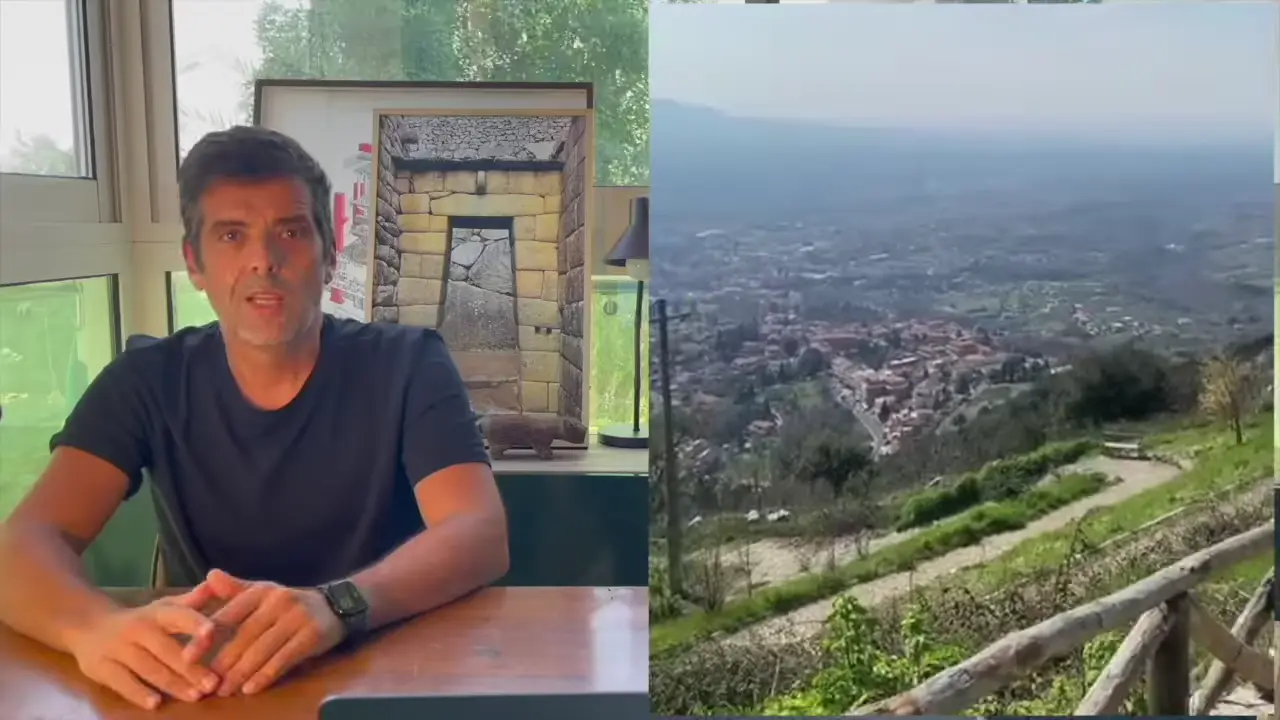
Cyclopean walls are strongly associated with fortifications, although polygonal masonry was also used for retaining walls, terraces and harbour works. The video argues that earthworks were its primary purpose, but archaeology does not treat that as a settled fact.
Pyrgi, the ancient port of Caere, preserves notable examples of polygonal masonry. Strabo's Pelasgian tradition reflects ancient Greek ideas about Italy's first inhabitants, not proof of the city's actual founders.
Orbetello's La Peschiera was developed in the 19th century as a sheltered harbour, not built in antiquity from fitted stones to prevent subsidence. Alatri's Pyramid of Time is a modern sundial and calendar, while the story that Chronos founded the city is modern mythology.
Sources
Cyclopean Walls | Mycenae Greeecee-mycenae.orgThese are giant walls with which Mycenaeans fortify their citadels. Because the boulders used for their construction have huge dimensions.
Cyclopean masonry - Wikipediaen.wikipedia.orgCyclopean masonry is a type of stonework found in Mycenaean architecture, built with massive limestone boulders, roughly fitted together with minimal clearance
Etruscan Walls of Orbetellobrunelleschi.imss.fi.itThe walls are one of the best preserved examples of a polygonal construction, an ancient architectural technique that contemplated the use of large blocks of ...
Cyclopean Walls of Mycenae: Ancient Engineering Marveluniquegreektours.comThe Cyclopean Walls demonstrate sophisticated understanding of defensive architecture and structural engineering. The builders incorporated ...
Cyclopean masonry | Ancient, Stone, Architecture - Britannicabritannica.comCyclopean masonry, wall constructed without mortar, using enormous blocks of stone. This technique was employed in fortifications.
ARTIFICIAL ISLANDSoceanbricks.comThe Ocean Bricks System provides a streamlined method for the rapid construction of artificial islands.
Archeology of Rose Islandspacecaviar.netRosa copyrighted the invention under the name “System to build artificial islands—in steel and concrete—both for civil and industrial purposes” (#850.987).
Artificial islanden.wikipedia.orgAn artificial island or man-made island is an island that has been constructed by humans rather than formed through natural processes.
AI-generated text · images from the original sources · always verify with the sources.