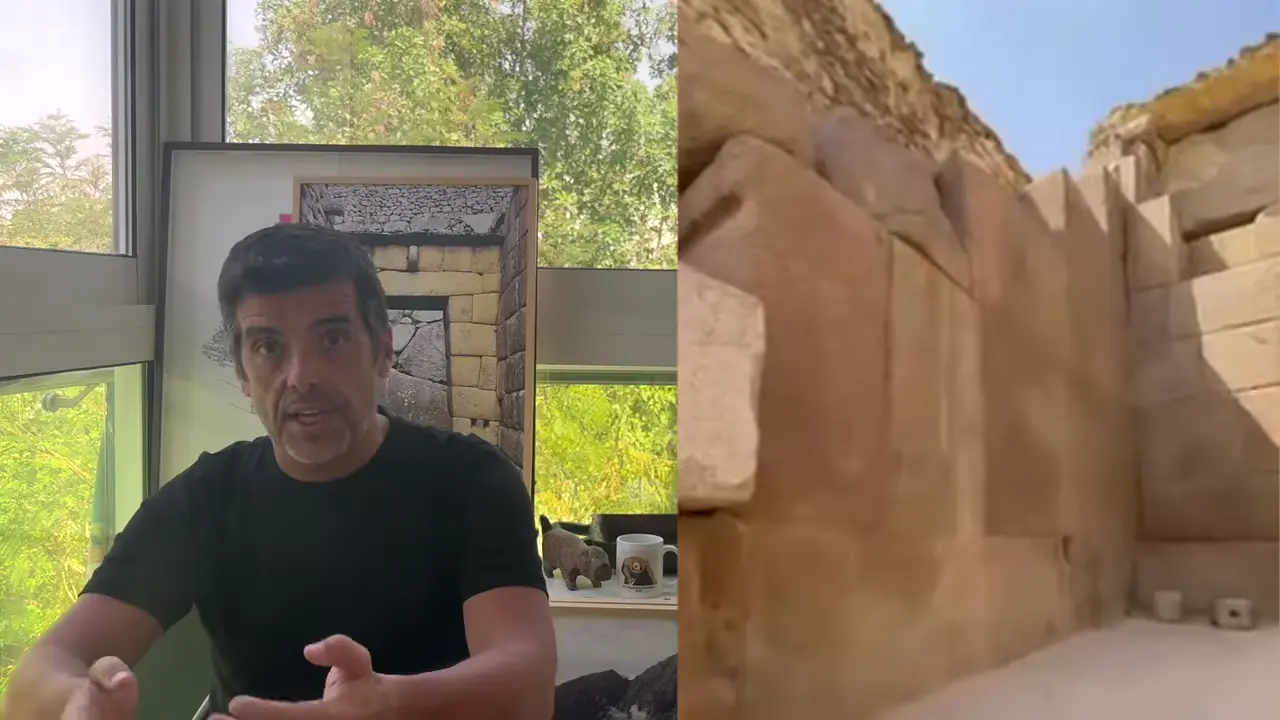
The Valley Temple at Giza (also known as the Valley Temple of Khafre) shows evidence of multiple construction phases. Its polished Aswan pink granite casing was fitted onto massive limestone core blocks—and some researchers have noted that stones appear carved to accommodate irregularities in the underlying rock, suggesting distinct building periods. The temple was built primarily from large limestone blocks quarried from the local bedrock, then clad with granite. Some scholars argue the temple represents a coherent single construction phase, with the apparent variations resulting from construction methodology rather than separate building periods.
Key facts claimed:
- The Valley Temple near the Great Pyramid has a granite casing on top of limestone core blocks
- The stones were carved to fit with damage in the softer rock, suggesting two different construction eras
- First constructed with large limestone blocks, then exposed, then the granite casing was added
- This indicates the temple may represent at least 2 different eras
Sources
The Valley Temple Giza – Ancient Rituals, History & Travel Guidesoulofegypttravel.comThe Valley Temple is built from megalithic limestone blocks, some weighing more than 200 tons. Granite imported from Aswan was used for its ...
The Valley Temple - iEgypt Travelsiegypttravels.comThese core stones were then lined with polished red granite from Aswan, the finest material available, symbolizing strength and permanence. Interior floors ...
The Valley Temple of Giza: A Monument of Power and Purificationegypttoursportal.comThe Valley Temple of King Khafre, built around 2570 BCE near the Great Sphinx, was a key funerary site for mummification and afterlife rituals.
Valley Temple of Khafre, Giza - History & Facts - Memphis Toursmemphistours.comThe Valley Temple showcases the Egyptians' mastery of stonework: Core structure: white limestone; Interior walls: polished pink Aswan granite; Floor: smooth ...
Valley Temple of Khafre in Giza – Ancient Masterpieceegypttoursgroup.comUnlike most temples of its era, the Valley Temple remains remarkably intact, featuring massive limestone foundations, polished Aswan granite ...
AI-generated text · images from the original sources · always verify with the sources.