

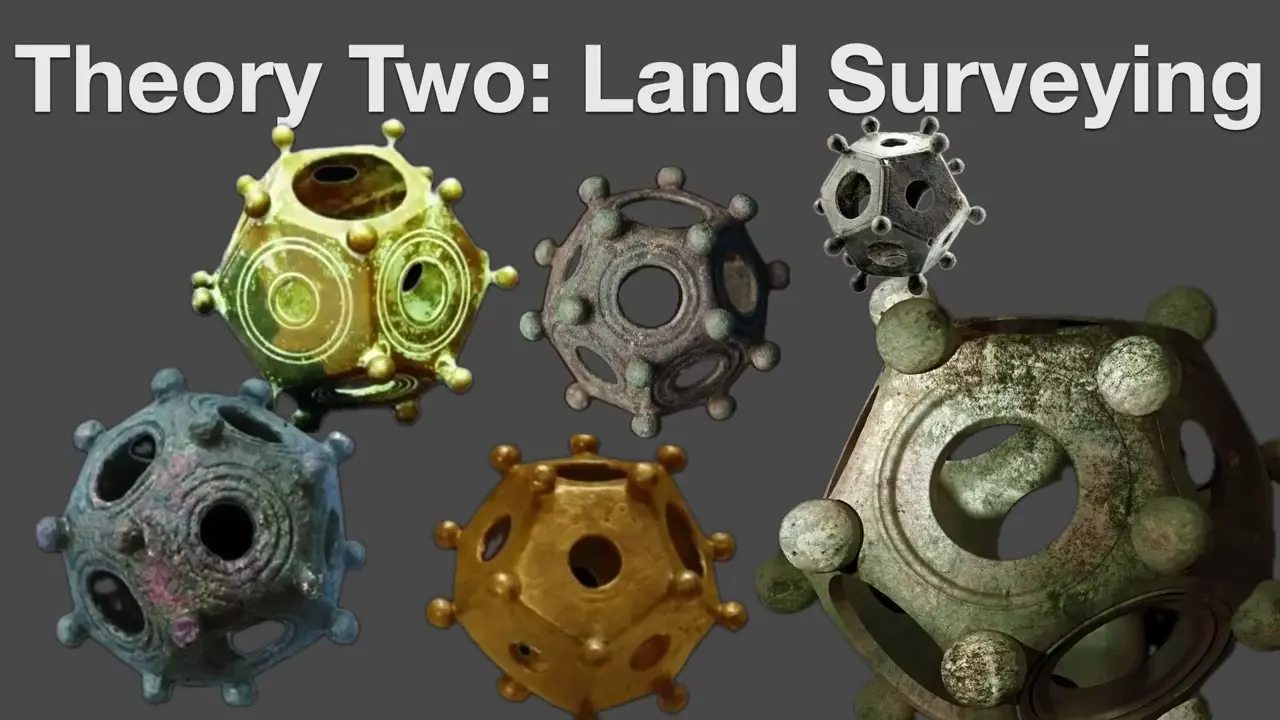
Pipe gauging fails (holes not uniform), surveying implausible, coin checking unlikely. Even knitting theory problematic - Romans didn't know it! (earliest evidence 1200s AD). Function unknown after 300 years of study.
Theories Debunked: Knitting, Pipe Gauging, Surveying, Coin Checking
Key facts
- Pipe gauging theory rejected: holes not uniform, no size markings
- Land surveying theory rejected: no measurements, no two objects same size
- Coin checking rejected: openings not uniform, not found near mints or throughout Empire
- Calendar/equinox measurement not backed by evidence
- Knitting theory problematic: Romans didn't know knitting (earliest evidence 1200s AD)
- Knitting would require cheaper materials than bronze
- Decorative function possible but cannot explain all examples
- Military scepter theory problematic: only handful found in military context
Sources
Toadman and Other Encountersetd.ohiolink.edu
She'll raise a few problems, sure, see the holes in the story. But he wasn ... Technically, it is not even a hole. The Third Problem derives from The.
Was this story useful?
Keep exploring
Every site on this page sits on the globe, and the people who research them are on the Discord.
3D Globe · Sites by country · Story Archive · Research Library · Weekly Journal · Search
AI-generated text · images from the original sources · always verify with the sources.