

The 1988 Shroud tests published a date of 1260–1390 CE at 95% confidence. AMS was relatively new, but already established. The video argues that outlier rejection, protocol decisions and delayed access to some lab records undermine the result; those remain disputed critiques. Some underlying records were released after a 2017 FOIA request, although the lab findings were published in 1989. The Shroud’s above-ground history raises contamination questions, but it does not itself make C14 dating unsuitable.
The Shroud of Turin’s 1988 radiocarbon dating: result and disputed critiques
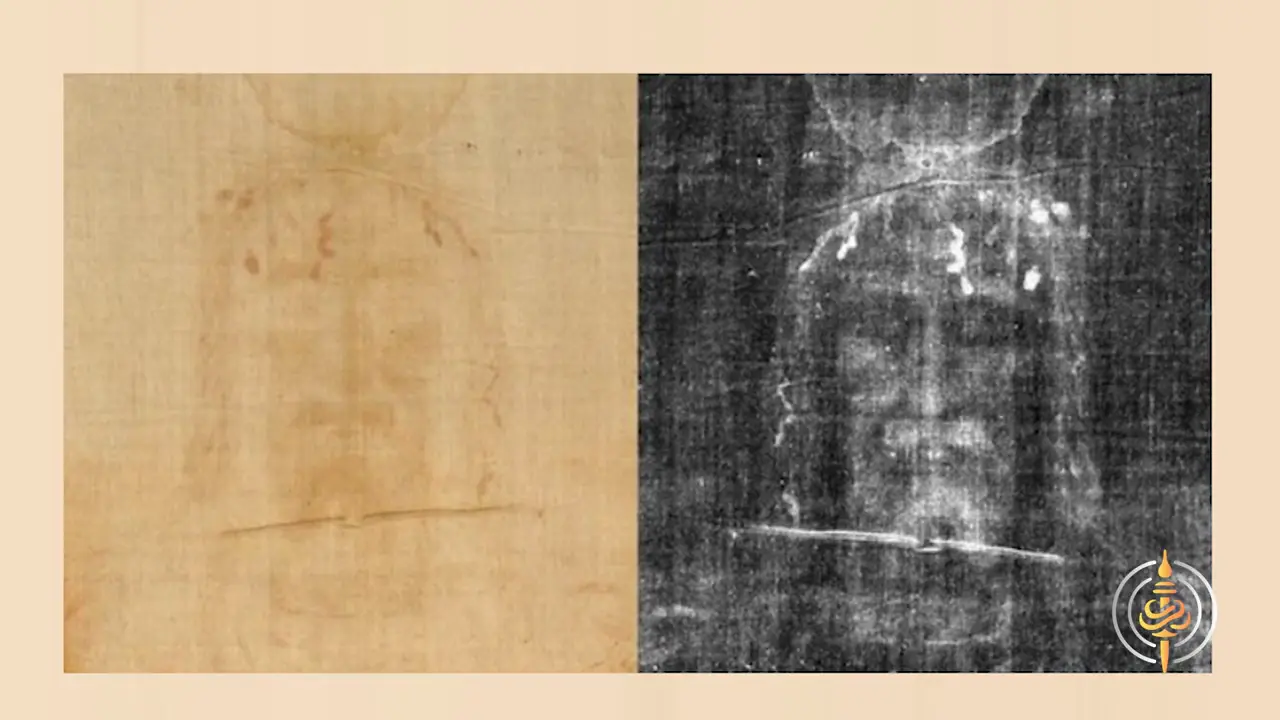
Key facts
- Radiocarbon dating was announced by Willard Libby in 1949 and developed through the 1950s; conventional beta-counting required gram-scale carbon samples, while AMS later allowed milligram-scale samples.
- AMS radiocarbon dating emerged in the late 1970s and early 1980s and was already established by 1988; calling it “unproven on cloth” is not supported.
- The three laboratories reported a calibrated date of 1260–1390 CE at 95% confidence.
- The video cites a three-day 1986 meeting in Turin involving Cardinal Anastasio Ballestrero and argues that many proposed protocols were not followed; that interpretation should be attributed to the video.
- Some underlying laboratory records became public after a 2017 Freedom of Information request; the laboratories’ measurements and conclusions had already been published in Nature in 1989.
- The video argues that the 1260–1390 CE range cannot be reproduced without excluding outliers. Outlier handling has been questioned, but deliberate manipulation is not an established finding.
- The Shroud’s documented 14th-century history raises contamination and repair concerns, but burial is not required for radiocarbon dating and above-ground status alone does not make it a poor candidate.
Sources
Analysis of textile fragments from the 1988 radiocarbon samples ...nature.com
by R Freer-Waters · 2026 — The Turin Shroud is a widely studied textile bearing the image of a human figure. Since the radiocarbon (14C) dating conducted in 1988 by ...
evidence for the skewing of the c-14 dating of the shroud of turin due to ...semanticscholar.org
In 1988, Carbon-14 findings from three Accelerator Mass Spectrometer (AMS) Labs independently dated a sample removed from the Shroud of Turin: unarguably ...
Radiocarbon dating of the Shroud of Turinen.wikipedia.org
In 1988, scientists at three separate laboratories dated samples from the Shroud to a range of 1260–1390 AD, which coincides with the first certain appearance ...
Radiocarbon Dating of the Shroud of Turinshroud.com
Very small samples from the Shroud of Turin have been dated by accelerator mass spectrometry in laboratories at Arizona, Oxford and Zurich.
The Radiocarbon Dating of the Shroud of Turin - PMC - NIHpmc.ncbi.nlm.nih.gov
by P Di Lazzaro · 2020 · Cited by 18 — These analyses suggest that the 1988 radiocarbon dating does not match the current accuracy requirements.
The Shroud of Turin Mysteriesmagiscenter.com
The 1988 Carbon Dating Controversy. One of the primary reasons the Shroud of Turin fell off the radar is the 1988 carbon dating controversy.
The 1988 radiocarbon dating of the Shroud of Turinsciencedirect.com
by B Walsh · 2020 · Cited by 24 — We review the statistical method cited in the report of the radiocarbon dating of the Shroud of Turin. Following strict analytical protocol, we find the ...
RADIOCARBON DATING OF THE TURIN SHROUDphilarchive.org
by T Casabianca · 2019 · Cited by 74 — In 1988, three laboratories performed a radiocarbon analysis of the Turin Shroud. The results, which were centralized by the British Museum and published in ...
Was this story useful?
Keep exploring
Every site on this page sits on the globe, and the people who research them are on the Discord.
3D Globe · Sites by country · Story Archive · Research Library · Weekly Journal · Search
AI-generated text · images from the original sources · always verify with the sources.