

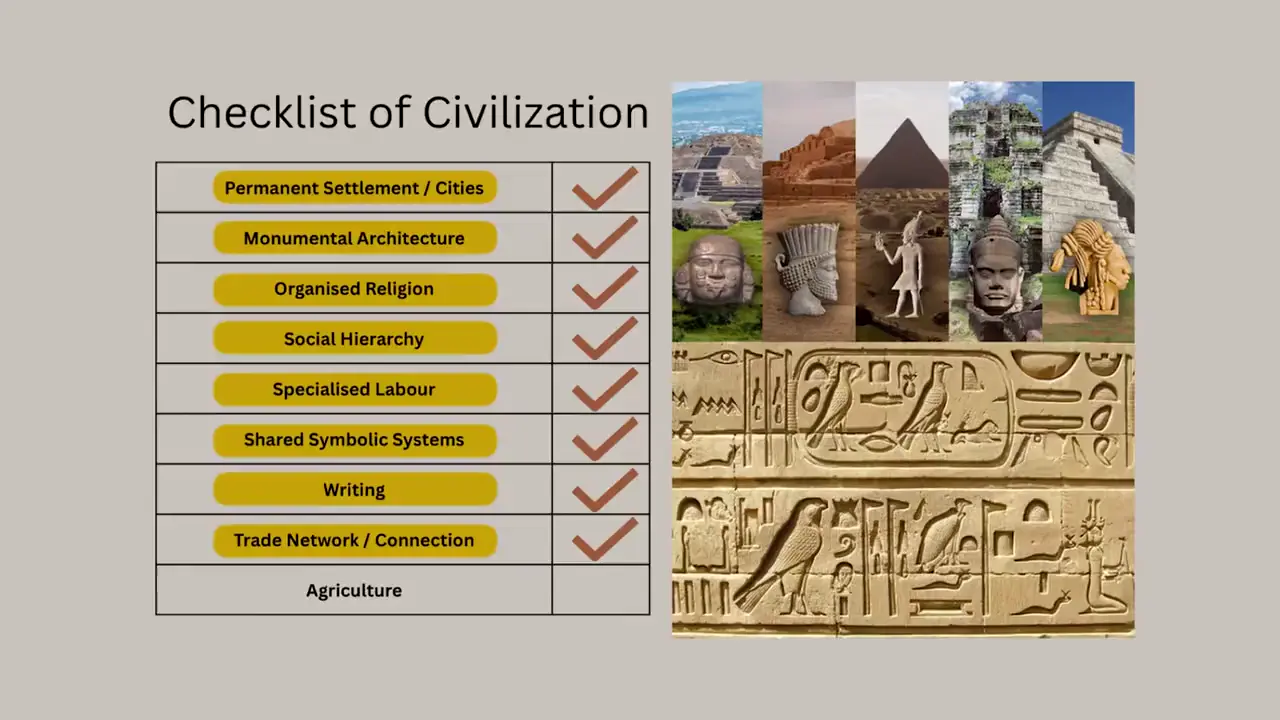
Taş Tepeler culture meets nearly all standard criteria for civilization. Standard archaeological definition of civilization includes: permanent settlements, monumental architecture, organized religion, social hierarchy, specialized labor, shared symbolic systems, trade networks, and agriculture The Taş Tepeler culture meets nearly all criteria: monumental architecture, organized labor, social hierarchy, shared symbolic culture, proto-writing, permanent settlement, and regional networks Archaeologists still hesitate to call Taş Tepeler a civilization due to the absence of confirmed agriculture
Should we reconsider what makes a civilization? The Taş Tepeler culture in Turkey features monumental architecture, organized labor, social hierarchy, shared symbolic culture, proto-writing, permanent settlements, and extensive trade networks — yet some archaeologists hesitate to call it a civilization because agriculture hasn't been confirmed there. This raises a fascinating question: did agriculture create civilization, or did civilization create agriculture?
Key facts claimed:
- Standard archaeological definition of civilization includes: permanent settlements, monumental architecture, organized religion, social hierarchy, specialized labor, shared symbolic systems, trade networks, and agriculture
- The Taş Tepeler culture meets nearly all criteria: monumental architecture, organized labor, social hierarchy, shared symbolic culture, proto-writing, permanent settlement, and regional networks
- While some archaeologists debate whether to classify Taş Tepeler as a civilization due to the absence of confirmed agriculture, other sources have already called it a civilization, suggesting the debate is ongoing rather than settled
- The video argues certain standard definitions may have been assembled retrospectively by examining Mesopotamian, Egyptian, and Indus Valley societies, all agricultural societies
Key Facts
- Standard archaeological definition of civilization includes: permanent settlements, monumental architecture, organized religion, social hierarchy, specialized labor, shared symbolic systems, trade networks, and agriculture
- The Taş Tepeler culture meets nearly all criteria: monumental architecture, organized labor, social hierarchy, shared symbolic culture, proto-writing, permanent settlement, and regional networks
- Archaeologists still hesitate to call Taş Tepeler a civilization due to the absence of confirmed agriculture
- The video argues the standard definition was assembled retrospectively by examining Mesopotamian, Egyptian, and Indus Valley societies, all agricultural societies
Related site: Göbekli Tepe — view location, images, and history on the Ancient Nerds map.
Source: This Discovery Is a Huge Problem for Historians by Michael Button