

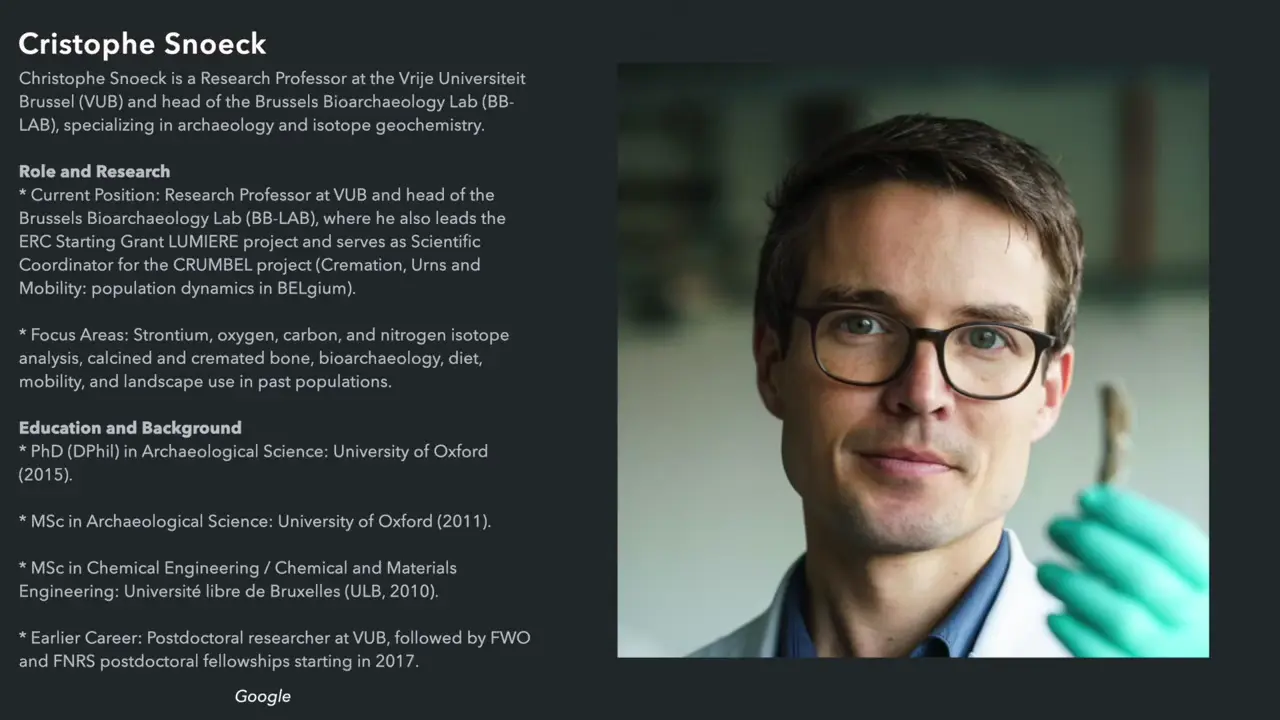
A 2018 study led by Christophe Snoeck and colleagues analysed strontium from 25 Stonehenge cremations. Fifteen fitted local Wessex geology; 10 showed non-local or mixed signals, with three of the clearest cases compatible with west Wales. Other British origins remain possible. Cremated bone reflects the final years of life; enamel reflects childhood 🧪
Stonehenge strontium: 40% non-local or mixed, with west Wales links
 EnglandBioarchaeology
Site mentioned
Key facts
- The 2018 Antiquity study was led by Christophe Snoeck, then at the University of Bradford—not Kristoff Snick. It examined cremated remains from individuals identified by Christy Willis.
- Of 25 individuals, 15 were consistent with local Wessex geology, while 10 had higher strontium-ratio values associated with western or northwestern British geology.
- Three of the 10 were the clearest far-western cases compatible with west Wales; the others had mixed signals and cannot all be assigned specifically to West Wales.
- Cremated bone reflects strontium from roughly the final decade of life, while tooth enamel reflects childhood, making them complementary rather than equivalent signals.
- The limited sample supports connections and movement, but does not show that Welsh people built Stonehenge; some relevant burials predate the main stone erection.
Sources
Strontium isotope analysis on cremated human remains from Stonehenge support links with west Walespubmed.ncbi.nlm.nih.gov
Strontium isotope analysis on cremated human remains from Stonehenge support links with west Wales - PMCpmc.ncbi.nlm.nih.gov
This Breathtaking Science Photo Shows a Single Trapped Atomsciencealert.com
Was this story useful?
Keep exploring
Every site on this page sits on the globe, and the people who research them are on the Discord.
3D Globe · Sites by country · Story Archive · Research Library · Weekly Journal · Search
AI-generated text · images from the original sources · always verify with the sources.