

The protruding nubs on megalithic blocks? Researcher Davidovits (who founded geopolymer science in the 1970s) suggests they're expulsion sprews from curing reactions. His Giza limestone analysis revealed fossils rearranged out of sedimentary order, while Puma Punku H-blocks contained organics trapped inside igneous rock — seemingly impossible naturally. Muffin-top expansion on 10-ton blocks also hints at mold pressure relief.
Stone nubs as manufacturing artifacts and Davidovits' geopolymer evidence at Giza and Puma Punku
 Peruunverified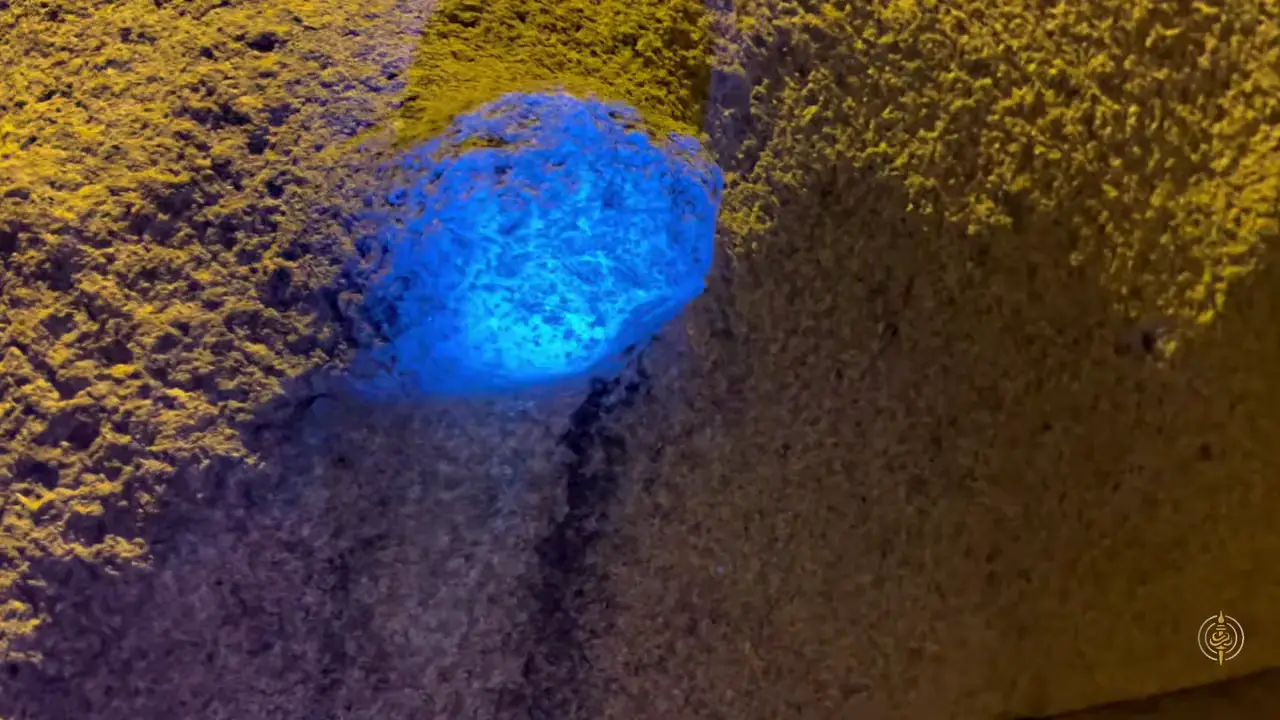
Key facts
- Nubs protruding from megalithic blocks are interpreted as exhaust ports or expulsion sprews from exothermic curing reactions
- UV light analysis reveals concentrated chemical solution residue on the undersides of nubs
- Muffin-top volumetric expansion on 5 to 10 ton blocks at Sacsayhuamán suggests hydrostatic pressure relief incisions in molds
- Joseph Davidovits' analysis of a Giza limestone core sample found human hair and fossils rearranged out of sedimentary order, indicating artificial manufacture
- Davidovits' analysis of Puma Punku H-blocks found organic chemistry embedded in igneous rock, which is physically impossible in natural stone
- The field of geopolymer material science was established in the early 1970s by Davidovits
Site mentioned
Keep exploring
Every site on this page sits on the globe, and the people who research them are on the Discord.
3D Globe · Sites by country · Story Archive · Research Library · Weekly Journal · Search
AI-generated text · images from the original sources · always verify with the sources.