

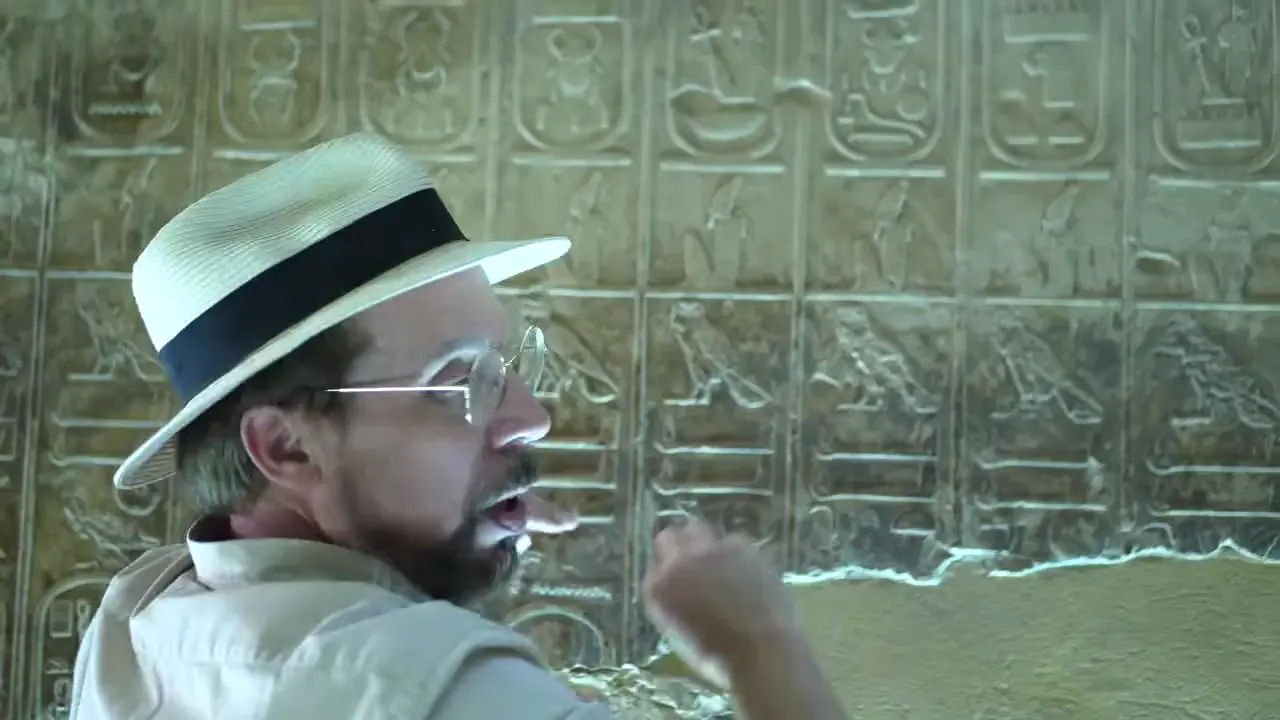
Seti I's King List, carved in the walls of his temple at Abydos in Upper Egypt, runs from Menes (1st Dynasty) to Seti I himself. Conspicuously absent: Akhenaten, Tutankhamun and the other Amarna-period rulers, branded heretics by the 19th-Dynasty compilers. Their erasure was deliberate 🏛️
Seti I's L-shaped temple at Abydos, Egypt, built in the late 13th century BCE
 EgyptArchitecture
Key facts
- The temple of Seti I stands at Abydos in Upper Egypt; the Troad (Hellespontine Abydos in north-west Anatolia) is a different site and has no Seti I temple
- Seti I was the second king of the 19th Dynasty, reigning c. 1294-1279 BCE, so the temple was built in the late 13th century BCE
- The temple is built mainly of limestone with sandstone elements
- The unusual L-shaped plan has two pylons, courts and hypostyle halls, and seven parallel chapels dedicated to Ptah, Ra-Horakhty, Amun-Ra, Osiris, Isis, Horus and Seti I
- Seti I died before the temple was finished; Ramesses II completed it, his reliefs carved in the deeply sunken style against Seti's raised relief
- The southern wing of the temple contains the seven chapels; the rear (northern) section holds the Osireion, storage magazines, the slaughter court and the corridors for the sacred barques
Sources
The Temple of Seti I in Abydosarce.org
Temple Of Seti I Stock Photosgettyimages.com
New Kingdom Monuments Abydos – The Temple of Setiegyptianmuseum.org
The Temple of King Sethos I at Abydos, Volume Iisac.uchicago.edu
Temple of Seti I (Abydos)en.wikipedia.org
Was this story useful?
Keep exploring
Every site on this page sits on the globe, and the people who research them are on the Discord.
3D Globe · Sites by country · Story Archive · Research Library · Weekly Journal · Search
AI-generated text · images from the original sources · always verify with the sources.