

Fossil shells in pyramid stones sit at random angles - not horizontal like in natural sedimentary rock. This suggests limestone was crushed, mixed into paste & poured into molds. All ingredients were available in Old Kingdom Egypt: limestone powder, clay binder, natron & lime. Davidovits' team recreated matching blocks with period-appropriate materials.
Scientific Evidence for Cast Limestone Blocks
 EgyptGeneral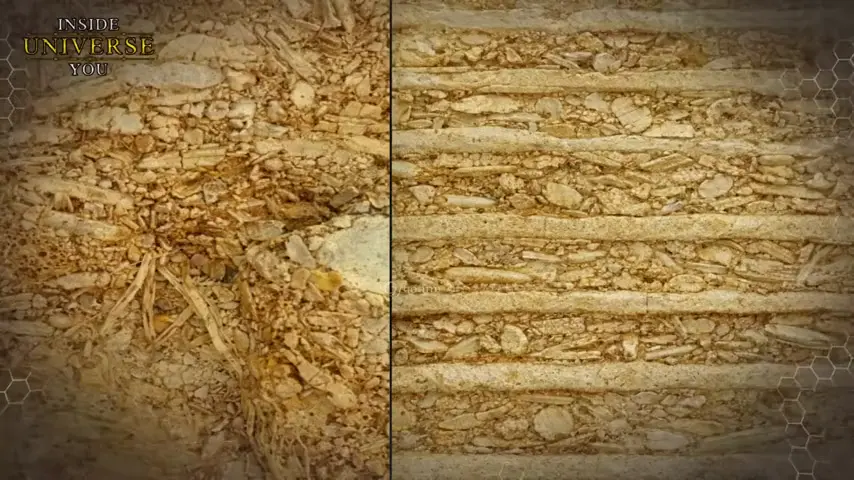
Site mentioned
Key facts
- Key ingredients for casting pyramid blocks were available in Old Kingdom Egypt: powdered limestone, clay/kaolin binder, natron (sodium carbonate), and lime
- Fossil shells in pyramid stones are jumbled at random angles, unlike natural sedimentary rock where they lie in horizontal layers
- This disarray suggests limestone was first crushed, mixed into paste, and poured into molds
- The precision of block fitting (not even a hair can be inserted) supports casting against neighboring surfaces
- Archaeologists have not found large numbers of copper chisels or pounding tools at Giza, despite conventional theory requiring extensive carving
- Casting in place would reduce need for metal tools, explaining their absence
- Davidovits team recreated reagglomerated limestone using only natural materials available 4,500 years ago
- The recreated blocks matched the Great Pyramid results with perfect joints
Sources
Unveiling the Mystery: Were the Pyramids Built with Ancient Concrete?shawnrb.medium.com
Disorganized Fossil Shells: In natural limestone, fossils are typically found in layered arrangements due to sedimentation over time. However, ...
How Did Egyptians Build the Pyramids? Ancient Ramp ... - History.comhistory.com
Researchers in Egypt discovered a 4,500-year-old ramp system used to haul alabaster stones out of a quarry, and reports have suggested that ...
Pyramids (2) The evidences - Geopolymer Institutegeopolymer.org
Jumbled fossil shells in a limestone block of the Great Pyramid. Natural sedimentation at sea bottom normally leaves them in horizontal layers.
Pyramids packed with fossil shells - ABC Newsabc.net.au
"Egyptian pyramid blocks of limestone tend to contain fossil shells and nummulites, often huge quantities of them, many of them intact, and many ...
The Surprising Truth Behind the Construction of the Great Pyramidsnsf.gov
The stones of the pyramids were actually made of a very early form of concrete created using a mixture of limestone, clay, lime and water.
Was this story useful?
Keep exploring
Every site on this page sits on the globe, and the people who research them are on the Discord.
3D Globe · Sites by country · Story Archive · Research Library · Weekly Journal · Search
AI-generated text · images from the original sources · always verify with the sources.