

Early human societies were not uniformly tiny compared to the massive megafauna populations they encountered. While some bands were small, emerging research challenges the assumption that all early human groups were small-scale and egalitarian—larger, more complex societies may have coexisted with megafauna. Mammoth populations in the hundreds of thousands and step bison numbering in the millions are plausible estimates, and megafauna like giant ground sloths did reach substantial sizes. The overkill model remains debated, but evidence of sustained, continent-wide mass slaughter for most extinct species is limited.
Scale discrepancy undermines human overkill theory
Key facts
- Early human populations were small mobile bands, perhaps thousands, not millions sweeping across continents
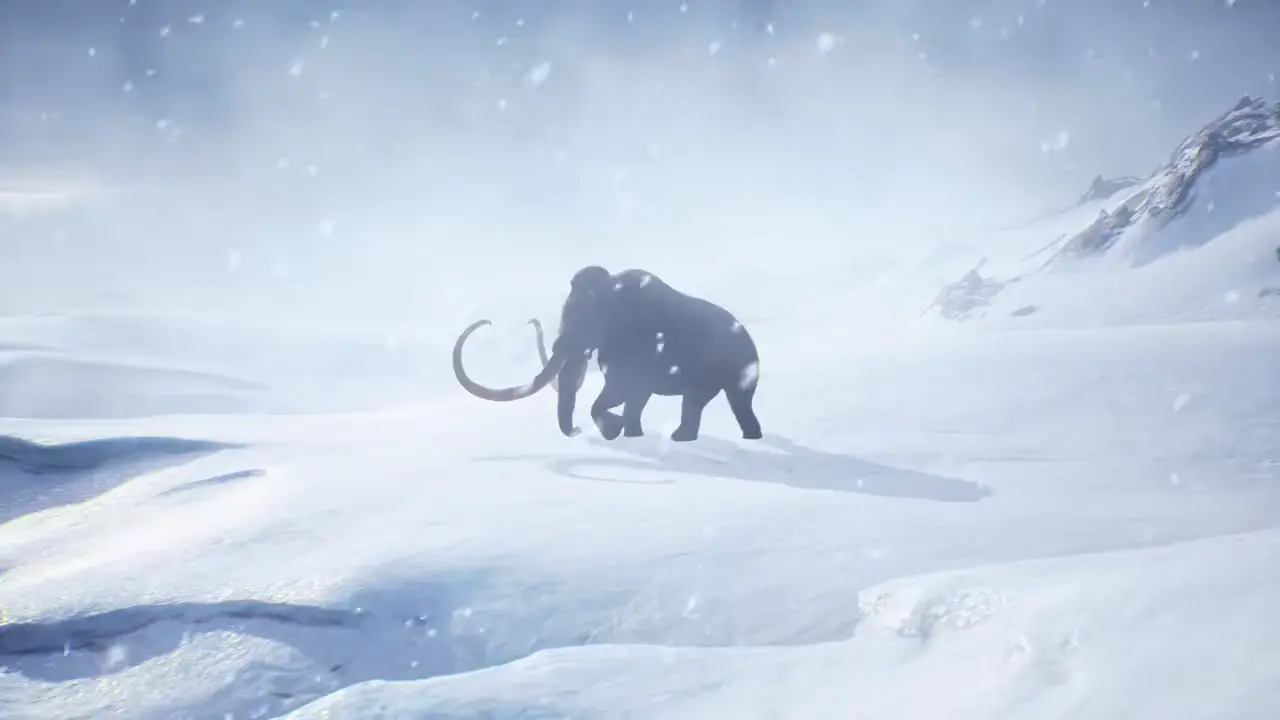
- Mammoth populations numbered in the hundreds of thousands across Eurasia and North America
- Each mammoth required up to 150 kg of vegetation per day
- Giant ground sloths weighed over 3,000 kg, step bison numbered in the millions
- Kill sites exist but are limited; no evidence of mass slaughter for most extinct species
- Sparse hunter-gatherer groups would need sustained pressure across millions of square kilometers to eliminate continent-spanning megafauna populations
Sources
Not all early human societies were small-scale egalitarian ...aeon.co
A grand research project created our origin myth that early human societies were all egalitarian, mobile and small-scale.
Early humans also drove megafaunal extinctionswildlife.org
“About 13,000 years ago, North America had a mammal megafauna community that was more diverse than in modern-day Africa — woolly mammoths, ...
Megafauna and ecosystem function from the Pleistocene to ...pnas.org
In this paper, we review evidence for megafaunal impacts on ecosystem function, on timescales ranging from the Late Pleistocene to the present.
Why early humans radically changed their toolkits 200000 ...newscientist.com
A decline in ancient megafauna in the Middle East coincided with a shift towards smaller, lighter toolkits in the archaeological record ...
How Losing the Megafauna Made Us Humananthropology.net
New research argues that the extinction of giant Ice Age animals reshaped human biology, culture, and even our oldest friendship—with the ...
Was this story useful?
Keep exploring
Every site on this page sits on the globe, and the people who research them are on the Discord.
3D Globe · Sites by country · Story Archive · Research Library · Weekly Journal · Search
AI-generated text · images from the original sources · always verify with the sources.