

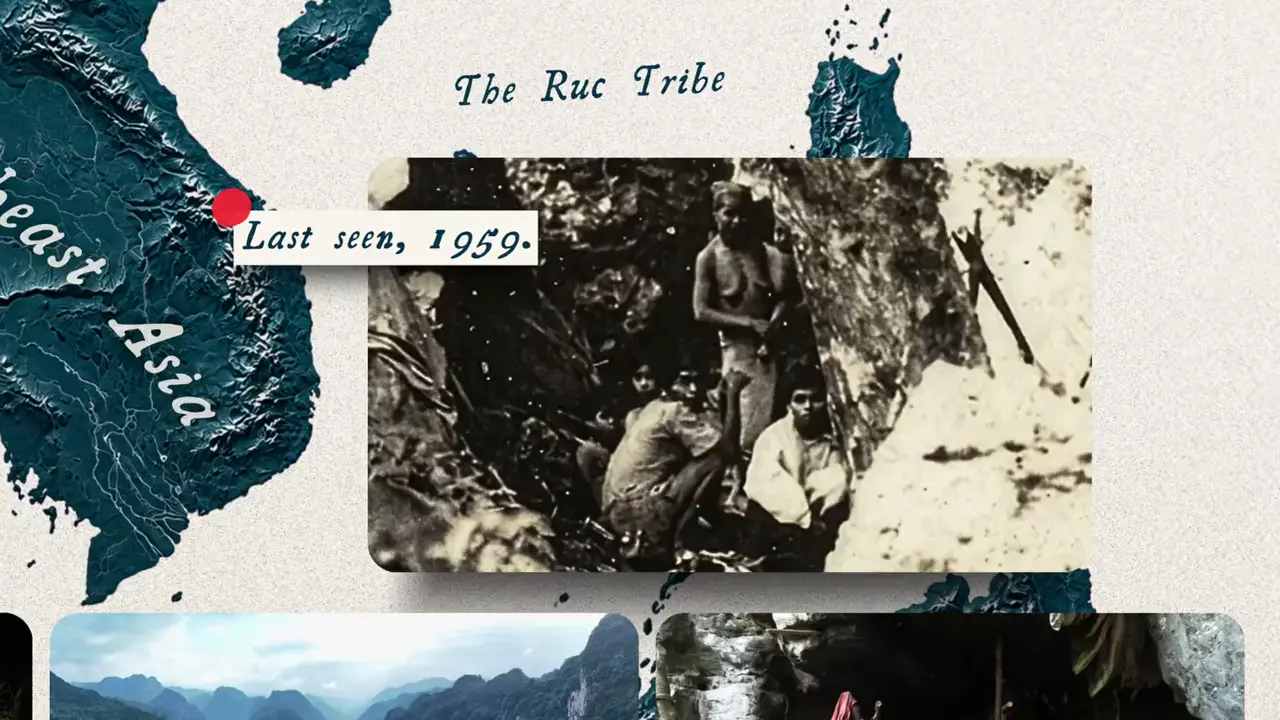
In 1959 Vietnamese border guards on patrol in the limestone mountains of Quang Binh found a small group living in rock shelters, wearing bark-cloth and living on hunting, trapping, wild roots and tubers. Their language was related to Vietnamese but more archaic, and they became known as the Ruak; their own accounts trace their ancestors fleeing into the mountains during the French colonial period or earlier wars and famines. The socialist government forcibly moved them out, building villages and teaching wet-rice farming. Many fled back at night for years before settling permanently. Only a few hundred remain, and their language helps reconstruct how Vietnamese sounded centuries ago. 🦇⛰️
Ruak cave-dwellers found in Quang Binh mountains in 1959, later resettled
 AustraliaGeneral
Key facts
- Quang Binh province in central Vietnam narrows to about 50 km between the South China Sea and the mountains of Laos.
- Western Quang Binh is jungle-covered limestone in which water erosion over millions of years carved some of the largest cave systems on Earth; the area is now protected as a national park.
- Son Doong is considered the largest known cave in the world and contains its own jungle, ecosystems and internal clouds.
- During the Vietnam War military trails ran through these mountains, the area was heavily bombed, and people sheltered in the caves.
- In 1959 Vietnamese border guards on a mountain patrol found a small group living in rock shelters and caves, wearing bark-cloth clothing and surviving on hunting, trapping, wild roots and tubers, with little contact with lowland farming communities.
- They spoke a language related to Vietnamese but more archaic; they became known as the Ruak, and their own accounts say their ancestors fled into the mountains during the French colonial period or earlier wars and famines.
- The socialist government forcibly moved them out of the cave systems, built houses and village towns in the valleys, supplied rice and tools and tried to teach wet-rice farming; schools and clinics followed.
- Some fell ill and many escaped at night back to the caves, and repeated resettlement attempts continued over the following decades until, by the late 1900s, they settled in the villages permanently.
- Today only a few hundred Ruak remain; their language retains archaic features that help linguists reconstruct how Vietnamese sounded centuries ago.
- The 1959 photograph showing their cave and cloud-forest way of life is the last known glimpse of it.
Sources
Phong Nha - Kẻ Bàngphongnhakebang.vn
A complete guide to Phong Nhavietnam.travel
Phong Nha - Ke Bang National Parkstorymaps.arcgis.com
Phong Nha–Kẻ Bàng National Parken.wikipedia.org
Was this story useful?
Keep exploring
Every site on this page sits on the globe, and the people who research them are on the Discord.
3D Globe · Sites by country · Story Archive · Research Library · Weekly Journal · Search
AI-generated text · images from the original sources · always verify with the sources.